Quranic Answer
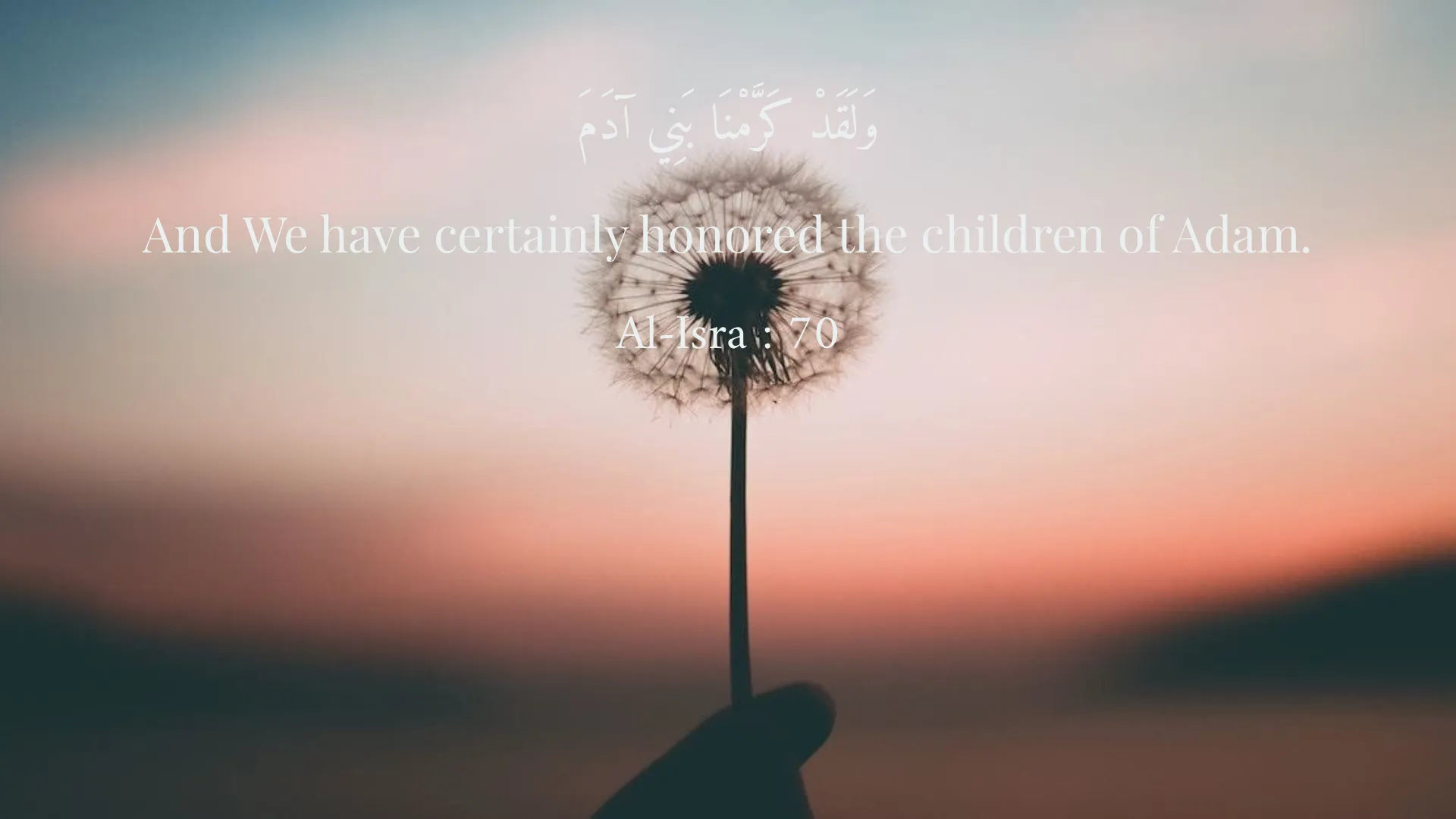
Respecting oneself is a profound and critical theme that is emphasized in the teachings of the Quran, the holy book of Islam. The notion of self-respect is not simply an attitude towards oneself; it is also a reflection of the value that Allah, the creator of the universe, places on human life. From various Quranic verses, it becomes evident that every human being is endowed with immense worth and dignity. This article will explore the significance of self-respect as articulated in the Quran, its implications for our lives, and ways we can embody this respect in our daily practices. To begin our exploration, we need to delve into the foundational verses of the Quran that highlight the honor bestowed upon humanity. The Quran states that Allah has created human beings from the best of His creations. This concept is deeply rooted in the belief that each individual possesses a unique spark of divine creation, which propels us to understand that we are not mere beings without purpose. In Surah Al-Isra, verse 70, for instance, it is stated: ‘And We have certainly honored the children of Adam.’ This profound verse underlines the inherent greatness and worth of human life. It serves as a reminder that our existence is not trivial; rather, it holds significant value in the eyes of Allah. When individuals find themselves in moments of despair, feeling worthless, it is imperative to recall this powerful affirmation of honor. Allah’s acknowledgment of our worth should evoke a sense of self-respect and dignity, even when we face trials and tribulations. One practical method to counter feelings of inadequacy or worthlessness is through cultivating gratitude. Paying attention to the myriad of blessings bestowed upon us—from the simplest joys to life-altering gifts—can greatly enhance our perception of self-worth. Gratitude is a powerful practice that fortifies our self-respect, reminding us of the divine attention we receive and the inherent value we possess. Moreover, the Quran further emphasizes individual potential and capacity through additional verses. In Surah Al-Baqarah, verse 286, it articulates: ‘Allah does not burden a soul beyond that it can bear.’ This verse signifies that every human being is equipped with bespoke strengths and capabilities tailored perfectly for their challenges. It encourages self-acknowledgment and fostering an awareness of one’s unique abilities. Recognizing our strengths is crucial in respecting ourselves; it allows us to appreciate who we are and how we can contribute positively to the world. In moments of hardship, these verses become beacons of hope, guiding us to remember that we are favored by Allah. It encourages a mindset where our struggles are not seen as a reflection of our worth but rather as part of life’s journey where growth and learning occur. The Quran invites us to regard our trials as opportunities for personal development, reinforcing the notion that we are valued despite the difficulties we may encounter. Furthermore, self-respect in Islam is intertwined with the practice of engaging in good deeds and being of service to others. The act of giving back to the community and participating in actions that uplift others not only enhances our self-worth but also cultivates a nurturing environment for those around us. Engaging in charity, volunteering, or lending a helping hand to those in need fosters a sense of purpose and interconnectedness. It reinforces the idea that respect for oneself is closely linked to the respect and kindness offered to others, creating a ripple effect of positivity in society. When we position ourselves to assist others, we are not only acknowledging our own value but also reaffirming the worth of those we help. By lifting others, we elevate our own spirits and deepen our understanding of the importance of community and mutual respect. This practice, deeply embedded in the teachings of the Quran, urges us to create a supportive environment, where self-worth thrives as we uplift others. Moreover, the teachings of the Quran on self-respect extend to the idea of achieving balance in life. The pursuit of knowledge, the fulfillment of personal aspirations, and the maintenance of mental and spiritual health significantly contribute to self-respect. Engaging in continuous learning not only enhances our capabilities but also nurtures our self-identity. Islamic teachings encourage us to seek knowledge and wisdom, as they are fundamental to our growth as individuals. In this light, placing value on education and personal development becomes synonymous with enhancing our self-respect. In conclusion, respecting oneself is a paramount theme that emerges from the teachings of the Quran. The verses bring forth a powerful message: every individual is created with immense value and importance. Recognizing this divine honor should galvanize us to hold ourselves in high regard. In times of distress, turning to gratitude for our blessings, acknowledging our unique strengths, engaging in good deeds, and nurturing a supportive environment can all play a crucial role in bolstering our self-respect. As we embrace the teachings of the Quran, let us embody the principles of self-respect in our lives, helping ourselves and others in the process. By doing so, we align ourselves more closely with the divine purpose for which we were created, ultimately fostering a world where mutual respect and dignity thrive, guided by the light of our faith.
Related Verses
وَلَقَدْ كَرَّمْنَا بَنِي آدَمَ
And We have certainly honored the children of Adam.
Al-Isra : 70
لَا يُكَلِّفُ اللَّهُ نَفْسًا إِلَّا وُسْعَهَا
Allah does not burden a soul beyond that it can bear.
Al-Baqarah : 286
Short Story
Once upon a time, a young man named Amir felt worthless. He went to the market and met a wise old man sitting beside his shop. The old man said to Amir, 'A person is worth as much as they think they are. If you see yourself as insignificant, you will never realize the blessings of life.' With these words, Amir recalled the verses of the Quran and understood that he is a divine gift.