Quranic Answer
In moments of utter helplessness, when the world, despite its vastness, seems to shrink around us, and despair and anxiety become our only companions, the human heart instinctively yearns for a steadfast and eternal refuge. The Holy Quran, this book of guidance and light, clearly illuminates the path to seeking shelter in the Divine Being under such circumstances. Seeking refuge in God during times of helplessness is not merely an option, but the only true way to find tranquility and strength in the face of life's storms. This multifaceted process requires a profound understanding of our relationship with the Unique Creator. One of the most fundamental pillars of seeking refuge in God is "Tawakkul," which signifies absolute reliance on the Almighty in all affairs, but only after exerting all possible efforts and means. The Quran emphasizes this principle in numerous verses. For instance, in Surah At-Talaq, verse 3, it states: "وَ مَن یَتَوَكَّلْ عَلَی اللَّهِ فَهُوَ حَسْبُهُ" (And whoever relies upon Allah – He is sufficient for him). This verse assures us that whenever we sincerely and faithfully put our trust in Allah, He will be our sufficiency and support. True Tawakkul is not passive resignation or inaction; rather, it means striving diligently in the righteous path and then entrusting the outcomes to divine decree. When a person, at the peak of weakness and despair, severs all hope from creation and connects with the Creator, at that very moment, they have found the strongest point of connection with the Lord. In such a state, not only is the psychological burden lifted from one's shoulders, but Allah also brings about ease from unforeseen directions. It is this Tawakkul that grants human beings a power beyond material capabilities, making them resilient against adversities and calamities. The history of prophets and saints is replete with examples where, despite apparent helplessness, their absolute reliance on God saved them from perils; from Abraham's salvation from Nimrod's fire to Jonah's deliverance from the belly of the whale, all demonstrate the power of Tawakkul. This profound trust imbues the soul with an unshakeable inner peace, knowing that the most powerful entity in existence is your protector and provider. A second and crucially vital means of seeking refuge in God is "Du'a" (supplication) and prayer. Du'a is the essence of servitude and direct conversation with the Lord. In moments of helplessness, our need to be heard and to receive aid is felt more keenly than ever. Allah Himself promises in the Holy Quran that He will answer the prayers of His servants. In Surah Ghafir, verse 60, He says: "وَقَالَ رَبُّكُمُ ادْعُونِي أَسْتَجِبْ لَكُمْ" (And your Lord says, "Call upon Me; I will respond to you"). And in Surah Al-Baqarah, verse 186, it clearly states: "وَإِذَا سَأَلَكَ عِبَادِي عَنِّي فَإِنِّي قَرِيبٌ ۖ أُجِيبُ دَعْوَةَ الدَّاعِ إِذَا دَعَانِ" (And when My servants ask you, [O Muhammad], concerning Me - indeed I am near. I respond to the invocation of the supplicant when he calls upon Me). Du'a is not merely asking for needs; it is an expression of weakness and dependence on an infinite source of power and mercy. When a person humbly raises their hands in supplication, they feel that they are not alone and that a power greater than all powers supports them. This intimate connection brings unparalleled tranquility to the heart and keeps hope alive. Sometimes the answer to a du'a may not be in the form we expect, but it always contains what is best for us, whether it is an immediate response, a reward saved for the Hereafter, or the warding off of a calamity. The very act of vocalizing our fears and hopes to Allah brings a sense of release and comfort, reminding us that there is always someone listening, someone capable of solving our greatest problems. "Sabr" (patience) and "Salat" (prayer) are also two powerful tools for seeking refuge in God. In Surah Al-Baqarah, verse 153, we read: "يَا أَيُّهَا الَّذِينَ آمَنُوا اسْتَعِينُوا بِالصَّبْرِ وَالصَّلَاةِ ۚ إِنَّ اللَّهَ مَعَ الصَّابِرِينَ" (O you who have believed, seek help through patience and prayer. Indeed, Allah is with the patient). Sabr means steadfastness in the face of difficulties, self-control during hardships, and perseverance in worship. When we find ourselves in helplessness, patience helps us confront the situation with greater calm and avoid hasty or incorrect decisions. Salat, too, is the pillar of religion and the ascension of the believer. During prayer, a person, free from worldly attachments, turns their entire being towards God. These moments are the peak of spiritual connection, where one can entrust all worries to Allah and be quenched from His fountain of grace. Prayer not only soothes the body and soul but also provides a source of spiritual energy that empowers one to continue on their path. Renewing ablution, performing daily prayers, and especially voluntary and night prayers, each opens a window to divine serenity. It is in the prostration (Sujud) that one feels closest to Allah, laying bare their vulnerabilities and finding strength in absolute submission. "Dhikr" (remembrance of Allah) also plays a central role in overcoming helplessness and finding peace. The Holy Quran states: "الَّذِينَ آمَنُوا وَتَطْمَئِنُّ قُلُوبُهُم بِذِكْرِ اللَّهِ ۗ أَلَا بِذِكْرِ اللَّهِ تَطْمَئِنُّ الْقُلُوبُ" (Those who have believed and whose hearts are assured by the remembrance of Allah. Unquestionably, by the remembrance of Allah hearts are assured). (Surah Ar-Ra'd, verse 28). In times of anxiety and desperation, repeating divine remembrance phrases such as "La hawla wa la quwwata illa billah" (There is no might or power except with Allah), "Hasbunallah wa ni'mal wakeel" (Allah is sufficient for us, and He is the best Disposer of affairs), or simply the names "Ya Allah," "Ya Rahman," "Ya Rahim" can soothe a troubled heart and strengthen the sense of divine presence and support. Dhikr is a continuous practice to maintain conscious connection with God, even amidst daily preoccupations. This constant reminder that Allah is present, observing, and all-powerful, assures a person that they are never alone under any circumstances. It shifts one's focus from the overwhelming nature of worldly problems to the infinite power and wisdom of the Creator. For effective refuge in God during helplessness, several practical steps are also essential: 1. Return to the Quran: Reading and reflecting on the verses of the Quran, especially those that speak of Tawakkul, Sabr, Du'a, and divine mercy, calm the heart and show the right path. 2. Istighfar (Seeking Forgiveness) and Tawbah (Repentance): Acknowledging mistakes and seeking forgiveness from Allah removes the veils between the servant and the Creator, opening the way for divine mercy. The feeling of guilt itself can be a source of helplessness, which is removed through sincere repentance. 3. Performing Good Deeds and Sadaqa (Charity): Helping others and giving charity not only earns rewards but also resolves difficulties and averts calamities. When we help others, Allah helps us. 4. Husn al-Dhann billah (Having good assumptions about Allah): Believing that Allah intends nothing but good for His servant, even if the outward appearance of an event is unpleasant. This good assumption is the key to inner peace and contentment. Ultimately, seeking refuge in God in times of helplessness is a deeply personal and spiritual experience that encompasses a range of heartfelt and outward actions. It signifies complete submission to the divine will, while also striving and struggling in the path of truth. When a person reaches this level of Tawakkul and submission, they not only find liberation from helplessness but also connect to an infinite source of peace, power, and hope that no storm can shake. It is here that the feeling of helplessness itself transforms into a gateway to the secure sanctuary of Allah, where the only true refuge for humanity lies. The deeper the relationship with God, the greater the sense of inner security and tranquility will be.
Related Verses
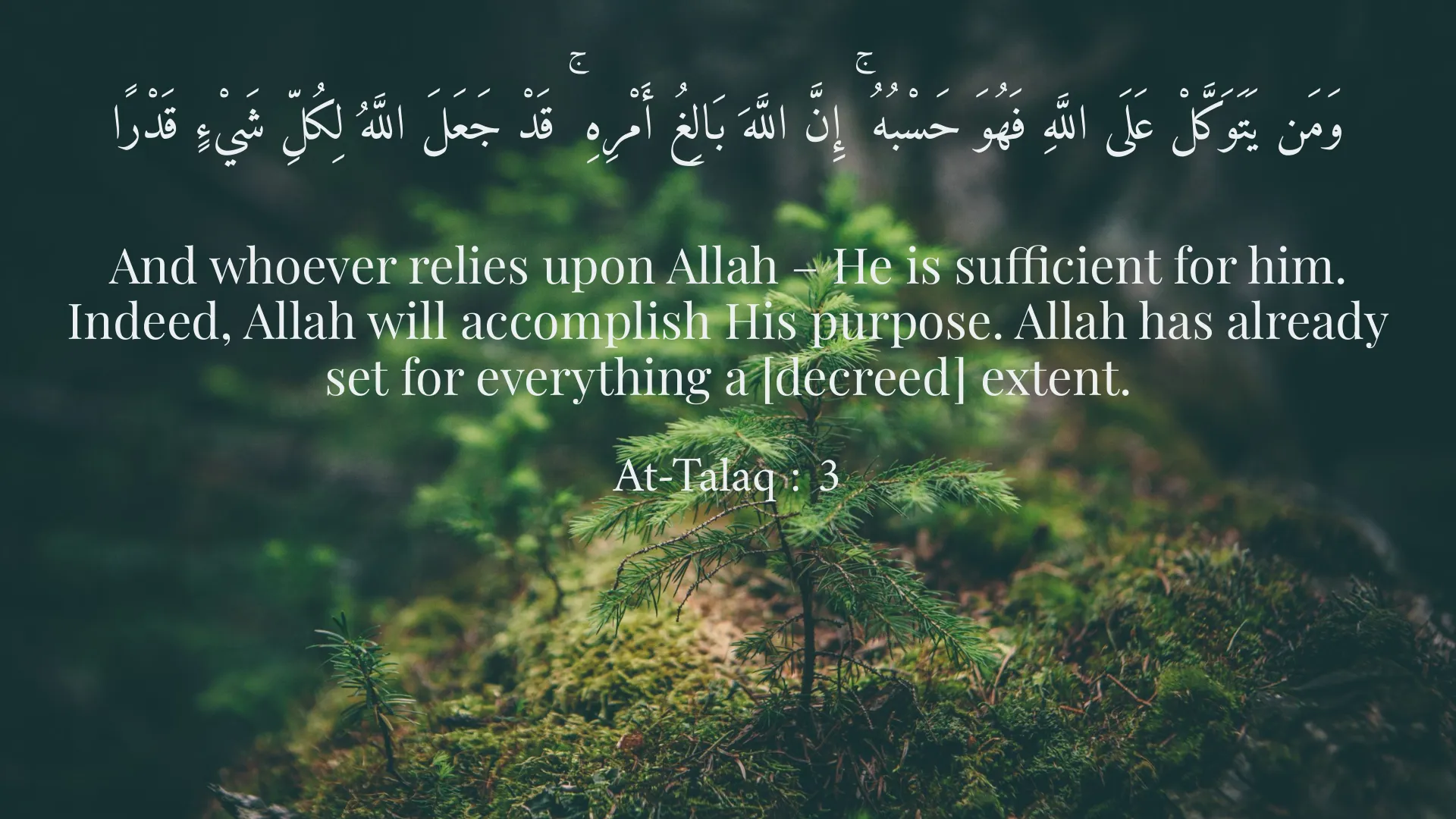
وَمَن يَتَوَكَّلْ عَلَى اللَّهِ فَهُوَ حَسْبُهُ ۚ إِنَّ اللَّهَ بَالِغُ أَمْرِهِ ۚ قَدْ جَعَلَ اللَّهُ لِكُلِّ شَيْءٍ قَدْرًا
And whoever relies upon Allah – He is sufficient for him. Indeed, Allah will accomplish His purpose. Allah has already set for everything a [decreed] extent.
At-Talaq : 3
وَإِذَا سَأَلَكَ عِبَادِي عَنِّي فَإِنِّي قَرِيبٌ ۖ أُجِيبُ دَعْوَةَ الدَّاعِ إِذَا دَعَانِ ۖ فَلْيَسْتَجِيبُوا لِي وَلْيُؤْمِنُوا بِي لَعَلَّهُمْ يَرْشُدُونَ
And when My servants ask you, [O Muhammad], concerning Me - indeed I am near. I respond to the invocation of the supplicant when he calls upon Me. So let them respond to Me [by obedience] and believe in Me that they may be [rightly] guided.
Al-Baqarah : 186
الَّذِينَ آمَنُوا وَتَطْمَئِنُّ قُلُوبُهُم بِذِكْرِ اللَّهِ ۗ أَلَا بِذِكْرِ اللَّهِ تَطْمَئِنُّ الْقُلُوبُ
Those who have believed and whose hearts are assured by the remembrance of Allah. Unquestionably, by the remembrance of Allah hearts are assured.
Ar-Ra'd : 28
Short Story
It is narrated that a wealthy merchant lost his entire fortune in a shipwreck and became utterly destitute and helpless. He sat by the shore, immersed in despair, when a wise dervish passed by. The dervish asked with a gentle smile, 'What troubles you so, my son?' The merchant, sighing, recounted his misfortune, lamenting his helplessness. The dervish calmly replied, 'My friend, when the waves of the sea take from you, turn your gaze to the vastness of the heavens. He who controls the sea also controls your heart. Place your trust in Him, for He is the ultimate refuge. Perhaps this loss is a purification, and a new door will open from where you least expect.' The merchant was moved by these words, lifted his head, made supplication, and felt a quiet strength return to his heart. Soon after, a hidden opportunity emerged for him, and he found peace, realizing that true wealth lies not in possessions, but in reliance on the Creator.