Quranic Answer
In the Holy Quran, Allah provides believers with various illuminating ways to counter the temptations and trials that life presents. The importance of understanding these teachings cannot be overstated, especially in a world where distractions and challenges abound. The Quran not only emphasizes the significance of faith in Allah but also offers practical guidance for navigating the complexities of existence. This article delves into several key verses, encapsulating the wisdom contained within them and demonstrating how these teachings are relevant to contemporary life. One of the foundational teachings found in Surah Al-Baqarah, verse 268, presents a profound understanding of the spiritual warfare that believers face. Allah asserts, "Satan is a threat to humanity; they must follow His advice." This verse underscores the notion that the constant presence of temptation in one's life is an inherent struggle for everyone. Recognition of this struggle is crucial, as it steers a person towards vigilance and prayer. Acknowledging that Satan is always present, inciting doubts and leading to sin, encourages believers to remain steadfast in their faith. In our daily lives, this might translate to adopting a mindful approach—being aware of the influences that tend to divert attention from the divine path. It implies that in moments of temptation, believers should anchor their thoughts and actions with the teachings of the Quran, always seeking Allah’s guidance. Another significant verse, found in Surah Aal-E-Imran, verse 179, delivers a poignant reminder: "And never think that those who disbelieve are able to escape in the land. Their refuge will be the Fire; and wretched is the destination." This verse highlights the dire consequences of straying from God's path. While it serves as a warning for non-believers, it simultaneously functions as a reminder for believers to remain steadfast in their faith. Particularly in times of trial, when doubts might arise, the assurance that divine justice prevails provides comfort and clarity. The worldly injustices and sorrows observed throughout one's life can be disheartening; however, faith in Allah's ultimate justice offers solace. This belief that no one can escape the consequences of their actions fosters a sense of responsibility among believers, motivating them to continually strive for righteousness. The Quran also repeatedly emphasizes the necessity of piety and patience in the face of temptations. Surah Al-Mu’minun, verse 96 declares, "Repel by that which is best the evil deed." This directive encourages believers to respond to malevolence with goodness. In our daily interactions, this teaching holds significant weight. Responding to hostility, disrespect, or negativity with kindness not only elevates one’s character but also serves as a profound statement of faith. Such actions embody the essence of Islamic teachings, transforming potentially harmful situations into opportunities for growth and understanding. In practical terms, implementing this principle might involve using compassionate words during an argument or lending a helping hand instead of responding to an unkind gesture with bitterness. By embracing this approach, we cultivate an environment that not only protects ourselves from negativity but also influences those around us positively. Moreover, Surah Al-Anfal, verse 53 brings further clarity, stating, "That is because they are a people who do not deal justly." This verse illustrates the paramount importance of justice and fairness. When individuals fail to adhere to these principles, they expose themselves to temptations and misguidance. Justice is a cornerstone of Islamic ethics, and indulging in unfair practices leads to further moral decline. This verse serves as a reminder for one to engage in introspection and continuously evaluate one’s relationships and dealings in all aspects of life—whether personal, professional, or communal. Upholding principles of equity contributes not only to personal integrity but to the collective well-being of society. Additionally, the Quran teaches that maintaining a strong connection with Allah and adhering to His commands is crucial in shielding oneself from the allure of temptations. This connection is fostered through acts of worship such as prayer, reading the Quran, and engaging in community service. The daily prayers serve as a reminder of Allah’s presence, reinforcing faith and offering believers a brief respite from worldly distractions. Additionally, the Quran serves as a guide to navigate challenges, providing not only comfort but also a roadmap for a fulfilling life. Strengthening faith and nurturing this divine connection yields various rewards. Believers often experience inner peace and fulfillment from adhering to the path laid out by Allah. Engaging regularly with the Quran, studying its verses, and reflecting on its meanings can enhance one’s understanding of life’s challenges while illuminating the way forward. In tumultuous times, it serves as a beacon of hope and guidance, reminding believers of the eternal truths that govern existence. Moreover, the act of surrounding oneself with a supportive community can play a crucial role in affirming faith and deterring muzzles to temptation. Engaging with individuals who share similar values encourages accountability and mutual growth. This, coupled with the principles outlined in the Quran, fosters resilience in the face of trials. In conclusion, the teachings within the Quran offer a profound framework for navigating life's trials and temptations. By understanding the persistent threat posed by Satan, recognizing the importance of justice, and adhering to principles of patience and goodness, believers can find protection from negative influences. The Quran serves as both a guide and a refuge, reminding us that faith, character, patience, and connection with the divine are vital components in navigating through life's complexities. Thus, the path to overcoming temptation is not merely about recognizing evil but responding to it with goodness, nurtured by a strong faith in Allah and the teachings of the Holy Quran.
Related Verses
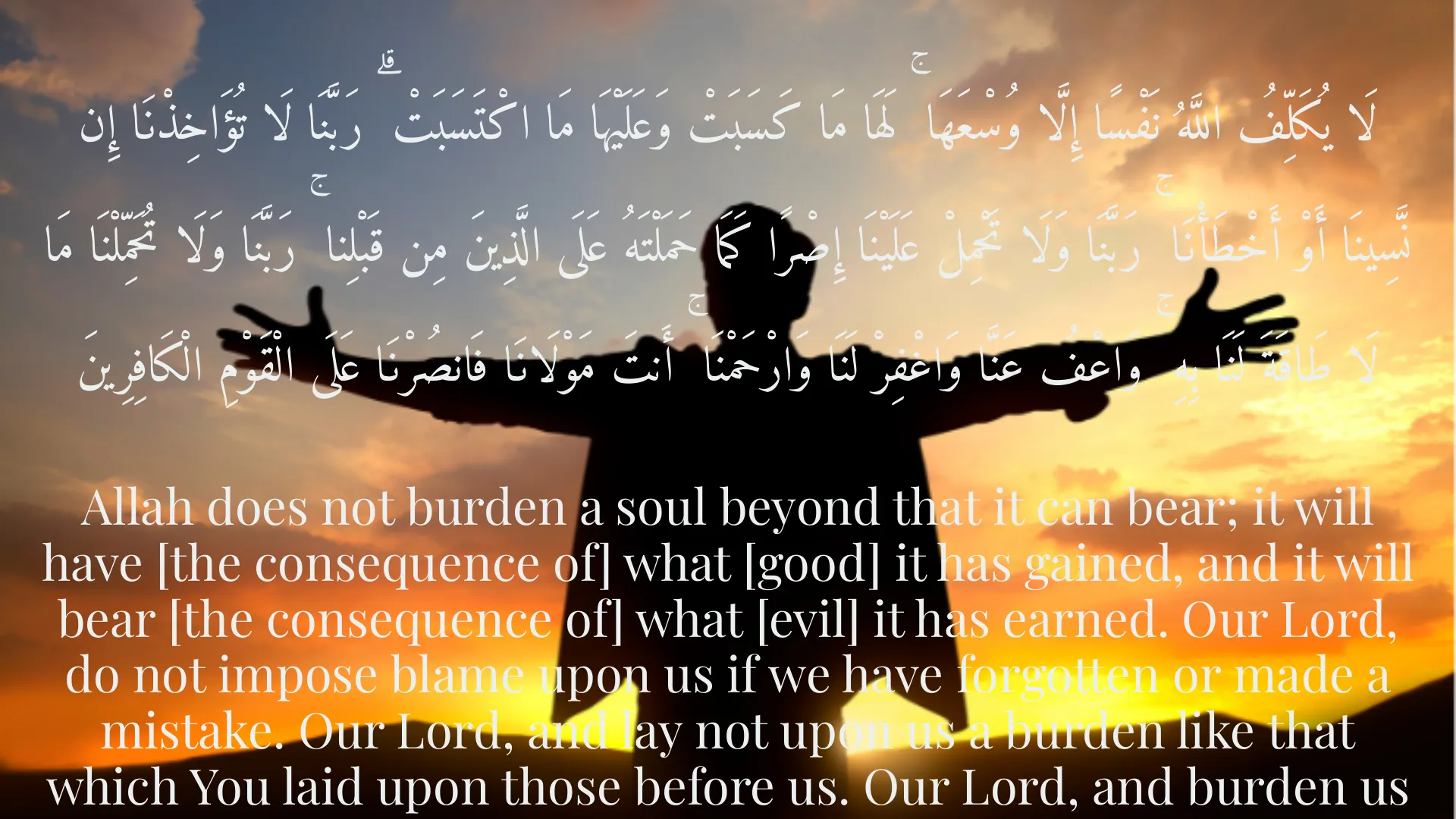
لَا يُكَلِّفُ اللَّهُ نَفْسًا إِلَّا وُسْعَهَا ۚ لَهَا مَا كَسَبَتْ وَعَلَيْهَا مَا اكْتَسَبَتْ ۗ رَبَّنَا لَا تُؤَاخِذْنَا إِن نَّسِينَا أَوْ أَخْطَأْنَا ۚ رَبَّنَا وَلَا تَحْمِلْ عَلَيْنَا إِصْرًا كَمَا حَمَلْتَهُ عَلَى الَّذِينَ مِن قَبْلِنا ۚ رَبَّنَا وَلَا تُحَمِّلْنَا مَا لَا طَاقَةَ لَنَا بِهِ ۚ وَاعْفُ عَنَّا وَاغْفِرْ لَنَا وَارْحَمْنَا ۚ أَنتَ مَوْلَانَا فَانصُرْنَا عَلَى الْقَوْمِ الْكَافِرِينَ
Allah does not burden a soul beyond that it can bear; it will have [the consequence of] what [good] it has gained, and it will bear [the consequence of] what [evil] it has earned. Our Lord, do not impose blame upon us if we have forgotten or made a mistake. Our Lord, and lay not upon us a burden like that which You laid upon those before us. Our Lord, and burden us not with that which we have no ability to bear. And pardon us; and forgive us; and have mercy upon us. You are our protector, so give us victory over the disbelieving people.
Al-Baqarah : 268
وَلا تَحْسَبَنَّ الَّذِينَ كَفَرُوا مُعَجِّزِينَ فِي الْأَرْضِ ۚ وَمَأْوَاهُمْ النَّارُ ۖ وَبِئْسَ الْمَصِيرُ
And never think that those who disbelieve are able to escape in the land. Their refuge will be the Fire; and wretched is the destination.
Aal-E-Imran : 179
فَادْفَعْ بِالَّتِي هِيَ أَحْسَنُ السَّيِّئَةَ ۖ نَحْنُ أَعْلَمُ بِمَا يَصِفُونَ
Repel by that which is best the evil deed. We know best what they describe.
Al-Mu’minun : 96
Short Story
One day, a righteous man lived in a city. He always said, 'I follow the inspirations I receive from the verses of the Quran to stay away from temptations.' One day when he went to the market, a man invited him to drink alcohol. The righteous man, recalling the verses of the Lord, turned away and continued to think about God and seek goodness. In this way, he not only kept himself away from temptation, but also showed others how much beauty and wisdom there is in following God's paths.