Quranic Answer
Gratitude is one of the most important qualities emphasized in Islam, particularly in the verses of the Quran. It is a divine principle that not only strengthens the spirit of an individual but also enhances peace and contentment in life. Cultivating a sense of gratitude can transform a person's outlook and overall well-being. This article will explore various aspects of gratitude in the Islamic context and how individuals can effectively cultivate and practice this noble trait in their daily lives. The first and foremost step in nurturing gratitude is to remind ourselves of God's countless blessings. The Quran, in Surah Ibrahim (14:7), clearly states, 'And [remember] when your Lord proclaimed: If you give thanks [by accepting faith and worship], I will give you more of My bounty.' This verse emphasizes that gratitude results in an increase in blessings and favors from Allah. Thus, it is imperative for individuals to take moments each day to reflect on the myriad blessings they possess: a supportive family, good health, and the various advantages that life has offered. Recognizing and acknowledging these divine gifts can significantly enhance one's appreciation for life. Many people tend to take their blessings for granted, but taking the time to reflect on them can lead to a profound transformation in mindset. People can start a gratitude journal where they jot down things they are thankful for every day. This practice can improve mental well-being by focusing on positive aspects while also serving as a reminder of the goodness in one’s life. Another vital method for nurturing the sense of gratitude is through acts of worship and prayer. Surah An-Nahl (16:18) of the Quran proclaims, 'And if you try to count the favors of Allah, you will never be able to enumerate them.' This highlights the abundance and infinity of God’s blessings, reminding us to remain humble and appreciative. Through prayer, supplication, and devotion, individuals attain a greater closeness to Allah, enabling them to express their gratitude more sincerely. Emphasizing the importance of prayer not only nurtures an individual’s connection with God but also allows for the opportunity to express thanks at various points during the day. When individuals dedicate specific times for prayer oriented toward gratitude, they become more aware of their surroundings and can acknowledge the ongoing blessings God provides. By reinforcing devotional acts, believers cultivate a culture of thankfulness that permeates all aspects of their lives. Moreover, expressing gratitude towards others is another crucial aspect of fostering a grateful mindset. When we acknowledge the efforts of those around us and show appreciation for their contributions and kindness, we strengthen our own sense of gratitude. Simple expressions of thanks can go a long way in enhancing interpersonal relationships, creating a positive atmosphere in both personal and social settings. For instance, saying thank you to a family member for their support, recognizing a friend's efforts in helping out during trying times, or showing appreciation to colleagues for their teamwork can significantly affect one's emotional state and elevate feelings of gratitude. By making it a habit to express thanks, we bolster our capacity for kindness, understanding, and empathy, enriching the social fabric upon which we rely. In addition to interpersonal relationships, practicing gratitude can lead to a profound shift in perspective. Individuals who consciously cultivate gratitude often report higher levels of happiness and decreased feelings of depression and anxiety. Research has shown that regularly practicing gratitude can improve mental health outcomes, resulting in greater resilience against life's challenges. Furthermore, gratitude can stimulate a positive feedback loop. When one practices gratitude by recognizing the good, it often encourages a mindset that is more resilient and capable of seeing possibilities in adverse situations. This, in turn, leads to greater acts of kindness and appreciation for others, sustaining a cycle of positivity and goodwill in a community. In summary, leading a life filled with gratitude not only serves to enhance personal well-being but also fosters positive change in the lives of others. Islam teaches that living with a grateful heart has spiritual, emotional, and social benefits. By reflecting upon and acknowledging the blessings bestowed upon us, engaging in prayer and worship, establishing positive social norms of expressing gratitude, and nurturing a mindset geared toward appreciation, individuals can significantly improve their quality of life. Ultimately, embracing gratitude leads to greater fulfillment, peace, and an enriched existence—an outcome that aligns beautifully with the Islamic principle of living a life filled with thankfulness and appreciation for all of God's mercies.
Related Verses
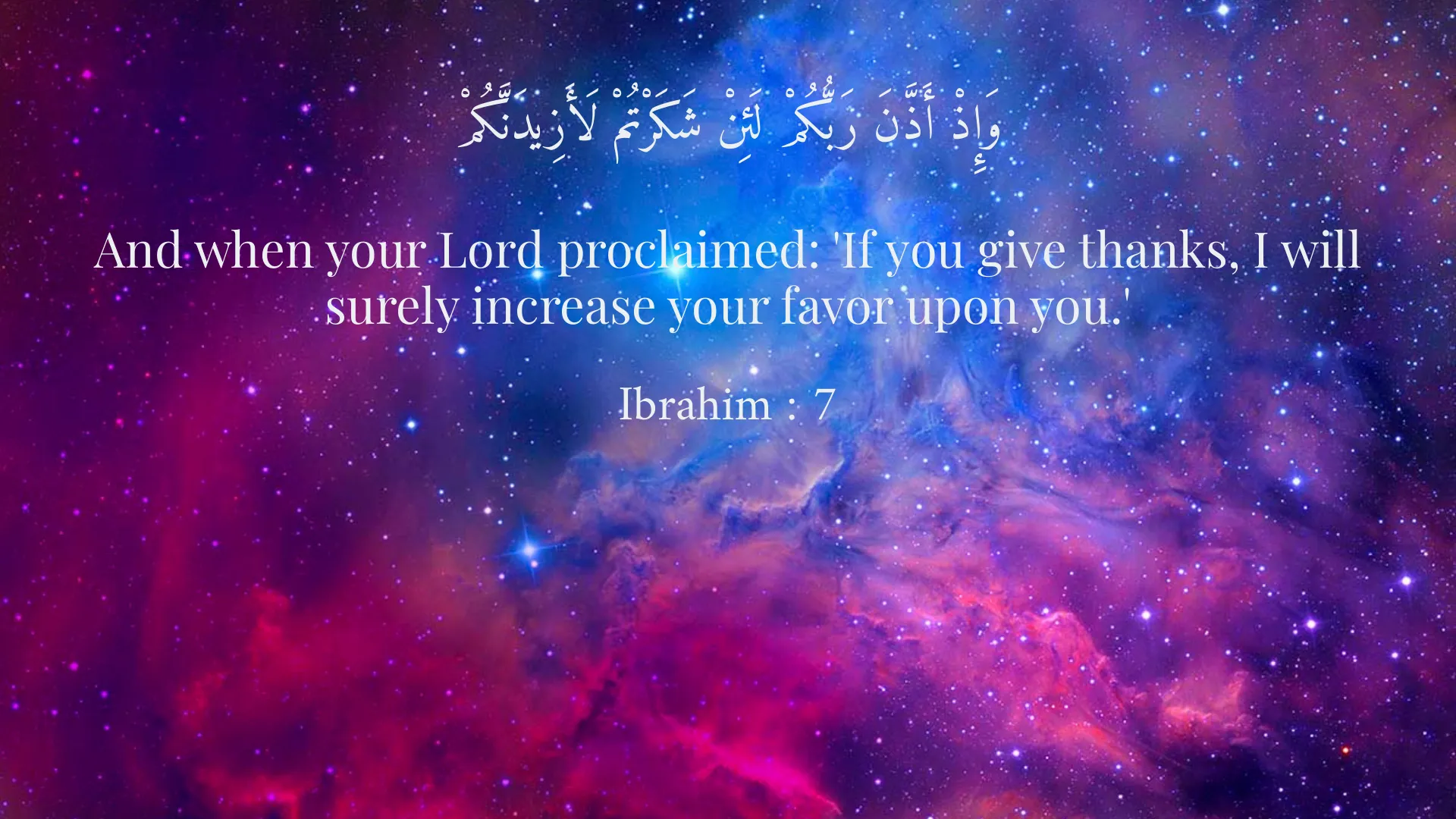
وَإِذْ أَذَّنَ رَبُّكُمْ لَئِنْ شَكَرْتُمْ لَأَزِيدَنَّكُمْ
And when your Lord proclaimed: 'If you give thanks, I will surely increase your favor upon you.'
Ibrahim : 7
وَإِن تَعُدُّوا نِعْمَةَ اللَّهِ لَا تُحْصُوهَا
And if you should count the favors of Allah, you could not enumerate them.
An-Nahl : 18
Short Story
One day, in a beautiful garden, a girl named Nada was looking at the flowers and was amazed by their beauty. She remembered that her mother always reminded her to keep the sense of gratitude in her heart. Nada decided to carry a notebook and write down everything she was thankful for. She thanked for health, her friends, and even the rain that nourished the earth. Gradually, her sense of gratitude grew day by day, and she began to see her life filled with beauty and happiness.