Quranic Answer
True gratitude for blessings in Islam is not merely confined to uttering "Alhamdulillah" or verbal expressions of thanks; rather, it encompasses far broader and deeper dimensions that involve the heart, tongue, and actions. Indeed, true gratitude (Shukr) is a comprehensive and continuous state that connects a person with the Giver of blessings in every moment of life. The Holy Quran consistently calls upon humanity to reflect on the countless divine blessings and to fulfill their right of gratitude, considering it one of the signs of true faith and servitude. Understanding that the entire existence, from the smallest particles to the largest galaxies, all are blessings from Allah, is the first step on the path of true gratitude. 1. The first pillar of true gratitude is acknowledgment and heartfelt recognition of the source of the blessings. This means we must believe with all our being that everything we possess – from health and well-being to family, friends, sustenance, intelligence, talents, security, peace, and even the ability to breathe – are all unconditional gifts from Almighty Allah. This recognition prevents a person from arrogance and self-conceit and leads them to humility before divine greatness. The Holy Quran states in Surah An-Nahl, verse 53: "And whatever blessing you have - it is from Allah." This foundational verse reminds us that there is no blessing except that its origin is Allah. Reflecting on this reality awakens the heart from heedlessness and guides it towards the praise and glorification of the Lord. For example, when we wake up in the morning and have the ability to see, hear, walk, and think, we should pause for a moment and consider that these abilities are gifts from God that could be taken away at any moment. This heartfelt recognition is the foundation for all subsequent forms of gratitude. 2. The second dimension of true gratitude is its verbal expression. After heartfelt recognition, it is time to express this gratitude with the tongue. Uttering "Alhamdulillah" (all praise is due to Allah) in every situation is one of the best and most comprehensive forms of verbal gratitude. This phrase is not only an acknowledgment of the blessing but also an admission of Allah's absolute Lordship and ownership over the universe and everything within it. In fact, "Alhamdulillah" itself encompasses complete and perfect gratitude. Furthermore, remembrance (Dhikr) and glorification of Allah, reciting supplications of gratitude, and speaking about divine blessings to others (to encourage gratitude and remind of divine power) are also considered forms of verbal gratitude. The Prophet Muhammad (peace be upon him) always said "Alhamdulillah" in various situations, from joy to hardship, indicating that gratitude should not be limited to times of comfort. Indeed, even in patience during trials and difficulties, gratitude is rewarded, for behind every hardship lies wisdom and good that only Allah knows. 3. The most important and complete form of true gratitude is practical gratitude (gratitude through action). This aspect of gratitude is the essence of our discussion and means using blessings correctly and appropriately in the way that Allah has intended for them. In other words, every blessing Allah has bestowed upon us comes with a specific purpose and a responsibility. Practical gratitude means utilizing blessings in the path of obedience to Allah and service to His creation. For instance, if Allah has granted you "health," true gratitude is to use this health in His worship, helping the needy, lawful work and effort, and acquiring knowledge, not in sin or harming yourself and others. If you have "wealth," its gratitude lies in spending it for good, helping orphans and the poor, giving in charity for Allah's sake, and avoiding extravagance and waste. The Holy Quran states in Surah Saba, verse 13: "Work, O family of David, in gratitude. And few of My servants are grateful." This verse clearly indicates that true gratitude is active and that the number of those who reach this stage is few. This implies that many only offer verbal thanks but do not practically utilize blessings as they should. If Allah has bestowed upon you "knowledge," its gratitude lies in teaching others, spreading truths, guiding the misguided, and using it for the betterment of humanity, not for deception and abuse. If you possess "power and social status," its gratitude is in establishing justice, supporting the oppressed, and reforming society. Even the blessing of "time" requires practical gratitude; its gratitude is making optimal use of life's moments in pursuit of divine pleasure, acquiring perfections, and performing beneficial deeds, not spending it in idleness and futility. This level of gratitude demonstrates the depth of one's faith and understanding of responsibility towards divine blessings. Practical gratitude is a form of investment for the future; for with every act of gratitude, we sow seeds of goodness and blessings in our lives and the lives of others. Furthermore, the benefits of true gratitude are countless. Among the most important is the divine promise of increasing blessings. In Surah Ibrahim, verse 7, we read: "And [remember] when your Lord proclaimed, 'If you are grateful, I will surely increase you [in favor]; but if you deny, indeed, My punishment is severe.'" This verse states a divine law: gratitude leads to an increase, and ingratitude (kufr) leads to a decrease and loss of blessings. Additionally, true gratitude brings peace of heart, inner contentment, and strengthens one's relationship with Allah. A grateful person is always optimistic and will be more patient in the face of challenges, knowing that everything from Allah is good and wise. This spiritual state keeps a person away from regret, impatience, and ingratitude, and fills them with hope and joy. Ultimately, true gratitude for blessings is a continuous journey and a way of life. This means that a believing person, at every moment and in every state, recognizes divine blessings, mentions them with the tongue, and practically utilizes them in a way that pleases the Lord. These three dimensions (heartfelt, verbal, practical) are inseparable, and each complements the other. The further we progress on this path, not only will we experience more blessings, but we will also draw closer to divine pleasure and proximity to Allah, leading a more fulfilling life in both this world and the hereafter.
Related Verses
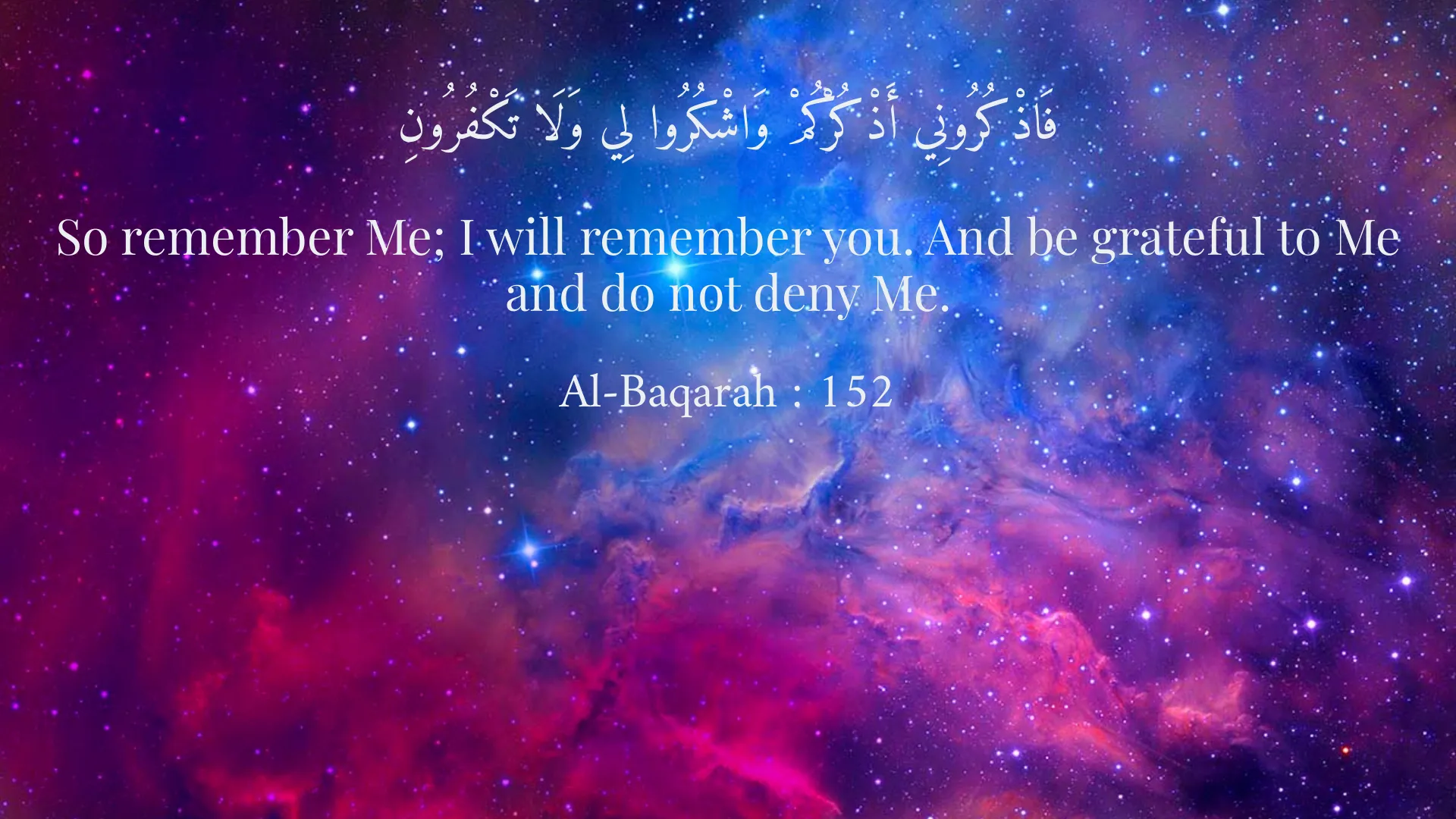
فَاذْكُرُونِي أَذْكُرْكُمْ وَاشْكُرُوا لِي وَلَا تَكْفُرُونِ
So remember Me; I will remember you. And be grateful to Me and do not deny Me.
Al-Baqarah : 152
وَإِذْ تَأَذَّنَ رَبُّكُمْ لَئِن شَكَرْتُمْ لَأَزِيدَنَّكُمْ ۖ وَلَئِن كَفَرْتُمْ إِنَّ عَذَابِي لَشَدِيدٌ
And [remember] when your Lord proclaimed, 'If you are grateful, I will surely increase you [in favor]; but if you deny, indeed, My punishment is severe.'
Ibrahim : 7
اعْمَلُوا آلَ دَاوُودَ شُكْرًا ۚ وَقَلِيلٌ مِّنْ عِبَادِيَ الشَّكُورُ
Work, O family of David, in gratitude. And few of My servants are grateful.
Saba : 13
Short Story
It is narrated that in ancient times, a pious and content man lived by a small well that had little water. One day, a thirsty dervish passed by and asked for a drink. The pious man, with an open face and a kind heart, gave the dervish the water he had. After drinking, the dervish made a supplication for him and said, "Your well shall become a spring of blessings, if you know the true value of this favor." The pious man took the dervish's words to heart. He used the well's water not to accumulate wealth, but to quench the thirst of weary travelers and to irrigate young trees in the dry desert. With every bucket of water he drew from the well, he said 'Alhamdulillah' and used this divine gift in the best possible way. It was not long before his well overflowed, and abundant, sweet water flowed from it. People from all directions came to his well for drinking and irrigation, and it became a bountiful spring and a center of prosperity. The pious man never forgot where this blessing came from, and he always generously shared his water with others, and his good deed multiplied his blessings and immortalized his good name. For he showed gratitude not only with his tongue but also with his actions, bringing ease to God's creation.