Quranic Answer
Raising children in Islam is a profound responsibility that is rooted in the teachings of the Holy Quran. Islamic teachings emphasize the importance of nurturing children not only as an obligation but as a means to ensure a bright future for society. This article explores the principles highlighted in the Quran concerning child upbringing, illustrating how these teachings shape not only individual character but also community values. The Quran explicitly addresses the significance of parental roles in shaping the ethics, morals, and overall character of children, turning the family unit into a foundation of society. In Islam, raising children is viewed as a direct implication of worshiping God. Parents are encouraged to embody and teach the principles of Islam that correspond with divine guidance. One of the essential aspects of this guidance is evident in Surah Luqman, verses 13 to 17, which recount the advice of Luqman, a wise figure, to his son. Luqman's counsel to worship Allah exclusively and to treat others with kindness encapsulates the essence of Islamic teachings on morality. This is crucial for parents, as they are expected to guide their children towards embedding such values in their daily lives. The significance of teaching children good behavior and instilling in them the importance of Islamic values cannot be overemphasized. This process begins with parents exhibiting good morals themselves. Children are known to emulate their parents, and therefore, parents must serve as role models. The teachings captured in Surah Luqman encourage parents to communicate effectively with their children, fostering understanding and a respectful relationship. Communication is pivotal as it allows for the transfer of values, beliefs, and essential life skills needed to navigate the world. Moreover, the Quran advises parents to make a habit of praying for their children's success and guidance. Surah Ibrahim, verse 31, indicates the obligation of parents to consistently seek divine assistance in their children’s lives. This not only reinforces the dependence on God but also creates an environment where children learn the importance of prayer and reliance on Allah. The regular practice of prayer encapsulates a spiritual connection that can shield children from the challenges and adversities of life. The teachings of the Quran also include moral guidelines that are fundamental for instilling proper conduct in children. Characteristics such as honesty, respect for elders, and care for the rights of others are foundational elements advocated in Islamic teachings. Instilling these morals in children at an early age leads to them becoming responsible adults who contribute positively to society. Through consistent reminders and practical examples, children can learn to practice these values in their interactions with one another and the world around them. Education plays a crucial role in raising children in Islam; it is not limited to formal schooling but extends to moral and spiritual education. Parents are encouraged to educate their children about the Quran, instilling a love for learning and a quest for knowledge. The Prophet Muhammad (PBUH) said that seeking knowledge is an obligation upon every Muslim, therefore, it is important for parents to nurture curiosity and a passion for learning within their children. When children grow up with a strong knowledge base, they are better equipped to make informed decisions and stand firm in their faith amidst societal challenges. The family unit in Islam serves as the initial training ground for children, a sanctuary of learning, acceptance, and understanding. The stability of family life is crucial for a child's emotional and psychological development. In this context, the Quran encourages parents to create a harmonious household where love, respect, and compassion reign. In doing so, children learn the importance of strong family ties and develop emotional intelligence which is vital in nurturing their relationships as they grow older. Furthermore, social responsibility directed towards the community also emerges from the teachings within the Quran. Parents are encouraged to instill a sense of belonging and service in their children. Verses emphasizing charity, compassion, and support for those in need cultivate a predisposition towards social welfare, encouraging children to contribute toward building a just society. This feeling of responsibility toward others not only fosters a sense of community but also reinforces the understanding that one's actions can impact those around them, instilling a sense of shared humanity. In conclusion, the upbringing of children in Islam is accorded high significance within the teachings of the Holy Quran. Raising children according to Quranic principles establishes a solid foundation based on faith, ethics, and moral behavior. From instilling a love for Allah to emphasizing the importance of social responsibility, every aspect of child upbringing is intricately tied to the teachings found in the Quran. Parents are presented with both a duty and a blessing: to nurture the next generation, guiding them towards leading a life that aligns with Islamic values. Embracing these teachings leads not only to raising moral and well-rounded individuals but also contributes to the cultivation of a virtuous society, bound by love, compassion, and mutual respect.
Related Verses
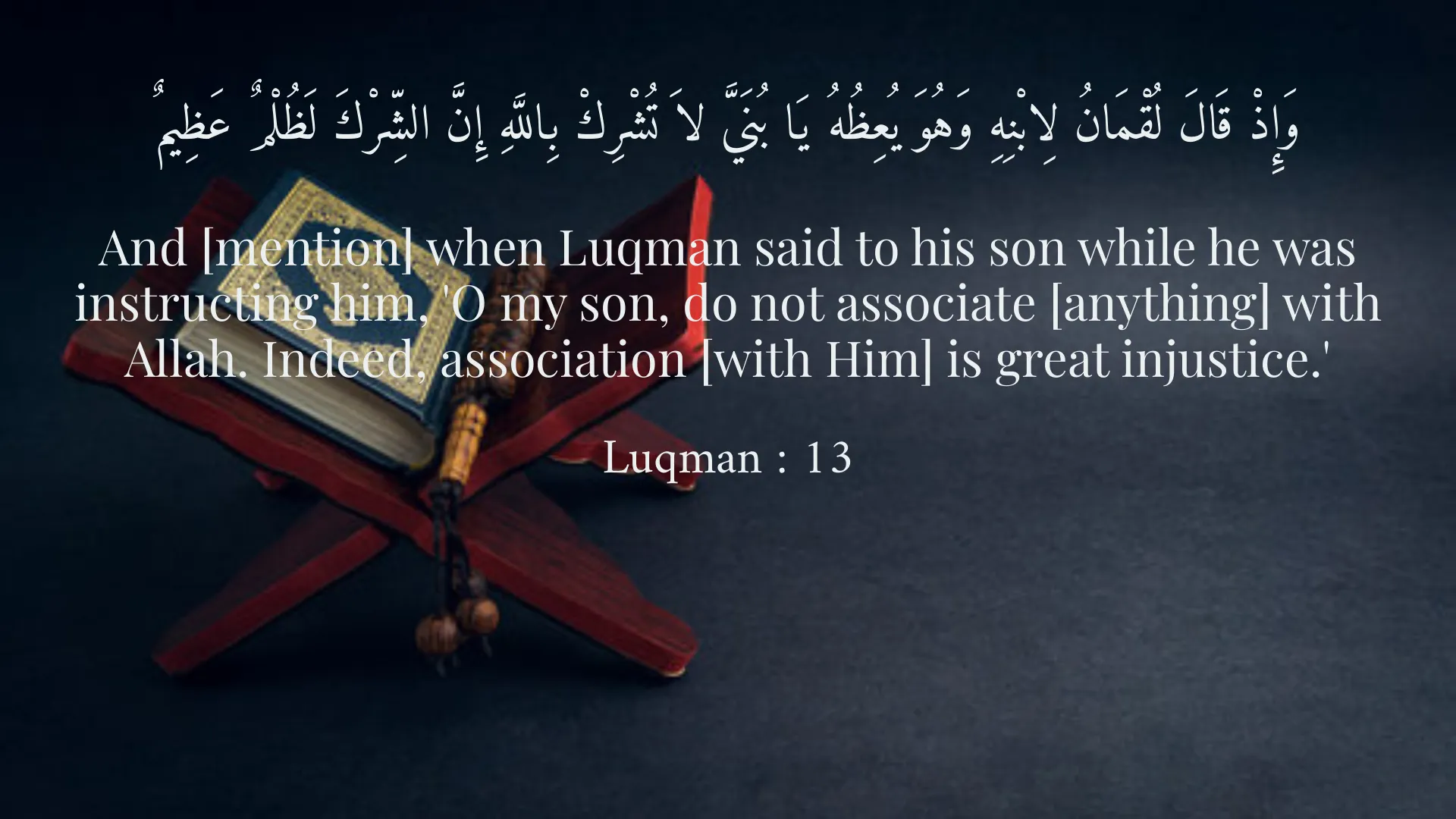
وَإِذْ قَالَ لُقْمَانُ لِابْنِهِ وَهُوَ يُعِظُهُ يَا بُنَيَّ لاَ تُشْرِكْ بِاللَّهِ إِنَّ الشِّرْكَ لَظُلْمٌ عَظِيمٌ
And [mention] when Luqman said to his son while he was instructing him, 'O my son, do not associate [anything] with Allah. Indeed, association [with Him] is great injustice.'
Luqman : 13
وَأَمُرْ أَهْلَكَ بِالصَّلاَةِ وَاصْطَبِرْ عَلَيْهَا ۚ لَا نَسْأَلُكَ رِزْقًا ۖ نَّحْنُ نَرْزُقُكَ ۚ وَالْعَاقِبَةُ لِلتَّقْوَى
And enjoin your family to prayer and be steadfast therein. We do not ask you for provision; We provide for you. And the [best] outcome is for righteousness.
Ibrahim : 31
Short Story
One day, a father decided to raise his children on the path of piety and faith. He taught them to rely on God in every endeavor and not to forget kindness and good behavior. This upbringing turned his children into the best individuals, allowing them to progress excellently in life.