Quranic Answer
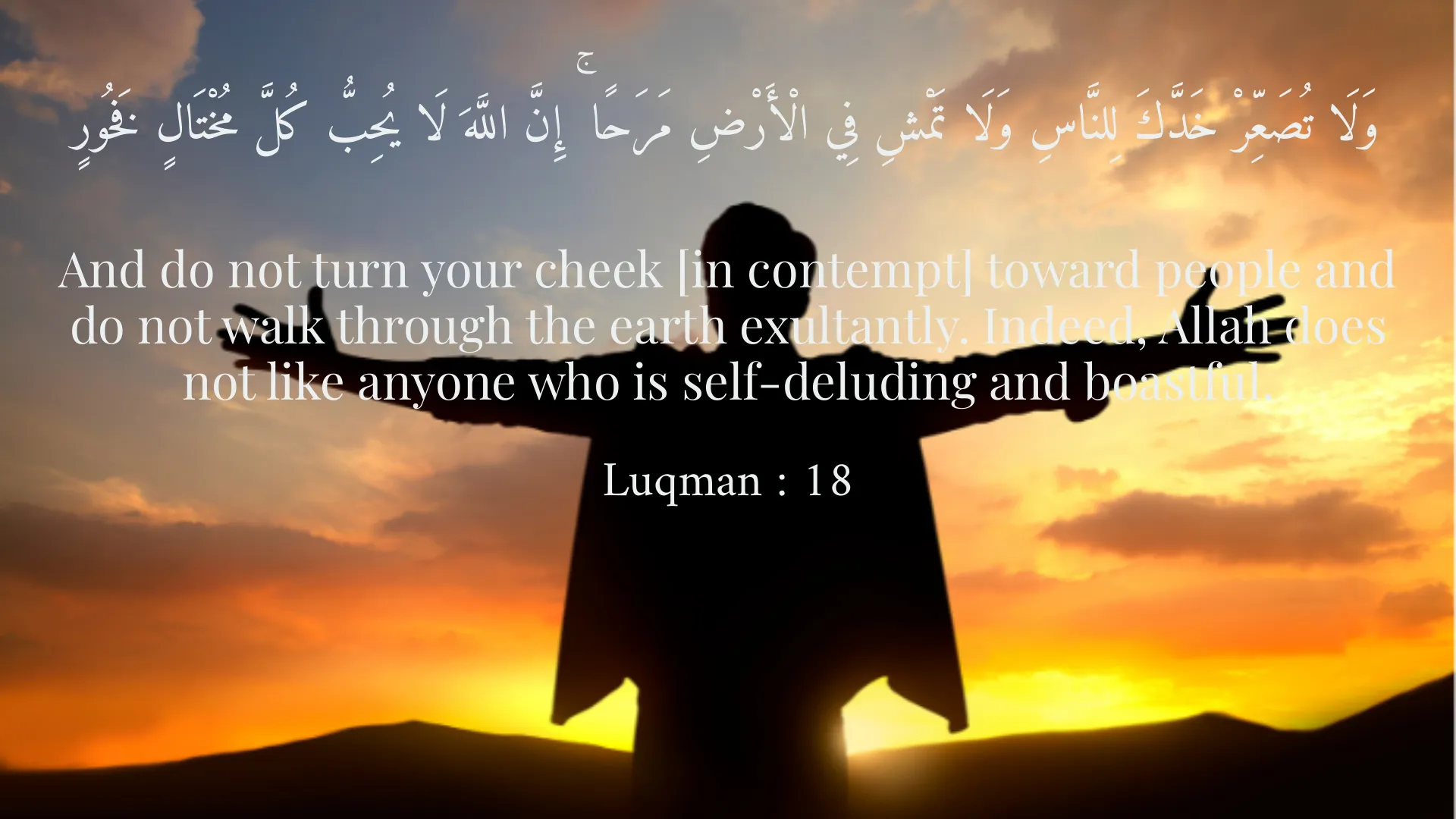
Pride and arrogance have long been viewed as detrimental traits not only in societal interactions but also in one's spiritual journey. The Holy Quran, a divine scripture revered by Muslims around the world, unequivocally condemns these negative attributes. Within its verses, Allah, the Almighty, reminds humanity of the disgraceful nature of pride, emphasizing humility and sincerity as crucial virtues for personal development and communal harmony. This article delves into the concept of pride and arrogance as expressed in the Holy Quran, exploring the aforementioned verses and their implications for believers. Surah Luqman, verse 18 provides a poignant reminder when it states: "And do not turn your cheek [in contempt] toward people and do not walk through the earth exultantly. Indeed, Allah does not like anyone who is self-deluding and boastful." In this verse, the Quran explicitly recognizes that pride often manifests through contemptuous behavior towards others. Turning one’s cheek in disdain not only reflects a lack of respect but also embodies an inflated sense of self-worth. Furthermore, walking through the earth exultantly illustrates a mannerisms fueled by arrogance, a stance that the Quran denounces. This verse encapsulates the essence of humility, urging individuals to treat others with respect, regardless of their status or achievements. The implication of pride leading to dehumanization is significant. When individuals begin to see themselves as superior, they may unconsciously escalate their own importance while diminishing others'. This self-delusion is a profound misconception that fails to recognize the shared humanity among all people. The Quran explicitly states that Allah does not favor those who indulge in such behavior. Stop to ponder the broader implications of this teaching. If a person were to approach life with a humble heart, viewing others as companions on a shared journey rather than as competitors, it could foster more harmonious relationships and contribute to a more just society. Moreover, Surah Al-Hashr, verse 18 reiterates the idea of accountability by stating: "O you who have believed, fear Allah. And let every soul look to what it has brought forth for tomorrow." This verse emphasizes the importance of self-reflection and an awareness of one’s actions in the sight of Allah. The instructive call to "fear Allah" serves as a reminder that believers should maintain a conscious awareness of their deeds. Instead of succumbing to arrogance, it is essential to cultivate a mindset that prioritizes reflection and accountability. In this context, focusing on good deeds is a direct counter to the prideful attitude that individuals may harbor. By directing attention to one's actions and the impact they have both on oneself and others, the Quran encourages a forward-looking perspective. One is invited to consider the potential consequences of today's actions on their eternal tomorrow. This foresight discourages the egotistical mindset that often drives individuals to elevate themselves above others, reminding them instead to strive for goodness and humility. The teachings of the Holy Quran do not merely aim to instill fear but are rooted in love and guidance from Allah, imploring believers to align their actions with righteous principles. When individuals genuinely consider what they bring to the world and cultivate a spirit of generosity, kindness, and empathy, they move towards a state aligned with divine expectations. The significance of these teachings culminates in Surah Al-An'am, verse 158, which states: "The Day when some of the signs of your Lord come, no soul will benefit from its faith." This verse captures the dire reality of the Day of Judgment when true faith and righteous deeds will be the only currency accepted by Allah. The message is clear: faith devoid of humility and ethical conduct carries no merit when facing divine scrutiny. This assertion reinforces the notion that outward displays of piety must be accompanied by sincere intentions and actions. Pride, which can lead to spiritual blindness, ultimately renders the believer unprepared for this fundamental day of reckoning. On the surface, one might argue that self-confidence and pride are essential for personal achievement and growth. However, the Quran carefully distinguishes between healthy self-esteem and detrimental arrogance. While confidence encourages individuals to pursue their goals and aspirations, pride can distort one’s perspective, leading to isolation and alienation from the community. In contrast, the Quran advocates for humility as a way to connect not only with others but also with Allah. Serving others, respecting their contributions, and recognizing shared values build connections that strengthen a community. In practical terms, cultivating humility requires continuous self-evaluation and growth. It invites believers to engage in regular self-reflection, challenging thoughts and behaviors that stem from pridefulness. When individuals confront their imperfections and invite accountability into their lives, they embrace a path of authentic living rooted in humility. This self-awareness encourages empathy towards others, resulting in a supportive and respectful community. In conclusion, the Quran’s teachings on pride and arrogance provide profound guidance for personal and spiritual development. The verses discussed from Surah Luqman, Surah Al-Hashr, and Surah Al-An'am collectively emphasize that humility and genuine action lead to divine favor, while pride distances individuals from Allah’s mercy. By internalizing these lessons, believers are called to embrace humility not just as a trait but as an ethos guiding their interactions and decisions in everyday life. In honoring this transformative approach, one can foster deeper connections with both humanity and the Divine, creating an atmosphere of love, respect, and mutual understanding—qualities essential for a meaningful existence.
Related Verses
وَلَا تُصَعِّرْ خَدَّكَ لِلنَّاسِ وَلَا تَمْشِ فِي الْأَرْضِ مَرَحًا ۚ إِنَّ اللَّهَ لَا يُحِبُّ كُلَّ مُخْتَالٍ فَخُورٍ
And do not turn your cheek [in contempt] toward people and do not walk through the earth exultantly. Indeed, Allah does not like anyone who is self-deluding and boastful.
Luqman : 18
يَا أَيُّهَا الَّذِينَ آمَنُوا اتَّقُوا اللَّهَ وَلْتَنْظُرْ نَفْسٌ مَّا قَدَّمَتْ لِغَدٍ
O you who have believed, fear Allah. And let every soul look to what it has brought forth for tomorrow.
Al-Hashr : 18
يَوْمَ يَأْتِي بَعْضُ آيَاتِ رَبِّكَ لَا يَنْفَعُ نَفْسًا إِيمَانُهَا
The Day when some of the signs of your Lord come, no soul will benefit from its faith.
Al-An'am : 158
Short Story
Once upon a time, there was a proud man who believed that his knowledge and intellect made him superior to others. In his town, he was seen as the most virtuous person. One day, an old man approached him and said, "Do you realize how your pride distances you from God's mercy?" The proud man retorted, "How could that be!" Yet, little did he know that his arrogance had blinded him to the tender mercy of Allah. The old man smiled and replied, "If you wish to find mercy, you must first free yourself from pride." The man realized that only through humility could he find his way back to the right path.