Quranic Answer
Anger, a fundamental human emotion, is often perceived as a double-edged sword, possessing the capability to drive both destructive and constructive behaviors. As one of the most profound emotional experiences, anger has uniquely shaped individual lives, interpersonal relationships, and even societal transformations. While it is easy to point to anger's negative manifestations—violence, aggression, and interpersonal conflict—there is also a burgeoning recognition of its positive potentials, especially when it is directed toward the pursuit of justice and moral integrity. In Islamic teachings, anger is acknowledged as a natural human emotion, yet it comes with a significant emphasis on self-control and restraint. The Quran addresses emotions, including anger, guiding individuals on how to channel these feelings positively. It is fascinating to note the contemplative approach Islam offers to understand and manage anger, linking it to the behavior and characteristics of believers. Specifically, verses within the Quran provide not only a moral compass but also a framework for navigating this often turbulent emotion. A pertinent reference comes from Surah Al-Imran, verse 134, where Allah advises, 'And those who are patient in hardship and moderation in anger...' This divine guidance highlights two critical aspects: the value of patience during adversities and the plea for moderation in times of anger. The act of moderating one’s anger suggests that while the feeling may arise, its expression should be thoughtful and measured. In essence, instead of reacting impulsively, believers are encouraged to respond with patience and reflection. Another significant verse, Surah Ash-Shura, verse 37, further elaborates on this notion, stating: 'And those who restrain their anger and pardon the people...' Here, the Quran presents an alluring ethos of forgiveness intertwined with patience. Restraining anger is depicted as a virtuous characteristic, reflecting self-discipline. Subsequently, the act of pardoning emphasizes the importance of compassion in interpersonal relationships, even when provoked. It highlights the power of choice in determining how anger is directed and utilized. This Islamic perspective illustrates that anger, while often viewed negatively in contemporary society, can manifest positively when appropriately controlled. In various contexts, anger can emerge as a compelling catalyst for change, particularly in the face of injustice. History brims with examples where anger against oppression has sparked revolutionary movements. When channeled correctly, anger can pave the way for necessary social actions and reforms, driving individuals and communities to confront and correct injustices. From an Islamic viewpoint, when anger arises as a response to injustices—be it in the form of social inequality, tyranny, or blatant ethical violations—it cannot be dismissed as contradictory to Islamic morals. Instead, it makes sense that believers harness such feelings towards evangelizing for justice. The concept of righteous anger contrasts significantly with the idea of unrestrained rage or aggression. Positively expressed, anger can align with the pursuit of what is ethical and just. A deeper exploration of Quranic teachings related to anger reveals connections to broader Islamic principles such as justice ('adl) and compassion (rahma). It is crucial to understand the dynamic interaction between emotion and ethics, where anger transcends being a mere feeling to become a driver of principled action. This connection proclaims that the expression of anger against wrongdoing can be morally justified, especially when it aims to restore dignity and uphold justice. However, while the scripture endorses such a relationship with anger, it also insists on significant personal responsibility. Choices made during moments of anger resonate profoundly beyond the immediate situation. Thus, the contemplation regarding how one reacts in anger can influence one’s moral standing and overall integrity. The Quran continually encourages believers to engage in self-reflection and mindfulness to ensure that anger does not morph into vindictiveness or hatred but instead cultivates a pursuit for peace and justice. Delving into historical narratives, we can find instances where Islamic figures embodied the ideal model of anger management and righteous indignation. For instance, the Prophet Muhammad (peace be upon him) exemplified how to respond to provocation with dignity, reinforcing patience and forgiveness, while at the same time standing firm against injustice. His life serves as a template on how to blend moral responsibility with emotional encounters, portraying that righteous anger is necessary when confronting oppression. In conclusion, anger is inherently woven into the human experience, furnishing rich insights into individuals’ moral frameworks and ethical conduct. The Quran presents a nuanced narrative that accepts anger as part of life’s emotional spectrum whilst urging individuals to exercise control and wisdom. Believers are encouraged to view anger through a powerful lens, one that propels them toward justice and virtue rather than destruction and chaos. Therefore, a pivotal task remains: navigating this intricate emotion by making conscious choices that shape its expression. In doing so, not only do individuals adhere to Islamic teachings, but they also engage in a broader human dialogue about ethics, behavior, and the profound impact emotions can wield over social structures.
Related Verses
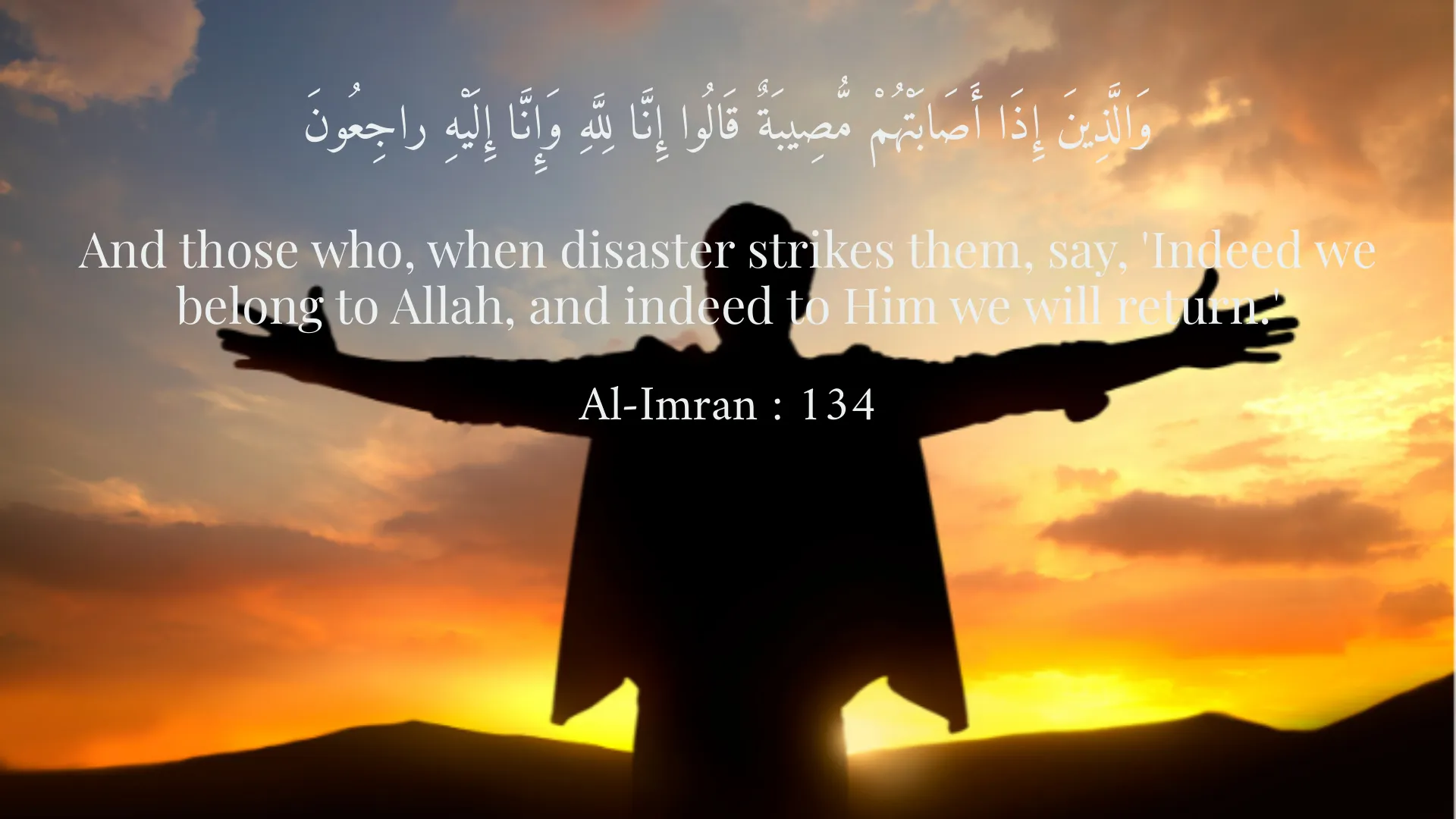
وَالَّذِينَ إِذَا أَصَابَتْهُمْ مُّصِيبَةٌ قَالُوا إِنَّا لِلَّهِ وَإِنَّا إِلَيْهِ راجِعُونَ
And those who, when disaster strikes them, say, 'Indeed we belong to Allah, and indeed to Him we will return.'
Al-Imran : 134
وَالَّذِينَ يَكْظِمُونَ الْغَيْظَ وَالْعَافِينَ عَنِ النَّاسِ ۗ وَاللَّهُ يُحِبُّ الْمُحْسِنِينَ
And those who restrain [anger] and who pardon the people - and Allah loves the doers of good.
Ash-Shura : 37
Short Story
Once upon a time, there was a man named Adel who struggled with various emotions. He was always troubled by his anger and did not know how to control it. One day, he went to a scholar and asked if anger was always bad. Together they reviewed the verses of the Quran and realized that anger could be used against oppression and injustice. With this newfound knowledge, Adel was able to see his anger not as merely negative, but as a tool to stand up for what is right and pursue justice in his life.