Quranic Answer
Asking questions and seeking deeper understanding regarding matters of faith and belief is not inherently a sign of doubt. In fact, in many instances, it can be a clear indication of profound contemplation, a sincere quest for truth, and a desire to grasp religious principles with greater depth. Islam, contrary to superficial interpretations, is a religion of intellect and reflection, actively encouraging its followers to ponder, research, and meditate upon divine verses and the signs of creation. The Holy Quran repeatedly invites humanity to observe the heavens and the earth, and to reflect upon themselves, so that they may come to realize the truth of God’s existence and the veracity of the faith. This divine invitation to contemplation inherently necessitates posing questions and cultivating curiosity to discover answers. From the perspective of the Quran and the Prophetic tradition, true faith is not built upon blind imitation but rather upon certainty and knowledge (yaqin and ma'rifah). This knowledge can be acquired through study, reflection on divine signs, and sincere inquiry. It is for this reason that we observe even prophets of God, at times, making requests of Allah to attain greater peace of heart or certainty. The most prominent example is the story of Prophet Abraham (peace be upon him) in the Quran, who asked Allah to show him how He brings the dead back to life. This request from Abraham was not out of doubt regarding God’s power, but rather for the “tranquility of his heart” (litma'inna qalbihi); that is, for his theoretical belief to transform into a direct, experiential, and heartfelt certainty. Allah responded positively to this request, asking him, “Have you not believed?” Abraham replied, “Yes, but [I ask] only that my heart may be satisfied.” This Quranic example clearly demonstrates that even God’s chosen ones can ask questions and seek more tangible proofs to reach higher degrees of certainty, and this is not only not blameworthy but is divinely affirmed. The fundamental difference between constructive questioning and destructive doubt lies in its intention and orientation. Constructive questioning is undertaken with the goal of discovering truth, resolving ambiguities, strengthening beliefs, and increasing knowledge. Such questions lead to the intellectual and spiritual growth of the individual, propelling them towards greater certainty. In contrast, destructive doubt typically arises from stubbornness, arrogance, denial of truth, or the whispers of Satan (waswas). This type of doubt, instead of seeking answers, makes excuses and persists in denial even in the face of clear evidence. The Quran speaks of those whose hearts are diseased and who seek discord by misinterpreting ambiguous verses, which is entirely different from sincere inquiry driven by a pure intention and a desire for guidance. Furthermore, throughout Islamic history, great scholars have significantly contributed to strengthening the intellectual foundations of the faith by posing profound questions and addressing misconceptions. This tradition of question and answer has been an inseparable part of the growth and dynamism of Islamic thought. The theological and philosophical debates that have unfolded over many centuries in the Islamic world bear witness to the fact that questioning is not only permissible but is a vital tool for refining the understanding of religion and defending it against challenges and doubts. When an individual finds convincing answers to their intellectual queries, their faith transcends the stage of mere imitation and ascends to the stage of intellectual and spiritual certainty, which is far more resilient and firm. Therefore, if someone asks many questions about their faith, their intention must be considered. If these questions stem from healthy curiosity, a thirst for knowledge, and a desire for better understanding, they should be encouraged and assisted in finding well-reasoned and convincing answers. This is not a sign of weak faith; rather, it can be a solid step on the path of perfection and strengthening beliefs. Of course, it is crucial for the questioner to seek answers from reliable sources and authentic scholars to avoid falling into intellectual deviations. Ultimately, true faith is one that is interwoven with both intellect and heart, and this intertwining cannot be achieved except through questioning, reflection, and the pursuit of truth. This process helps individuals not only to believe in God and His signs but also to comprehend the depth of divine wisdom and power, making them more resilient against temptations and doubts.
Related Verses
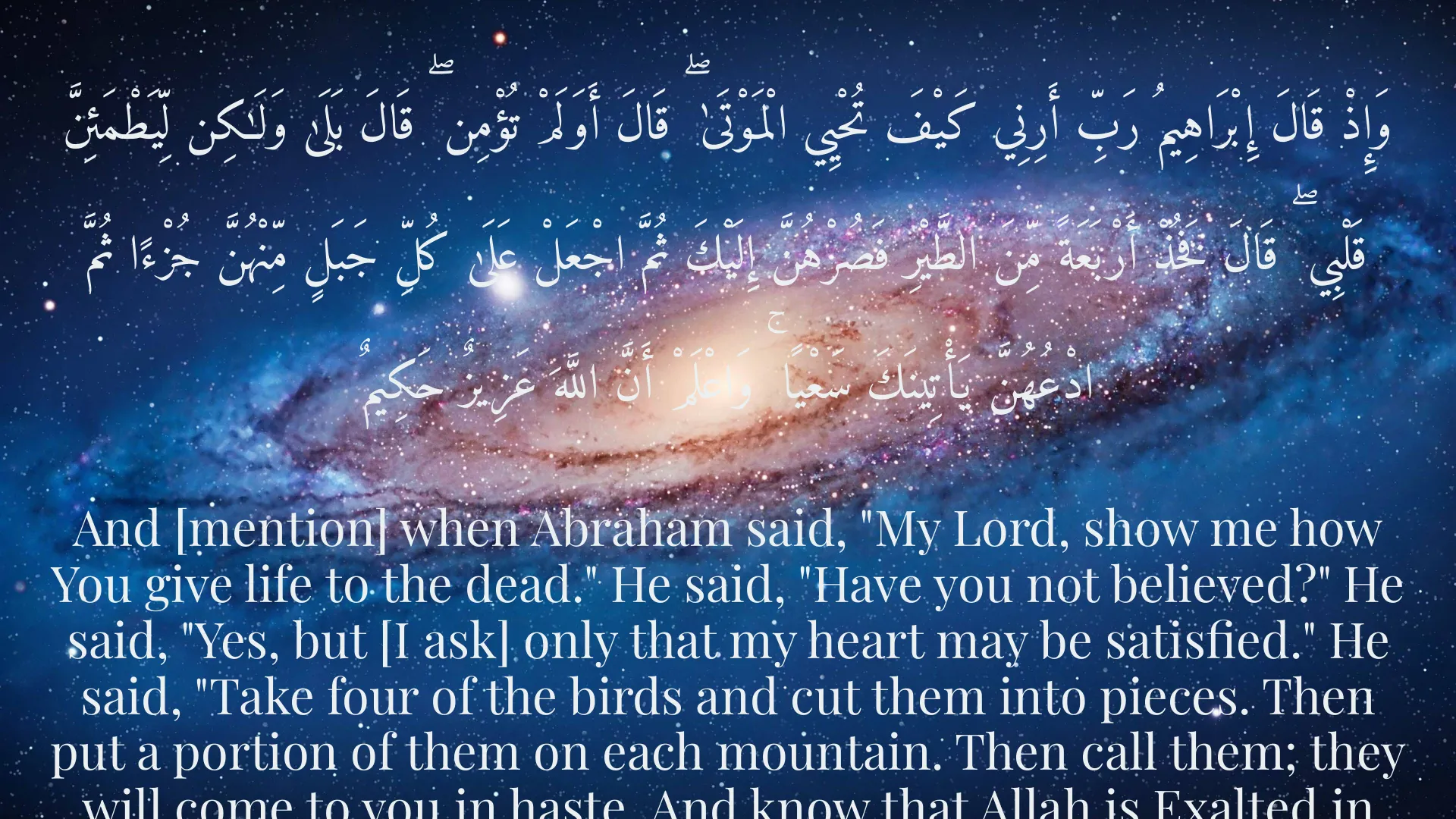
وَإِذْ قَالَ إِبْرَاهِيمُ رَبِّ أَرِنِي كَيْفَ تُحْيِي الْمَوْتَىٰ ۖ قَالَ أَوَلَمْ تُؤْمِن ۖ قَالَ بَلَىٰ وَلَٰكِن لِّيَطْمَئِنَّ قَلْبِي ۖ قَالَ فَخُذْ أَرْبَعَةً مِّنَ الطَّيْرِ فَصُرْهُنَّ إِلَيْكَ ثُمَّ اجْعَلْ عَلَىٰ كُلِّ جَبَلٍ مِّنْهُنَّ جُزْءًا ثُمَّ ادْعُهُنَّ يَأْتِينَكَ سَعْيًا ۚ وَاعْلَمْ أَنَّ اللَّهَ عَزِيزٌ حَكِيمٌ
And [mention] when Abraham said, "My Lord, show me how You give life to the dead." He said, "Have you not believed?" He said, "Yes, but [I ask] only that my heart may be satisfied." He said, "Take four of the birds and cut them into pieces. Then put a portion of them on each mountain. Then call them; they will come to you in haste. And know that Allah is Exalted in Might and Wise."
Al-Baqarah : 260
إِنَّ فِي خَلْقِ السَّمَاوَاتِ وَالْأَرْضِ وَاخْتِلَافِ اللَّيْلِ وَالنَّهَارِ وَالْفُلْكِ الَّتِي تَجْرِي فِي الْبَحْرِ بِمَا يَنفَعُ النَّاسَ وَمَا أَنزَلَ اللَّهُ مِنَ السَّمَاءِ مِن مَّاءٍ فَأَحْيَا بِهِ الْأَرْضَ بَعْدَ مَوْتِهَا وَبَثَّ فِيهَا مِن كُلِّ دَابَّةٍ وَتَصْرِيفِ الرِّيَاحِ وَالسَّحَابِ الْمُسَخَّرِ بَيْنَ السَّمَاءِ وَالْأَرْضِ لَآيَاتٍ لِّقَوْمٍ يَعْقِلُونَ
Indeed, in the creation of the heavens and earth, and the alternation of night and day, and the [great] ships which sail through the sea with that which benefits people, and what Allah has sent down from the heavens of rain, giving life thereby to the earth after its lifelessness and dispersing therein every [kind of] moving creature, and [in] the dispersal of winds and clouds subjugated between the heaven and the earth are signs for a people who use reason.
Al-Baqarah : 164
هُوَ الَّذِي أَنزَلَ عَلَيْكَ الْكِتَابَ مِنْهُ آيَاتٌ مُّحْكَمَاتٌ هُنَّ أُمُّ الْكِتَابِ وَأُخَرُ مُتَشَابِهَاتٌ ۖ فَأَمَّا الَّذِينَ فِي قُلُوبِهِمْ زَيْغٌ فَيَتَّبِعُونَ مَا تَشَابَهَ مِنْهُ ابْتِغَاءَ الْفِتْنَةِ وَابْتِغَاءَ تَأْوِيلِهِ ۗ وَمَا يَعْلَمُ تَأْوِيلَهُ إِلَّا اللَّهُ ۗ وَالرَّاسِخُونَ فِي الْعِلْمِ يَقُولُونَ آمَنَّا بِهِ كُلٌّ مِّنْ عِندِ رَبِّنَا ۗ وَمَا يَذَّكَّرُ إِلَّا أُولُو الْأَلْبَابِ
It is He who has sent down to you the Book; in it are verses [that are] precise - they are the foundation of the Book - and others unspecific. As for those in whose hearts is deviation [from truth], they will follow that which is unspecific thereof, seeking discord and seeking an interpretation [suitable to them]. And no one knows its [true] interpretation except Allah. But those firm in knowledge say, "We believe in it; all [of it] is from our Lord." And no one will be reminded except those of understanding.
Al-Imran : 7
Short Story
It is narrated that one of Saadi's students was a very inquisitive man, always seeking to know the details of every matter. One day, he asked the Shaykh, "Is all this questioning from me a sign of lack of certainty?" Saadi smiled and said, "O young man, questioning is like wind that blows away dust from a jewel. If your intention is to find the jewel of truth, the more you ask, the clearer the jewel within you will become, and the rust will be removed from your heart. But if your goal is merely to scatter dust to obstruct the path for others, then that very question will become a veil for you. A sincere questioner is like a thirsty person digging a well to reach pure water, not merely pounding the ground and raising dust." The student was enlightened by this statement and understood that noble questioning is a path towards knowledge and certainty.