Quranic Answer
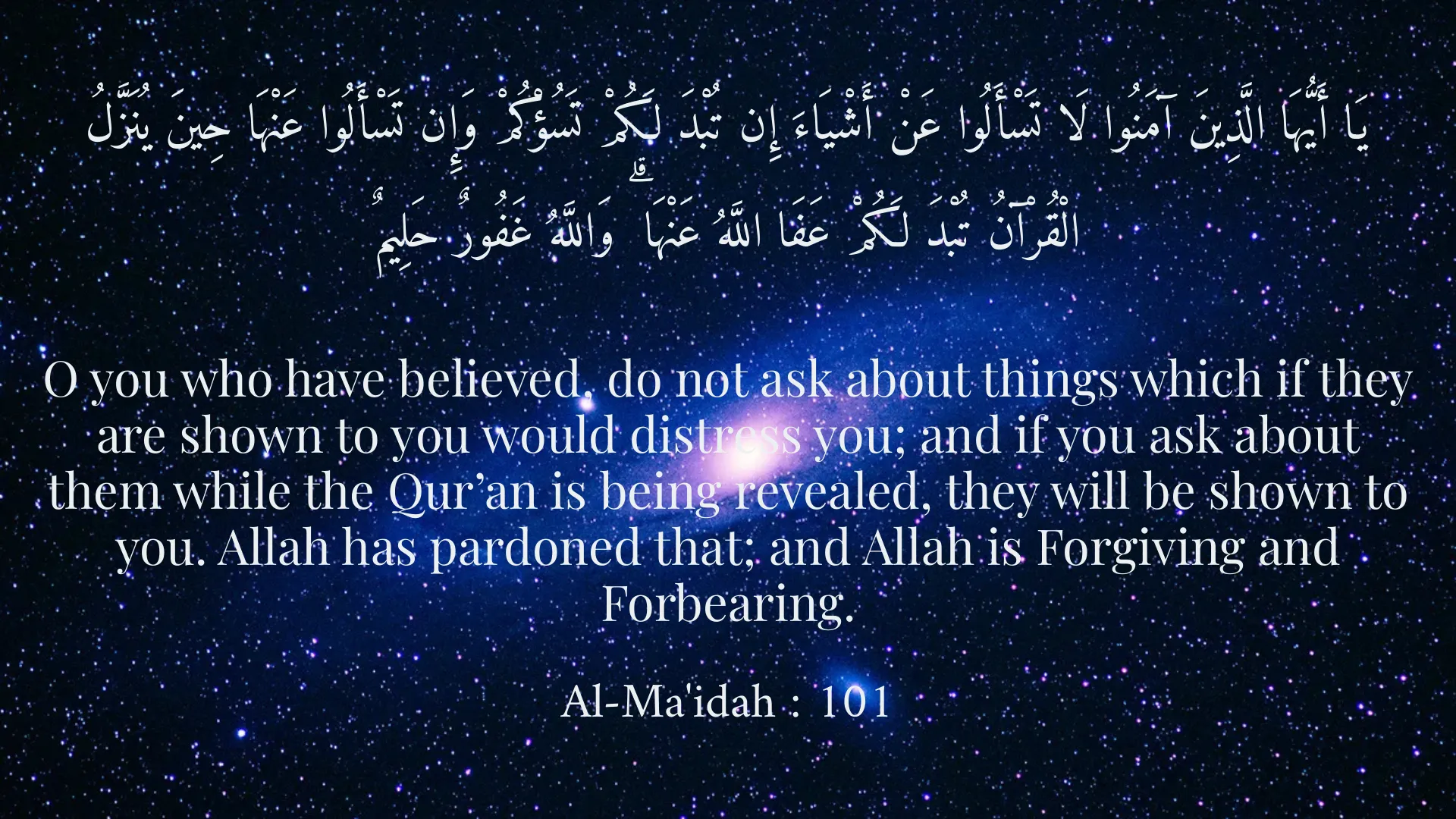
In the noble teachings of the Holy Quran, the pursuit of knowledge and deep reflection on creation and divine signs is strongly encouraged. Humans are naturally curious beings, possessing an innate thirst for understanding their existential roots, the meaning of life, and the nature of their Creator. The Quran, in numerous verses, invites people to ponder over the signs of God in the horizons and within themselves, including the astonishing order of the universe, natural phenomena, and even the human soul itself. This invitation to constructive thinking and questioning is not only far from being disrespectful but is considered a path to deepening faith and gaining a better understanding of the Lord. When questions are asked with sincerity, humility, and with the aim of reaching truth and peace of heart, they are not only commendable but are steps on the path of spiritual growth and drawing closer to God. Such questions demonstrate the vitality of the divine فطرة (innate disposition) and the eagerness to understand more of God’s wisdom. Prophets and divine saints themselves were prime examples of truth-seekers who, in their quest to understand their mission and guide humanity, constantly sought divine knowledge. Therefore, questions that lead to greater understanding and insight have always been affirmed. These types of questions lead one to contemplate the verses of the Quran and Hadith, as well as to reflect on existence, opening new horizons of knowledge. Furthermore, many religious rulings and principles of Islam have been shaped through the questions posed by the companions to the Prophet (PBUH) and his responses, which itself is a testament to the importance and legitimacy of inquiry. However, alongside this encouragement for constructive inquiry, the Holy Quran, in specific instances, warns against excessive questioning or questions with inappropriate intentions. These warnings do not signify an absolute prohibition of questioning but rather pertain to the type and intention of the questioner, as well as the nature of the subject being asked about. For example, in Surah Al-Ma'idah, verses 101 and 102, it states: “O you who have believed, do not ask about things which if they are shown to you would distress you; and if you ask about them while the Qur’an is being revealed, they will be shown to you. Allah has pardoned that; and Allah is Forgiving and Forbearing. A people before you asked such questions and then became disbelievers thereby.” These verses clearly indicate that some questions, instead of leading to guidance, might lead to confusion, hardship, or even disbelief. Such questions usually fall into several categories: Firstly, questions whose sole purpose is to find fault, dispute, or unnecessarily challenge divine rulings and truths. These questions do not stem from genuine curiosity but from obstinacy, mockery, or testing. Secondly, questions that delve into purely unseen (ghayb) matters, the essence of the Divine Being, or details beyond human conception that are incomprehensible to humans. Since these matters are beyond human grasp and imagination, asking about them might lead to anthropomorphism, embodiment, or deviation in belief. The Quran advises us to suffice with what has been revealed in these matters and to refrain from pondering the 'how' of the Divine Essence, as this only leads to bewilderment and misguidance. Thirdly, questions that could lead to the imposition of additional laws or restrictions that God, out of His wisdom, has made easy for His servants. A famous example is the story of the cow of the Children of Israel in Surah Al-Baqarah, where their excessive and trivial questions made the task difficult for themselves. Fourthly, questions asked out of disrespect, impudence, or with the intent to challenge the Almighty Lord. Such questions are not only worthless but are also far from the etiquette of servitude and harm one's relationship with the Creator. Therefore, the criterion for 'disrespect' in questioning about God is not the act of asking itself, but rather the intention, purpose, tone, and nature of what is being asked. If the question is asked with proper etiquette, respect, sincerity, and with the aim of increasing knowledge and closeness to God, from the Quranic perspective, it is not only not disrespectful but is an act of worship and a path to strengthening faith. However, if it stems from disputation, obstinacy, or curiosity about unseen matters that God has prohibited, it can be reprehensible and even dangerous. A true believer is one who knows about which matters to inquire and in which matters to be content with submission and reliance on Divine wisdom. Ultimately, the spirit of Islam emphasizes moderation in all matters, including inquiry, so that the path to acquiring knowledge is not closed, nor is one misguided in the pursuit of unnecessary and harmful curiosities.
Related Verses
يَا أَيُّهَا الَّذِينَ آمَنُوا لَا تَسْأَلُوا عَنْ أَشْيَاءَ إِن تُبْدَ لَكُمْ تَسُؤْكُمْ وَإِن تَسْأَلُوا عَنْهَا حِينَ يُنَزَّلُ الْقُرْآنُ تُبْدَ لَكُمْ عَفَا اللَّهُ عَنْهَا ۗ وَاللَّهُ غَفُورٌ حَلِيمٌ
O you who have believed, do not ask about things which if they are shown to you would distress you; and if you ask about them while the Qur’an is being revealed, they will be shown to you. Allah has pardoned that; and Allah is Forgiving and Forbearing.
Al-Ma'idah : 101
قَدْ سَأَلَهَا قَوْمٌ مِّن قَبْلِكُمْ ثُمَّ أَصْبَحُوا بِهَا كَافِرِينَ
A people before you asked such questions and then became disbelievers thereby.
Al-Ma'idah : 102
هُوَ الَّذِي أَنزَلَ عَلَيْكَ الْكِتَابَ مِنْهُ آيَاتٌ مُّحْكَمَاتٌ هُنَّ أُمُّ الْكِتَابِ وَأُخَرُ مُتَشَابِهَاتٌ ۖ فَأَمَّا الَّذِينَ فِي قُلُوبِهِمْ زَيْغٌ فَيَتَّبِعُونَ مَا تَشَابَهَ مِنْهُ ابْتِغَاءَ الْفِتْنَةِ وَابْتِغَاءَ تَأْوِيلِهِ ۗ وَمَا يَعْلَمُ تَأْوِيلَهُ إِلَّا اللَّهُ ۗ وَالرَّاسِخُونَ فِي الْعِلْمِ يَقُولُونَ آمَنَّا بِهِ كُلٌّ مِّنْ عِندِ رَبِّنَا ۗ وَمَا يَذَّكَّرُ إِلَّا أُولُو الْأَلْبَابِ
He is the One who sent down to you the Book. In it are verses precise (muhkamat) – they are the foundation of the Book – and others unprecise (mutashabihat). As for those in whose hearts is deviation, they will follow that which is unprecise thereof, seeking discord and seeking its interpretation. And no one knows its interpretation except Allah. And those firm in knowledge say, "We believe in it; all [of it] is from our Lord." And no one will remember except those of understanding.
Aal-Imran : 7
Short Story
It is narrated that in ancient times, a curious young man named Fahm (meaning 'Understanding') approached a wise scholar and incessantly asked him questions. One day, he asked the scholar: "O Sheikh, what are the boundaries of this world and the next, and what secret does every speck of dust hold within itself?" The scholar smiled and said: "O Fahm, you have asked well. But the knowledge that leads you to true understanding is neither in counting every grain of dust nor in measuring the infinite dimensions of the universe. Rather, it is in knowing what is required of you and how to draw closer to your Creator with the etiquette of servitude. Asking excessively about matters that bewilder the mind and sow doubt in the heart is like trying to scoop water from the ocean with a sieve; it only increases thirst and yields nothing. Instead, ponder what has been revealed to you, and submit to what remains hidden, for every veil has its time and every secret its appointed hour." Fahm took heed of this advice and understood that sincere and purposeful questioning is a key to unlocking knowledge, but inappropriate and disrespectful questions become veils themselves.