Quranic Answer
The Quran is a foundational text for millions of Muslims around the world, serving as a spiritual guide and a manual for moral conduct in human life. Among its many themes, the Quran pays particular attention to the intricate relationship between poverty and wealth, and how these two conditions interact with human spirituality, contentment, and ethical behavior. The teachings of the Quran emphasize the importance of how individuals respond to their circumstances regarding material wealth, rather than simply the accumulation of riches itself. In Surah Al-Baqarah, verse 177, Allah elucidates the essence of true righteousness and piety. He states that piety and goodness are not simply determined by one's material wealth or the amount of possessions one holds; instead, they are profoundly woven into the fabric of one's consciousness of God, known as 'taqwa.' The verse implies that a firm belief in God and a commitment to serving humanity are the cornerstones of virtue. This invites readers to reflect on their own lives and the way they engage with the world around them. A wealthy individual, in the absence of piety and concern for others, is not virtuous; conversely, a poor individual who acts with integrity and empathy embodies true righteousness. Poverty itself is neither an inherent virtue nor a vice in the narrative of the Quran. Rather, it is how an individual reacts to poverty that matters most. Surah Al-Furqan, verse 67, highlights the characteristics of true believers, stating that they are those who exercise patience and resilience during times of poverty. This suggests that rather than being a shameful state, poverty can serve as a test of character and faith. Believers are challenged to remain steadfast, maintain their focus on God, and not to lose sight of their inner peace and contentment even when faced with material scarcity. Furthermore, the Quran encourages a compassionate response to poverty, urging believers to extend help to those in need. Surah Ali 'Imran, verse 134, illustrates this idea, affirming that true believers are those who endure difficulties with patience for the sake of Allah and exhibit compassion towards others. The act of helping the needy not only benefits others but enriches one's spiritual journey by fostering empathy and connection to God. This dynamic relationship encourages individuals to cultivate an attitude of gratitude and appreciation for the blessings they have, regardless of their material fortunes. The teachings of the Quran suggest that poverty can indeed become an opportunity for spiritual growth. In facing the trials of financial hardship, individuals may find themselves seeking a deeper connection with the divine. It challenges them to reflect on their priorities and what truly matters in life. As believers strive to nurture their spiritual selves during difficult times, they often find pathways to fulfillment that transcend physical wealth. The trials of poverty prompt believers to strengthen their reliance on Allah, as they recognize that their ultimate dependence lies in divine support rather than material wealth. Importantly, being poor is not automatically virtuous; virtue is defined by one's inner spirit and intentions when confronted with poverty. The real measure of a believer lies not in their economic status, but in the virtues they choose to embody in their daily lives. Individuals imbued with a spirit of charity, generosity, and kindness create ripples of positive change in their communities. Conversely, a wealthy person who neglects the needs of others could be perceived as falling short of the moral high ground that the Quran advocates. In a broader sense, the Quran advocates for a balance between wealth and spirituality, presenting the ideal approach to life as one where individuals cultivate a sense of responsibility towards others. The act of sharing one's wealth, volunteering time, and offering support to others are reinforced as integral components of a believer's life. The Quran places profound emphasis on the intentions behind deeds, leading to the conclusion that virtue lies in piety, doing good deeds, and earning the pleasure of God through one's actions. As Muslims navigate their lives, there exists a profound understanding woven throughout the Quran that both wealth and poverty serve as tests from Allah. Each condition bears its own challenges and opportunities for self-improvement and spiritual elevation. Wealth may come with its own set of trials related to pride and entitlement, while poverty tests patience and resilience. Both scenarios provide a template for developing a closer connection to God and to the greater community. The Quran also addresses misconceptions regarding wealth and morality often found within society. Instead of viewing poverty as a mark of a lesser individual or wealth as a sign of favor from God, it advocates for an understanding that true worth is defined by the heart and actions of a person. This perspective encourages both the wealthy and the impoverished to strive for a character that aligns with divine principles of justice, kindness, and charity, reinforcing shared humanity above material hurdles. In conclusion, the intricate relationship between poverty, wealth, and spirituality as presented in the Quran serves as a timeless reminder of what truly defines a virtuous life. The development of a strong sense of piety, coupled with compassion towards others, creates a lasting impact on a believer’s personal journey and societal contributions. It invites believers to view their circumstances as opportunities for growth and connection to the divine while maintaining a commitment to uplift others around them. As such, the teachings of the Quran offer profound insights and practicality for navigating the complex landscape of wealth and poverty in human life, ultimately guiding individuals toward a life filled with purpose, compassion, and spiritual fulfillment.
Related Verses
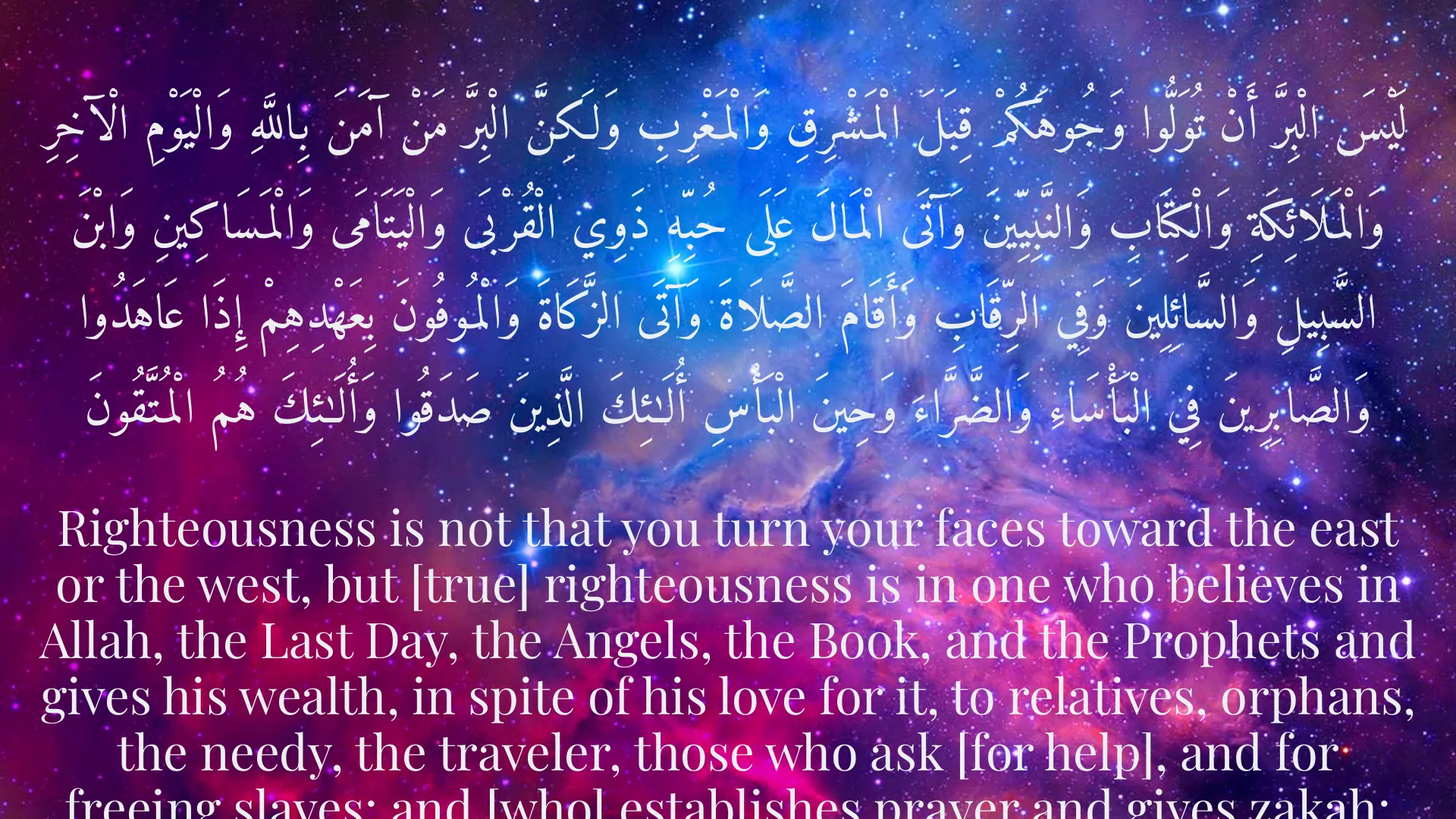
لَيْسَ الْبِرَّ أَنْ تُوَلُّوا وَجُوهَكُمْ قِبَلَ الْمَشْرِقِ وَالْمَغْرِبِ وَلَكِنَّ الْبِرَّ مَنْ آمَنَ بِاللَّهِ وَالْيَوْمِ الْآخِرِ وَالْمَلَائِكَةِ وَالْكِتَابِ وَالنَّبِيِّينَ وَآتَى الْمَالَ عَلَى حُبِّهِ ذَوِي الْقُرْبَى وَالْيَتَامَى وَالْمَسَاكِينِ وَابْنَ السَّبِيلِ وَالسَّائِلِينَ وَفِي الرِّقَابِ وَأَقَامَ الصَّلَاةَ وَآتَى الزَّكَاةَ وَالْمُوفُونَ بِعَهْدِهِمْ إِذَا عَاهَدُوا وَالصَّابِرِينَ فِي الْبَأْسَاءِ وَالضَّرَّاءَ وَحِينَ الْبَأْسِ أُلَـٰئِكَ الَّذِينَ صَدَقُوا وَأُلَـٰئِكَ هُمُ الْمُتَّقُونَ
Righteousness is not that you turn your faces toward the east or the west, but [true] righteousness is in one who believes in Allah, the Last Day, the Angels, the Book, and the Prophets and gives his wealth, in spite of his love for it, to relatives, orphans, the needy, the traveler, those who ask [for help], and for freeing slaves; and [who] establishes prayer and gives zakah; [those who fulfill their promise when they promise] and [those who are] patient in poverty and hardship and during battle. Those are the ones who have been true, and it is those who are the righteous.
Al-Baqarah : 177
وَالَّذِينَ إِذَا أَنفَقُوا لَمْ يُسْرِفُوا وَلَمْ يَقْتُرُوا وَكَانَ بَيْنَ ذَٰلِكَ قَوَامًا
And those who, when they spend, are neither extravagant nor stingy, but are ever, between that, [justly] moderate.
Al-Furqan : 67
الَّذِينَ يُنفِقُونَ فِي السَّرَّاءَ وَالضَّرَّاءَ وَالْكَاظِمِينَ الْغَيْظَ وَالْعَافِينَ عَنِ النَّاسِ ۗ وَاللَّهُ يُحِبُّ الْمُحْسِنِينَ
Who spend during ease and hardship and who restrain [their] anger and who pardon the people; and Allah loves the doers of good.
Ali 'Imran : 134
Short Story
Once upon a time in a village, there lived a poor man named Hasan. Despite his poverty, he always relied on God and constantly helped others. One day, a neighbor came to Hasan seeking help. Without any expectation, Hasan assisted him, demonstrating that what truly mattered more than wealth was his intention and spirit of helping others. These qualities made Hasan beloved in the hearts of the people, and he also felt content with his life.