Quranic Answer
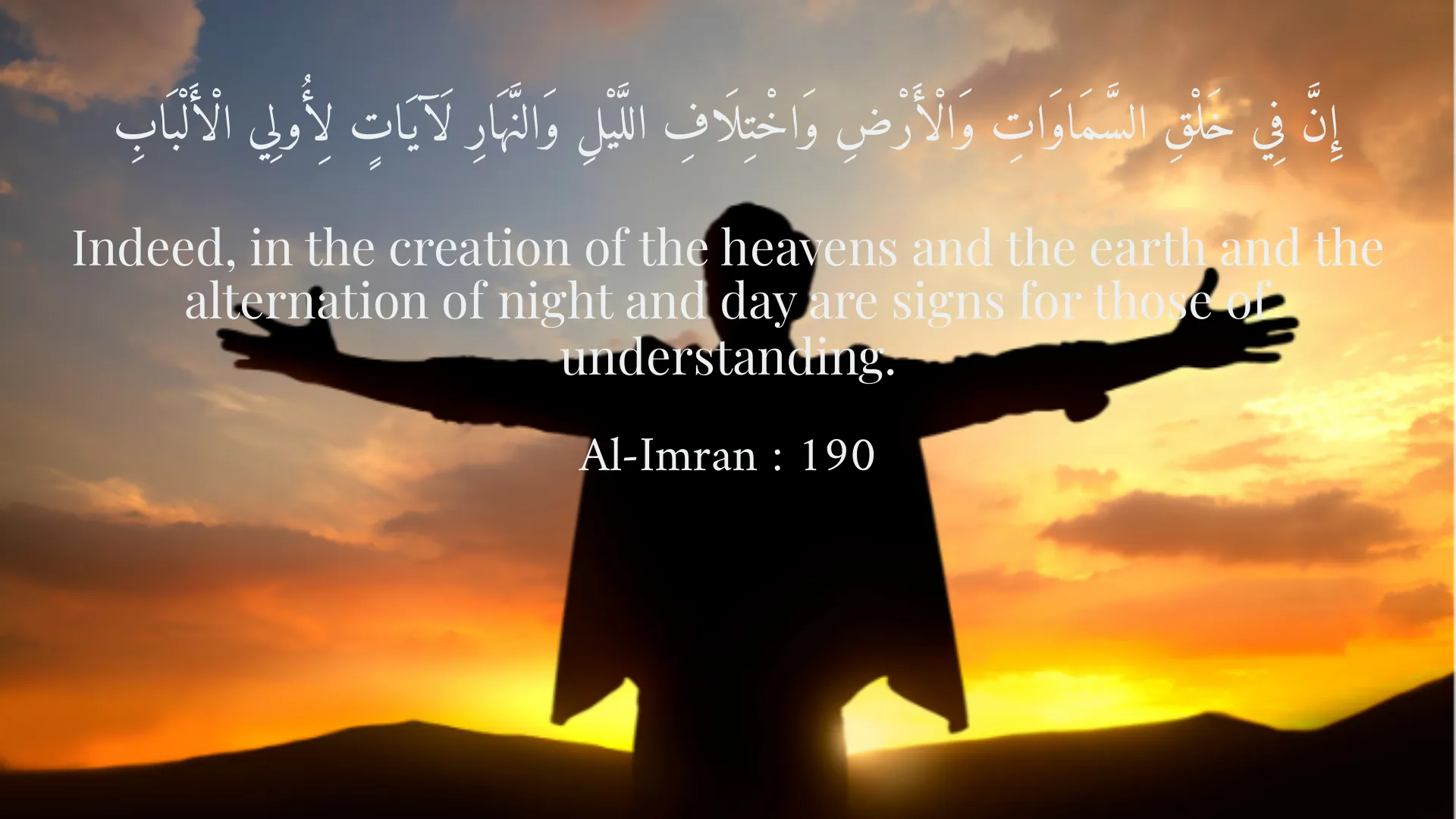
In the Holy Quran, contemplation of creation is introduced as an important and valuable act for believers, extending beyond mere acknowledgment of existence to embodying a profound engagement with the divine. The act of reflection on the creation of the heavens and the earth is presented not only as a message to be understood but as an essential aspect of faith. The emphasis placed on contemplation can profoundly impact an individual’s relationship with God, and this theme is illustrated in several verses throughout the Quran, where both the structures of the universe and the cyclical nature of time are highlighted as signs of Allah's power. One of the most striking examples appears in Surah Al-Imran, verse 190, which states, 'Indeed, in the creation of the heavens and the earth and the alternation of night and day are signs for those of understanding.' This verse encapsulates a foundational message of Islam, serving as a call to intellectual engagement with the world. For the believer, the act of contemplating creation goes beyond superficial observation; it is an invitation to delve deeper into the meanings and implications of what one observes. In doing so, individuals begin to uncover the lores and truths that exist within the natural world's structures, from the vastness of the cosmos to the intricacies of earthly life. To emphasize this further, the Quran articulates that such contemplation is not limited to the physical aspects of creation, but extends into the realm of understanding the unseen. This is conveyed powerfully in Surah Hud, verse 123, which elucidates, 'And to Him belongs the unseen [aspects] of the heavens and the earth. And to Him will be returned the command all of it. So worship Him and rely upon Him.' This verse highlights the duality of the known and the unknown, reminding believers that everything ultimately returns to Allah and that reliance upon Him is paramount. Such verses encourage a deep trust in God, which is an essential foundation for worship, while also suggesting that understanding the unseen can elevate the believer's consciousness toward the divine. Through reflection on creation and its effects, individuals can gain a deeper understanding of Allah. This process of contemplation leads to a broader appreciation of the signs and greatness of God, aligning seamlessly with the concept that worship is not merely about rituals but the engagement of the heart and mind in recognizing God's attributes through His creations. The more one reflects, the more one can appreciate the intricate design and order that permeates the universe, fostering a sense of humility and gratitude. Moreover, in Surah Al-Baqarah, verse 164 states, 'Indeed, in the creation of the heavens and the earth and the alternation of night and day are signs for those of understanding.' This reiteration strengthens the notion that contemplation is a significant source of wisdom and insight. The repetitive nature of such verses serves to anchor the idea that these reflections are vital to the faith journey. Through the acknowledgment of these signs, believers develop a mindset that cultivates modesty and moral virtues, as they recognize their smallness in the grand scheme of creation and the mightiness of the creator. Contemplation of creation provides an avenue not only for understanding divine power but also for personal growth. For instance, when one considers the delicate balance of ecosystems or the precise phenomena occurring in celestial bodies, it brings to light the intricate connections present in the universe. This understanding fosters a sense of responsibility toward the environment and fellow creatures, emphasizing the moral obligations tied to one's existence in this universe. It can motivate believers to act justly, compassionately, and responsibly as stewards of the earth, closely aligning with the teachings of Islam that advocate for ethical behavior and respect for all forms of life. Additionally, contemplation can lead to an inner transformation, where humble awareness of one's place in creation engenders patience, gratitude, and a sense of peace amidst life's challenges. As believers navigate personal struggles, the vastness of the universe and the harmonious turn of night and day serve as reminders that they are part of a grand design, governed by a wise and caring creator. This realization can profoundly impact mental well-being, leading to a greater sense of purpose and connection with the Divine. In conclusion, it can be stated that contemplation of creation is indeed a form of worship as it leads individuals to reflect on the signs and greatness of God. This type of worship not only fosters spiritual growth and a closer relationship with Allah but also cultivates virtues that enrich interpersonal relationships and encourage ethical living. Ultimately, the Quran invites believers to engage deeply with the world around them, allowing the magnificence of creation to be a catalyst for understanding, worship, and moral excellence—transforming the act of seeing into an act of believing.
Related Verses
إِنَّ فِي خَلْقِ السَّمَاوَاتِ وَالْأَرْضِ وَاخْتِلَافِ اللَّيْلِ وَالنَّهَارِ لَآيَاتٍ لِأُولِي الْأَلْبَابِ
Indeed, in the creation of the heavens and the earth and the alternation of night and day are signs for those of understanding.
Al-Imran : 190
وَلَهُ غَيْبُ السَّمَاوَاتِ وَالْأَرْضِ ۗ وَإِلَيْهِ يُرْجَعُ الْأَمْرُ كُلُّهُ فَاعْبُدْهُ وَتَوَكَّلْ عَلَيْهِ
And to Him belongs the unseen [aspects] of the heavens and the earth. And to Him will be returned the command all of it. So worship Him and rely upon Him.
Hud : 123
إن في خلق السماوات والأرض واختلاف الليل والنهار لآيات لأولي الألباب.
Indeed, in the creation of the heavens and the earth and the alternation of night and day are signs for those of understanding.
Al-Baqarah : 164
Short Story
One day, Mahdi was sitting and pondering over the beauty of God's creation. He gazed at the sky, watching the flying birds and the lush trees; he felt these signs reminded him to reflect on God's infinite power and wisdom. This contemplation led him towards more worship and gratitude towards God. He understood that every thought and reflection on creation could be a way to draw closer to God.