Quranic Answer
In the Holy Quran, the concept of crying out of fear of God is portrayed as a profound and natural response for believers. This emotional expression is not merely an act of fear, but rather symbolizes an intimate connection with the Creator, showcasing their understanding of His majesty, mercy, and justice. In various verses throughout the Quran, this theme is echoed, illustrating how believers experience moments of fear linked to their faith, leading to a state of sincerity and repentance. One significant verse that emphasizes this notion is found in Surah Maryam, verse 58, where Allah states: 'Indeed, those who have believed and done righteous deeds will have the Gardens of Paradise as a lodging.' This verse serves multiple purposes; it reassures believers of their place in Paradise as a reward for their faith and righteous actions. The juxtaposition of faith and good deeds emphasizes that mere belief is not sufficient; one must also act righteously to earn a place in the divine realm. Consequently, the act of crying out of fear of God should not be viewed as a mere reaction to dread or anxiety, but rather as a manifestation of love and devotion towards the Almighty. The emotional turmoil experienced by believers, characterized by crying out of fear of God, often leads to a period of reflection and personal growth. This act signifies a recognition of one's own shortcomings and a sincere desire to repent for past sins. The Quran beautifully articulates this in Surah Az-Zumar, verse 23: 'Allah has sent down the best statement, a [Book] consistent in its verses, the skins shiver therefrom of those who fear their Lord.' The imagery of skins shivering illustrates the profound impact that divine revelations can have on the hearts of believers. It highlights that true faith elicits reactions that resonate deep within one’s soul, bridging the gap between fear and love. Crying as a response to the realization of God's magnificence is encountered throughout Islamic teachings. Such reactions are not signs of weakness; rather, they epitomize a strength founded on a deep relationship with the Creator. The Prophet Muhammad (peace be upon him) further reinforces this idea when he states, 'The eyes that weep out of fear of God are never to be touched by fire.' This profound statement accentuates the value of such tears, emphasizing that they stem from a place of genuine faith and heartfelt connection with Allah. This understanding empowers believers to confront their fears and shortcomings with grace rather than despair. Additionally, the emotions tied to crying from fear of God can act as a catalyst for spiritual transformation. It often propels individuals to seek forgiveness and strive for greater righteousness in their lives. This prayerful yearning for redemption is a vital aspect of the believer’s journey, as it reinforces the essence of humility. Believers are reminded of their fragility and imperfections, and through this recognition, they seek the mercy of their Creator. This process of yearning conversion is vital in Islam, as it allows believers to realign themselves with their spiritual objectives and commit to becoming better individuals. Furthermore, in many Islamic traditions, the act of crying in prayer or during moments of remembrance of Allah is encouraged, portraying it as a mark of sincerity and depth of faith. It is a powerful reminder that the believer’s emotional state can be deeply intertwined with their spiritual journey. The escalation of fear to a loving and awe-filled acceptance of God's presence allows for a transformative experience. This evolution catalyzes a believer’s move toward spiritual enlightenment and strengthens their faith. The relationship between fear and love in the context of faith can be viewed as a duality where both emotions coexist and complement each other. Fear of God engenders an awareness of His omnipotence and majesty, while love for God nurtures a sense of security in His mercy and compassion. Therefore, crying out of fear of God can serve both to remind believers of the gravity of their actions while simultaneously reinforcing their relationship with Allah. It is this balance that solidifies the believer’s resolve to walk the path of righteousness while being aware of the implications of their choices. In conclusion, crying out of fear of God, as depicted in the Holy Quran, is a natural and positive state for believers. It encapsulates an intricate connection between emotions, faith, and spirituality. As seen in Surah Maryam and Surah Az-Zumar, these expressions of susceptibility reflect a deeper understanding of God’s presence and a healthy realization of one’s own limitations. The Prophet Muhammad's words further accentuate the sanctity of tears shed for divine fear, illustrating that such sincerity will engender divine protection from punishment. Ultimately, crying from the fear of God stands not as a weakness, but as a testament to the strength of one’s faith, embodying a profound relationship with the Divine that nurtures growth, transformation, and a longing for closeness to Allah.
Related Verses
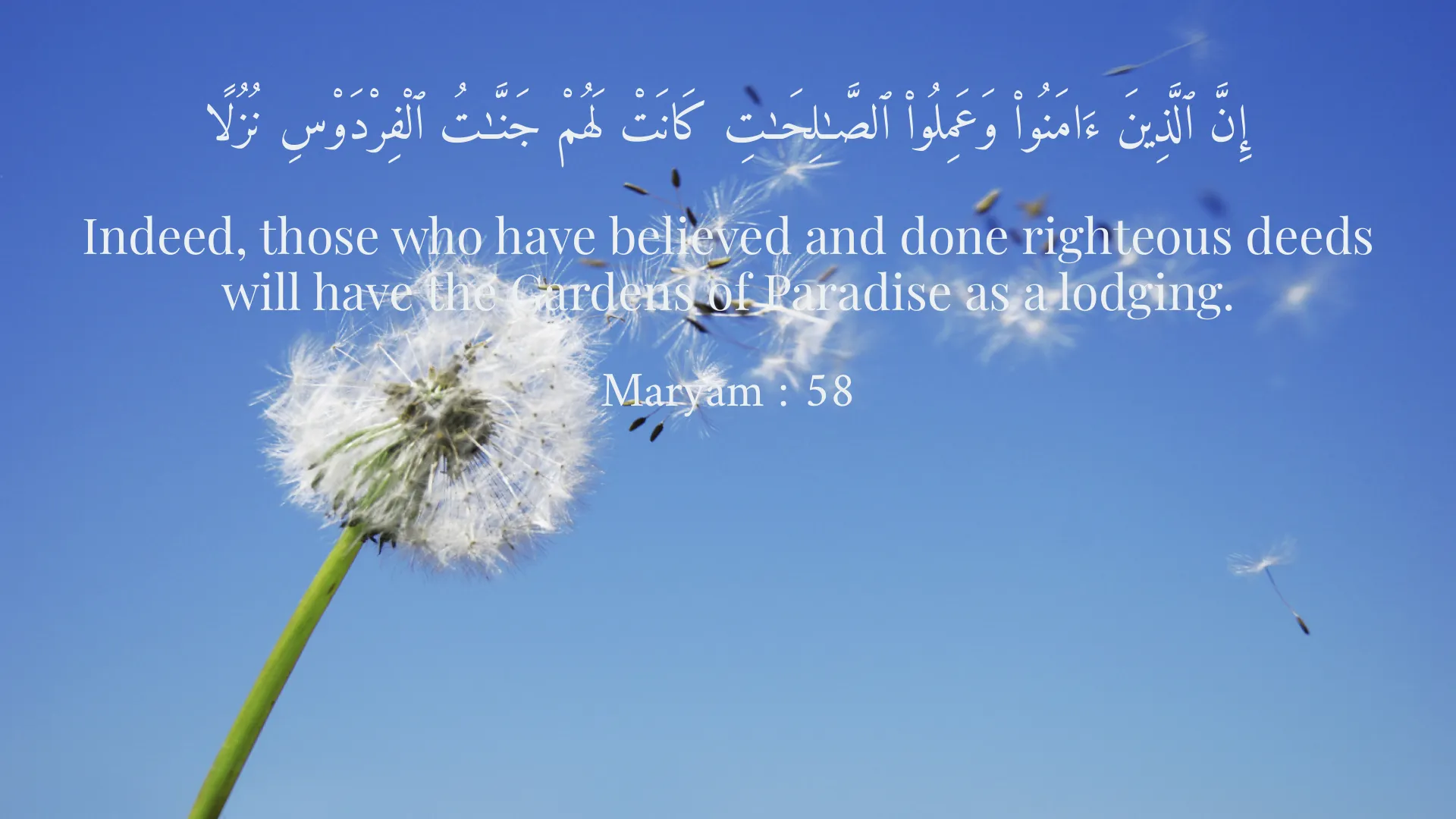
إِنَّ ٱلَّذِينَ ءَامَنُواْ وَعَمِلُواْ ٱلصَّـٰلِحَـٰتِ كَانَتْ لَهُمْ جَنَّـٰتُ ٱلْفِرْدَوْسِ نُزُلًا
Indeed, those who have believed and done righteous deeds will have the Gardens of Paradise as a lodging.
Maryam : 58
ٱللَّهُ نَزَّلَ أَحْسَنَ الْحَدِيثِ كِتَـٰبًۭا مُتَشَابِهًۭا مَّثَانِىَ ۚ تَقْشَعِرُّ مِنْهُ جُلُودُ ٱلَّذِينَ يَخْشَوْنَ رَبَّهُمْ
Allah has sent down the best statement, a [Book] consistent in its verses, the skins shiver therefrom of those who fear their Lord.
Az-Zumar : 23
Short Story
A story of a girl named Siba from a small village. She always cried when thinking about her sins. One day, with a deeper understanding of the meanings of the Quran, she realized that her crying was a sign of her faith. From that day on, she tried to get closer to God and repent more for her sins.