Quranic Answer
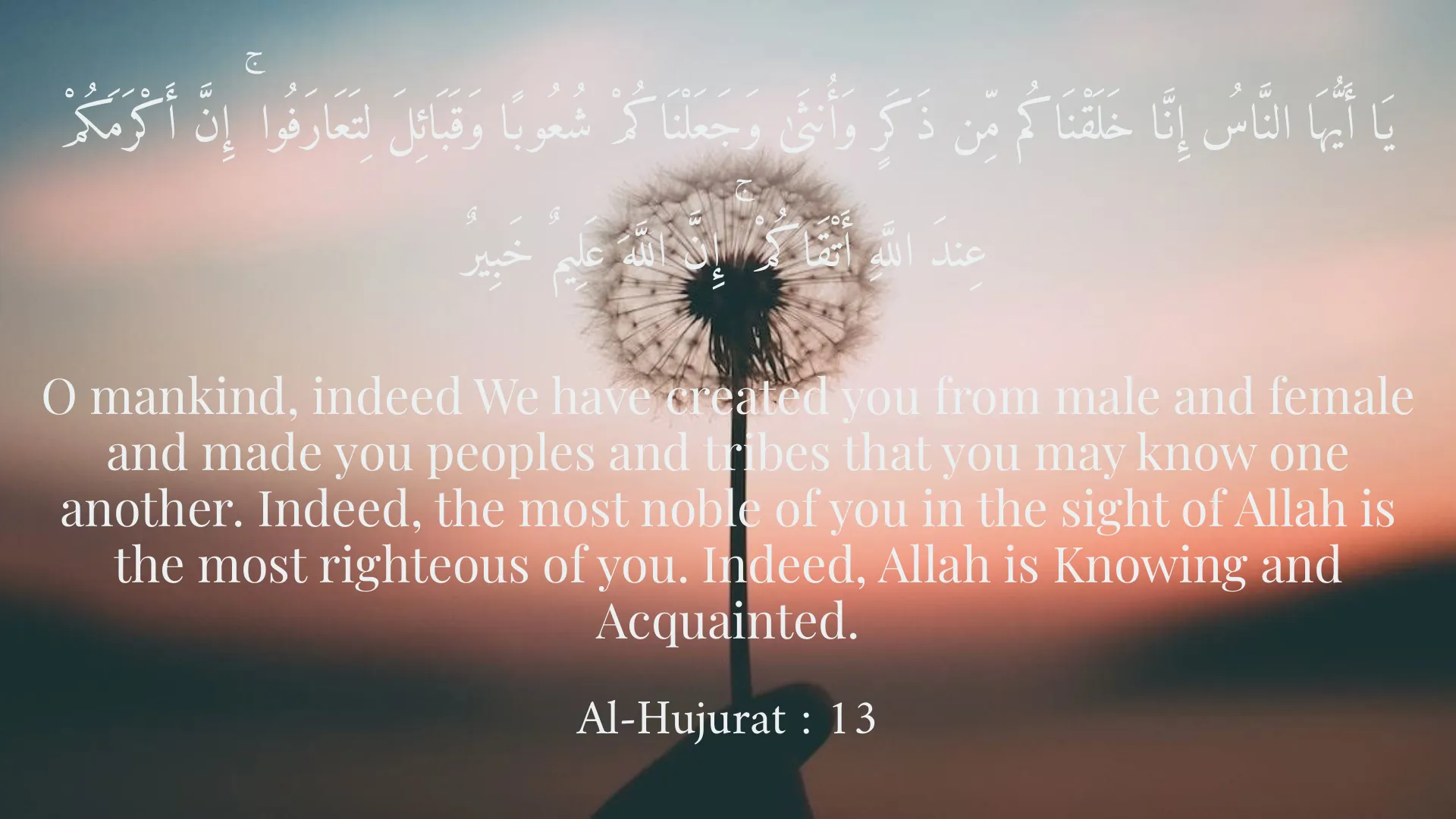
The Holy Quran, as a comprehensive guide for humanity, unequivocally addresses the issue of discrimination and strongly condemns it. From its very inception, it establishes profound principles for justice, equality, and mutual respect among human beings, effectively invalidating any form of discrimination. The essence of Quranic teachings rests upon the inherent dignity of every human being, irrespective of their apparent affiliations, race, language, or social status. It declares piety and righteousness as the sole criterion for superiority. One of the most fundamental and pivotal verses in this regard is Surah Al-Hujurat (49:13): “O mankind, indeed We have created you from male and female and made you peoples and tribes that you may know one another. Indeed, the most noble of you in the sight of Allah is the most righteous of you. Indeed, Allah is Knowing and Acquainted.” This verse explicitly states that all humanity originates from a single male and female, and the purpose of creating diverse nations and tribes is for mutual recognition and constructive interaction, not for asserting superiority or engaging in discrimination. It clearly invalidates race, ethnicity, color, language, wealth, or social position as criteria for superiority. Instead, it identifies Taqwa (piety, God-consciousness, righteousness) as the only true measure of honor in the sight of Allah. Taqwa here is not merely ritualistic observance but encompasses all good deeds, pursuit of justice, respect for others' rights, purity of heart, and abstaining from sin and oppression. Whoever possesses greater Taqwa, meaning they are more mindful of God in their actions, words, and conduct, and thus avoid injustice and discrimination, is indeed more honorable in the sight of God. This principle represented a revolutionary social and intellectual shift, uprooting the foundations of racial, class, and gender discrimination prevalent in societies then and now. The Quran further emphasizes the unity of human origin, considering all human beings as descendants of a single pair (Adam and Eve). In Surah An-Nisa (4:1), it states: “O mankind, fear your Lord, who created you from one soul and created from it its mate and dispersed from both of them many men and women. And fear Allah, through whom you ask one another, and the wombs. Indeed, Allah is always over you an Observer.” This verse not only calls for Taqwa but also grounds the creation of humanity in a “single soul” (Nafs Wahidah). This concept unequivocally negates any claims of racial or ethnic superiority, as all originate from a common source and are inherently equal. This principle provides the intellectual foundation for combating any supremacist ideology and fosters an environment for peaceful coexistence and cooperation among diverse peoples and nations. Moreover, the Quran does not merely tolerate linguistic and racial diversity but presents it as a sign of Allah's power and wisdom. Surah Ar-Rum (30:22) states: “And of His signs is the creation of the heavens and the earth and the diversity of your languages and your colors. Indeed in that are signs for those of knowledge.” This verse highlights the beauty and wisdom inherent in human physical and cultural differences. Instead of these differences serving as a basis for conflict or superiority, they are presented as means for contemplation and understanding the Creator and the grandeur of creation. This perspective offers a positive and constructive view of human diversity, leading to acceptance and appreciation rather than rejection. Beyond these theoretical foundations, the Quran explicitly prohibits discriminatory acts and behaviors. For instance, in the same Surah Al-Hujurat (49:11-12), believers are commanded not to ridicule one another, not to call each other by offensive nicknames, and to avoid suspicion and backbiting: “O you who have believed, let not a people ridicule [another] people; perhaps they may be better than them; nor let women ridicule [other] women; perhaps they may be better than them. And do not insult one another and do not call each other by [offensive] nicknames. Wretched is the name of disobedience after [one’s] faith. And whoever does not repent — then it is those who are the wrongdoers. O you who have believed, avoid much [negative] suspicion, indeed some suspicion is sin. And do not spy and do not backbite each other.” These prohibitive injunctions effectively eliminate the precursors and manifestations of discrimination, as mockery, labeling, and negative suspicion often stem from prejudice and bias. Furthermore, the Quran emphasizes the paramount importance of justice in all matters, obliging Muslims to act justly even towards their adversaries. In Surah Al-Ma'idah (5:8), it declares: “O you who have believed, be persistently Qawwamin for Allah, witnesses in justice, and let not hatred of a people prevent you from being just. Be just; that is nearer to righteousness. And fear Allah. Indeed, Allah is Acquainted with what you do.” This verse unequivocally states that enmity towards a people should not lead to deviation from justice. Being just is closer to Taqwa. This command for absolute justice effectively negates any discrimination in rulings, judgments, and social interactions, laying the foundation for a just society free from undue prejudice. Therefore, the Quran not only rejects discrimination on a theological basis but also practically and legally combats it, calling upon believers to build a society founded on equality, respect, and justice. This comprehensive approach to discrimination underscores the immense importance of this issue in the Islamic worldview.
Related Verses
يَا أَيُّهَا النَّاسُ إِنَّا خَلَقْنَاكُم مِّن ذَكَرٍ وَأُنثَىٰ وَجَعَلْنَاكُمْ شُعُوبًا وَقَبَائِلَ لِتَعَارَفُوا ۚ إِنَّ أَكْرَمَكُمْ عِندَ اللَّهِ أَتْقَاكُمْ ۚ إِنَّ اللَّهَ عَلِيمٌ خَبِيرٌ
O mankind, indeed We have created you from male and female and made you peoples and tribes that you may know one another. Indeed, the most noble of you in the sight of Allah is the most righteous of you. Indeed, Allah is Knowing and Acquainted.
Al-Hujurat : 13
يَا أَيُّهَا النَّاسُ اتَّقُوا رَبَّکُمُ الَّذِي خَلَقَکُم مِّن نَّفْسٍ وَاحِدَةٍ وَخَلَقَ مِنْهَا زَوْجَهَا وَبَثَّ مِنْهُمَا رِجَالًا کَثِيرًا وَنِسَاءً ۚ وَاتَّقُوا اللَّهَ الَّذِي تَسَاءَلُونَ بِهِ وَالْأَرْحَامَ ۚ إِنَّ اللَّهَ کَانَ عَلَيْکُمْ رَقِيبًا
O mankind, fear your Lord, who created you from one soul and created from it its mate and dispersed from both of them many men and women. And fear Allah, through whom you ask one another, and the wombs. Indeed, Allah is always over you an Observer.
An-Nisa : 1
وَمِنْ آيَاتِهِ خَلْقُ السَّمَاوَاتِ وَالْأَرْضِ وَاخْتِلَافُ أَلْسِنَتِکُمْ وَأَلْوَانِکُمْ ۚ إِنَّ فِي ذَٰلِکَ لَآيَاتٍ لِّلْعَالِمِينَ
And of His signs is the creation of the heavens and the earth and the diversity of your languages and your colors. Indeed in that are signs for those of knowledge.
Ar-Rum : 22
يَا أَيُّهَا الَّذِينَ آمَنُوا كُونُوا قَوَّامِينَ لِلَّهِ شُهَدَاءَ بِالْقِسْطِ ۖ وَلَا يَجْرِمَنَّکُمْ شَنَآنُ قَوْمٍ عَلَىٰ أَلَّا تَعْدِلُوا ۚ اعْدِلُوا هُوَ أَقْرَبُ لِلتَّقْوَىٰ ۖ وَاتَّقُوا اللَّهَ ۚ إِنَّ اللَّهَ خَبِيرٌ بِمَا تَعْمَلُونَ
O you who have believed, be persistently Qawwamin for Allah, witnesses in justice, and let not hatred of a people prevent you from being just. Be just; that is nearer to righteousness. And fear Allah. Indeed, Allah is Acquainted with what you do.
Al-Ma'idah : 8
Short Story
It is narrated that one day, a wise sage was walking through a marketplace with his young, somewhat arrogant servant. The servant cast a disdainful glance at a disheveled, impoverished old man sitting by the wayside and sneered. The wise sage, noticing his servant's look, kindly turned to him and said: 'Young man, beware of being deceived by anyone's appearance or deeming them insignificant due to their worn clothes and distressed state. Know that the worth of a person lies in their inner essence, not in their attire or apparent social standing. It is quite possible that this old man, who seems lowly in your eyes, might hold such a high rank in the sight of God and in the purity of his heart that hundreds like us cannot attain it. We are all from the same earth, and to the same earth we shall return; thus, differences lie in good deeds and pure intentions, not in outward appearance or wealth.' The servant was ashamed by the sage's words and from that day on learned never to judge anyone by their appearance and to regard all human beings with respect. This tale teaches us a great lesson in equality and avoiding discrimination, just as the sweet-tongued Saadi has beautifully articulated.