Quranic Answer
From the perspective of the Holy Quran, worldly life is entirely a series of trials and tests, and every human being is tested by God in some way. These trials are not limited to physical ailments, financial shortcomings, or the loss of loved ones, but emotional and psychological sufferings are also unequivocally part of this divine system of probation. The Quran clearly states that humans are tested not only with external hardships but also with fear, anxiety, sorrow, and despair, which are the main sources of emotional distress. These tests are not meant as a punishment but rather for the purification of the soul, elevation of the believers' status, manifestation of the sincerity of faith, and strengthening the servant's connection with the Creator. The ultimate goal of these trials is to guide humanity towards perfection and deeper insight into the existential truth and the purpose of creation. In Surah Al-Baqarah, verse 155, the Quran states: "And We will surely test you with something of fear and hunger and a loss of wealth and lives and fruits, but give good tidings to the patient." In this verse, "fear" is explicitly mentioned as one of the means of divine testing, which directly relates to a person's emotional state. Fear can arise from an uncertain future, social threats, or a lack of security, all of which lead to emotional suffering. The loss of wealth, lives, and fruits, in turn, each bring profound emotional distress such as grief, despair, and anxiety. This verse indicates that a person's reaction to these hardships, namely patience and perseverance, is a criterion for assessing faith and divine reward. Patience in the face of emotional suffering means not surrendering to despair, maintaining hope, and seeking refuge in God. Furthermore, in Surah Al-Ankabut, verses 2-3, we read: "Do people think that they will be left alone because they say, 'We believe,' and will not be tested? But We have certainly tested those before them, and Allah will surely make evident those who are truthful, and He will surely make evident the liars." These verses explicitly state that testing is an inseparable part of the path of faith. Emotional sufferings, such as doubt, uncertainty, temptation, or psychological pressures that might challenge one's faith, are examples of these trials. Through these tests, God measures the steadfastness and perseverance of individuals on the path of religion and their adherence to moral principles. These trials are an opportunity for humans, through effort and reliance on God, to overcome life's difficult stages and strengthen their faith. One of the most important wisdoms behind emotional suffering is the expiation of sins and the compensation for deficiencies. Sometimes these sufferings are an atonement for a person's past actions and lead to their purification. Also, these hardships provide an opportunity for humans to awaken from heedlessness and return to God. In moments of profound emotional distress, humans feel the need for refuge and inner peace more than ever, and this very feeling drives them towards prayer, supplication, and humble entreaty to the Divine Presence. This closeness to God is the greatest blessing itself and signifies the elevation of one's spiritual status. Prophet Ya'qub (AS) suffered immense emotional pain due to the loss of Prophet Yusuf (AS), yet he remained patient and said: "I only complain of my suffering and my grief to Allah, and I know from Allah that which you do not know" (Surah Yusuf, verse 86). This shows that even prophets of God experience emotional suffering, and their solution is to seek refuge in God and express weakness only before Him. Quranic solutions for dealing with emotional suffering include patience, prayer, remembrance of Allah (dhikr), reliance on Allah (tawakkul), and submission to divine decree (qadar). Surah Ar-Ra'd, verse 28, states: "Those who have believed and whose hearts are assured by the remembrance of Allah. Unquestionably, by the remembrance of Allah hearts are assured." Dhikr and remembrance of God, especially during times of emotional crisis, can be comforting and soothing. Furthermore, prayer, as the pillar of religion and the believer's ascension, is a powerful means of connecting with the Origin of existence and gaining peace and spiritual strength. Reliance on God means that one makes every effort but entrusts the outcome to Him, knowing that the divine will prevails over everything and that whatever happens has a hidden wisdom. Ultimately, emotional sufferings, though painful, are opportunities for growth, self-discovery, and strengthening faith. They compel us to look deep within ourselves and detach from worldly dependencies. These trials not only reveal our weaknesses but also showcase our hidden potentials for resilience and endurance. By understanding that emotional suffering can also be a divine test, we can change our perspective towards it. Instead of drowning in despair, we can see it as a stepping stone to perfection and divine pleasure. This perspective enables a person, even in the midst of emotional storms, to anchor their hope in God and achieve a deeper tranquility that surpasses superficial and transient worldly comforts.
Related Verses
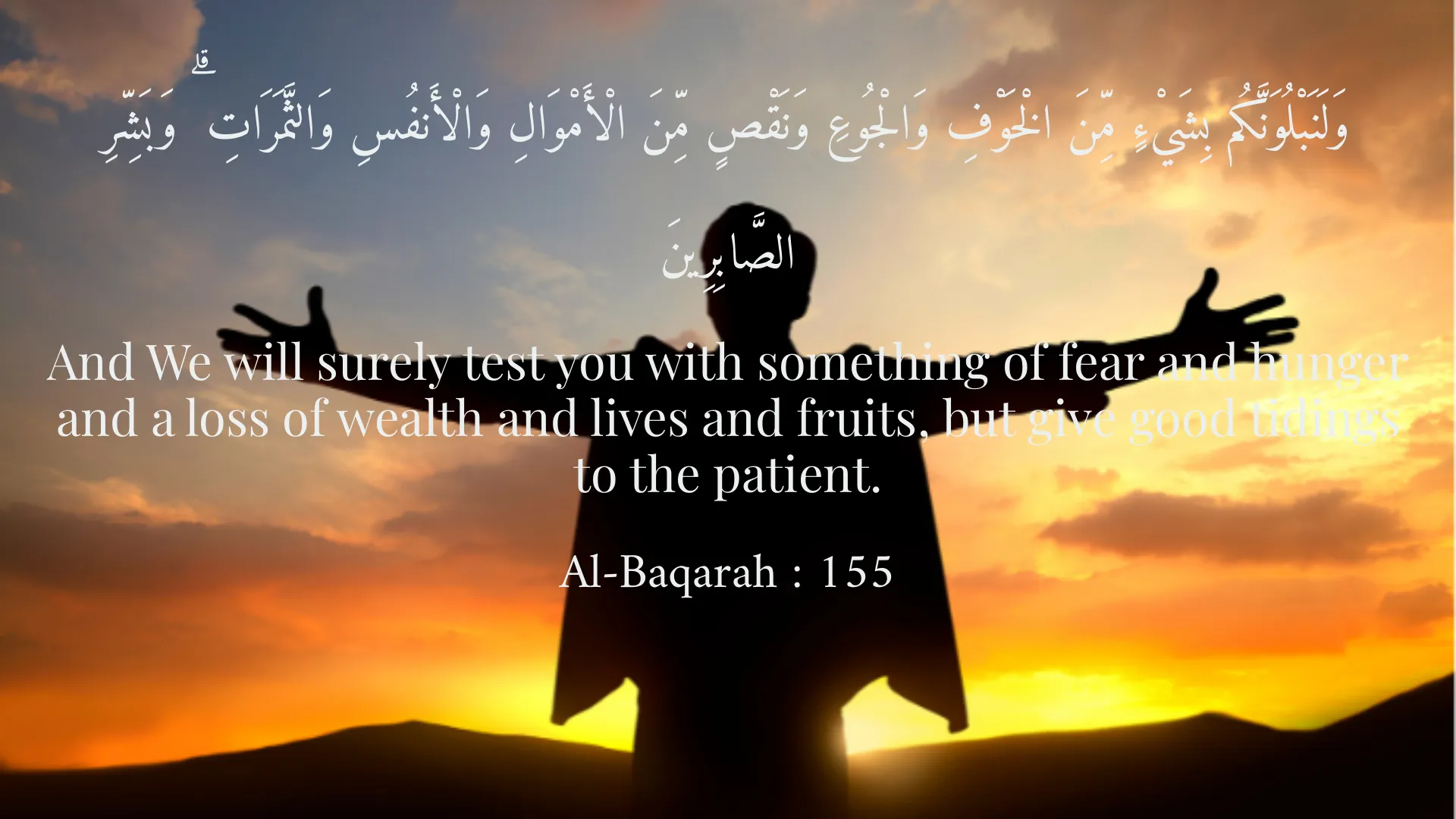
وَلَنَبْلُوَنَّكُم بِشَيْءٍ مِّنَ الْخَوْفِ وَالْجُوعِ وَنَقْصٍ مِّنَ الْأَمْوَالِ وَالْأَنفُسِ وَالثَّمَرَاتِ ۗ وَبَشِّرِ الصَّابِرِينَ
And We will surely test you with something of fear and hunger and a loss of wealth and lives and fruits, but give good tidings to the patient.
Al-Baqarah : 155
أَحَسِبَ النَّاسُ أَن يُتْرَكُوا أَن يَقُولُوا آمَنَّا وَهُمْ لَا يُفْتَنُونَ
Do people think that they will be left alone because they say, 'We believe,' and will not be tested?
Al-Ankabut : 2
وَلَقَدْ فَتَنَّا الَّذِينَ مِن قَبْلِهِمْ ۖ فَلَيَعْلَمَنَّ اللَّهُ الَّذِينَ صَدَقُوا وَلَيَعْلَمَنَّ الْكَاذِبِينَ
But We have certainly tested those before them, and Allah will surely make evident those who are truthful, and He will surely make evident the liars.
Al-Ankabut : 3
الَّذِينَ آمَنُوا وَتَطْمَئِنُّ قُلُوبُهُم بِذِكْرِ اللَّهِ ۗ أَلَا بِذِكْرِ اللَّهِ تَطْمَئِنُّ الْقُلُوبُ
Those who have believed and whose hearts are assured by the remembrance of Allah. Unquestionably, by the remembrance of Allah hearts are assured.
Ar-Ra'd : 28
Short Story
It is narrated that in ancient times, there was a wise man who, despite losing his wealth and children, always maintained a calm demeanor and a hopeful heart. His friends asked him, "How is it that amidst all these calamities, you still smile and no suffering brings you down?" The wise man, with a gentle smile, replied: "Whenever a mighty wave crashes me against a rock, I remember that this wave is a sea driven by my Lord. So I know that this hardship is merely a test to gauge my patience and reliance on Him. And since I know that the end of every dark night is the dawn of hope, my heart finds peace, and my soul knows who its only refuge is." This Saadi-esque tale reminds us that emotional sufferings, though difficult, are opportunities to understand the depth of faith and reliance on the Creator, leading to true tranquility.