Quranic Answer
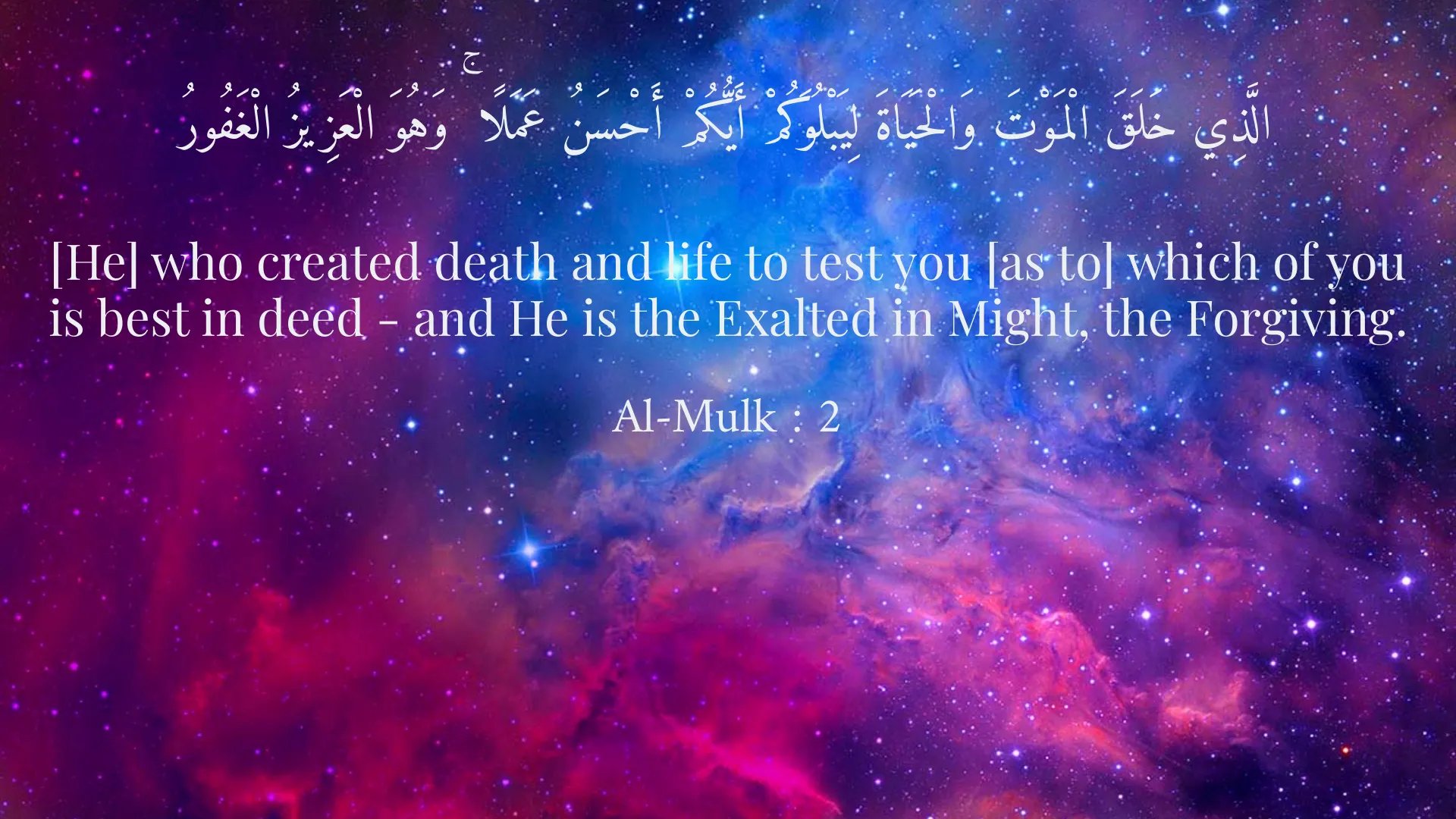
In the Islamic perspective, explicitly supported by the radiant verses of the Holy Quran, it can be definitively stated that indeed, every aspect of human life, from the most minor details to the most significant events, is fundamentally a divine test and trial. This concept is one of the most foundational and profound in the Quran, providing meaning and direction to human existence. Allah Almighty did not create the universe in vain, nor did He leave humanity to wander aimlessly; rather, every moment of our lives is a stage for the manifestation of our true essence and the degree of our servitude to Him. This test is not merely for assessment, but for growth, elevation, and the discovery of our hidden potentials. The Holy Quran explicitly states that the purpose of creating death and life is to test humanity. In Surah Al-Mulk, verse 2, Allah says: "الَّذِي خَلَقَ الْمَوْتَ وَالْحَيَاةَ لِيَبْلُوَكُمْ أَيُّكُمْ أَحْسَنُ عَمَلًا ۚ وَهُوَ الْعَزِيزُ الْغَفُورُ" (He who created death and life to test you [as to] which of you is best in deed - and He is the Exalted in Might, the Forgiving). This verse clearly indicates that the very principle of our creation is founded upon a grand test. Our life is an opportunity; an opportunity to demonstrate how we perform good deeds and how we react to both challenges and blessings. However, this test is not limited to hardships and calamities alone. Many people mistakenly assume that divine tests only manifest in trials and difficulties, whereas the Quran considers both good and evil as means of testing. In Surah Al-Anbiya, verse 35, Allah states: "كُلُّ نَفْسٍ ذَائِقَةُ الْمَوْتِ ۗ وَنَبْلُوكُم بِالشَّرِّ وَالْخَيْرِ فِتْنَةً ۖ وَإِلَيْنَا تُرْجَعُونَ" (Every soul will taste death. And We test you with evil and with good as a trial; and to Us you will be returned). This verse is crucial because it teaches us that both blessings (good) and hardships (evil) are instruments for testing our faith, patience, gratitude, and servitude. How do we utilize our wealth? Are we grateful during times of health and use it in Allah’s way? Does power and position distract us from the remembrance of God? These are all tests of prosperity and ease, which are sometimes more challenging than trials of hardship, as they carry a greater risk of arrogance and heedlessness. In Surah Al-Ankabut, verses 2 and 3, Allah emphasizes that merely believing is insufficient, and faith must be put to the test: "أَحَسِبَ النَّاسُ أَن يُتْرَكُوا أَن يَقُولُوا آمَنَّا وَهُمْ لَا يُفْتَنُونَ * وَلَقَدْ فَتَنَّا الَّذِينَ مِن قَبْلِهِمْ ۖ فَلَيَعْلَمَنَّ اللَّهُ الَّذِينَ صَدَقُوا وَلَيَعْلَمَنَّ الْكَاذِبِينَ" (Do people think that they will be left to say, 'We believe' and they will not be tried? But We have certainly tried those before them, and Allah will surely make evident those who are truthful, and He will surely make evident the liars). These verses clearly show that trials are an inseparable part of the path of faith, and their purpose is to distinguish the truthful from the false. Allah does not need these tests to know, for He is the All-Knowing of the unseen; rather, these tests are for the truth to become apparent to ourselves and to future generations, to establish proof against us, and to provide a path for our growth and perfection. Another type of test mentioned in the Quran involves more specific forms of fear, hunger, and decrease in wealth, lives, and fruits. In Surah Al-Baqarah, verse 155, we read: "وَلَنَبْلُوَنَّكُم بِشَيْءٍ مِّنَ الْخَوْفِ وَالْجُوعِ وَنَقْصٍ مِّنَ الْأَمْوَالِ وَالْأَنفُسِ وَالثَّمَرَاتِ ۗ وَبَشِّرِ الصَّابِرِينَ" (And We will surely test you with something of fear and hunger and a loss of wealth and lives and fruits, but give good tidings to the patient). This verse not only enumerates common types of calamities but also states the main solution for succeeding in these tests: 'patience' (sabr). Those who exhibit patience in the face of these difficulties will be blessed with divine tidings and mercy. Patience here does not mean passive endurance but active resilience, reliance on Allah, and striving to overcome difficult situations with Allah's help. These divine tests have noble objectives. Firstly, they are a means of distinguishing the sincerity of faith from mere claims. It is in the midst of hardship that the true essence of faith is revealed. Secondly, tests serve as a means of purifying the soul and cleansing one's being from impurities and sins, much like gold is heated in a furnace to become pure. Thirdly, they provide an opportunity for the elevation of one's spiritual rank and status. The more patient one is in adversity and grateful in prosperity, the faster they ascend the ladder of progress and draw closer to Allah. Fourthly, these tests bestow insight and wisdom upon humanity, pulling them out of heedlessness and worldly attachments. In the shadow of difficulties, one recognizes their weakness and deeply feels the need to rely on Allah's infinite power. Thus, every phenomenon in life, whether joy or sorrow, success or failure, friendship or enmity, health or illness, all are instruments and stages for a divine test. Viewing life from this perspective brings peace and strength, as one knows that nothing happens without wisdom, and every moment can be an opportunity to gain Allah's pleasure and elevate one's status in His presence. This perspective helps a person not to despair in the face of hardships and not to become arrogant in the face of blessings, but rather to always adhere to the path of moderation, servitude, and gratitude. Therefore, life in Islam is not a blind destiny but a meaningful divine journey where every step is a stride towards perfection and closeness to Allah.
Related Verses
الَّذِي خَلَقَ الْمَوْتَ وَالْحَيَاةَ لِيَبْلُوَكُمْ أَيُّكُمْ أَحْسَنُ عَمَلًا ۚ وَهُوَ الْعَزِيزُ الْغَفُورُ
[He] who created death and life to test you [as to] which of you is best in deed - and He is the Exalted in Might, the Forgiving.
Al-Mulk : 2
وَلَنَبْلُوَنَّكُم بِشَيْءٍ مِّنَ الْخَوْفِ وَالْجُوعِ وَنَقْصٍ مِّنَ الْأَمْوَالِ وَالْأَنفُسِ وَالثَّمَرَاتِ ۗ وَبَشِّرِ الصَّابِرِينَ
And We will surely test you with something of fear and hunger and a loss of wealth and lives and fruits, but give good tidings to the patient,
Al-Baqarah : 155
أَحَسِبَ النَّاسُ أَن يُتْرَكُوا أَن يَقُولُوا آمَنَّا وَهُمْ لَا يُفْتَنُونَ
Do people think that they will be left to say, "We believe" and they will not be tried?
Al-Ankabut : 2
وَلَقَدْ فَتَنَّا الَّذِينَ مِن قَبْلِهِمْ ۖ فَلَيَعْلَمَنَّ اللَّهُ الَّذِينَ صَدَقُوا وَلَيَعْلَمَنَّ الْكَاذِبِينَ
But We have certainly tried those before them, and Allah will surely make evident those who are truthful, and He will surely make evident the liars.
Al-Ankabut : 3
كُلُّ نَفْسٍ ذَائِقَةُ الْمَوْتِ ۗ وَنَبْلُوكُم بِالشَّرِّ وَالْخَيْرِ فِتْنَةً ۖ وَإِلَيْنَا تُرْجَعُونَ
Every soul will taste death. And We test you with evil and with good as a trial; and to Us you will be returned.
Al-Anbiya : 35
Short Story
It is narrated that in ancient times, there was a wealthy and renowned merchant whose riches and possessions were immeasurable, and his caravans traversed every direction. One day, his ships encountered a severe storm at sea, and all that he possessed was swept away. The merchant, who until then had known nothing but joy and abundance, was heartbroken by this incident and sat mourning in a corner of his house. An old friend, a simple-hearted and wise dervish, came to visit him and found him distraught. He asked, "My friend! What has happened that you sit so sorrowfully?" The merchant sighed and recounted his distress. The dervish smiled and said, "Brother! Look closely, for what you lost was merely worldly possession, whose nature is disloyalty. He who granted you this wealth knows when to reclaim it. Is it not that this world is a house of trial, and all within it are tools for testing our servitude? Yesterday, He tested you with richness; today, with poverty. If in both states you are grateful and patient, then indeed you have polished the gem of faith. Perhaps this indigence is a path to eternal comfort and a wisdom that cannot be matched by all the treasures of the world." The merchant gained insight from these words and understood that the world is but a fleeting passage, and all that transpires within it is for the testing of human nature. So, he rose, repented, engaged in good deeds, and found a tranquility in his heart that surpassed thousands of treasures.