Quranic Answer
In the Holy Quran, sorrow and sadness are recognized as natural human emotions, integral to the human experience, and are often seen as catalysts for spiritual growth and development. Throughout the Quran, numerous verses reflect upon the nature of these emotions, offering guidance on navigating the hardships that often accompany them. In the light of Islamic teachings, sorrow is not merely a burden, but rather an opportunity for introspection, resilience, and ultimately, personal evolution. One of the key verses that shed light on the relationship between human emotions and faith is found in Surah Al-Baqarah, verse 155, where Allah states, 'And We will surely test you with something of fear and hunger and a loss of wealth and lives and fruits, but give good tidings to the patient.' This verse clearly indicates that life is filled with challenges and tests, many of which can incite feelings of sorrow and sadness. It is important to recognize that these afflictions are not a punishment, but a fundamental aspect of the human existence that Allah has chosen as a means to grow closer to Him. Amidst the trials, Allah promises that there are rewards for those who exercise patience and perseverance. This verse serves as a profound reminder that while it is natural to experience sorrow, it is how one responds to that sorrow that defines the strength of their faith. Moreover, the Quran emphasizes that excessive sorrow in itself is not a sign of weak faith; rather, it is an essential part of the trials and tests that Allah subjects individuals to during their lifetime. In fact, the expression of sorrow is often viewed as a natural reaction to challenging circumstances, not an indication of one's spiritual shortcomings. The Quran acknowledges that being human inherently comes with an array of emotions, including sadness. However, it encourages believers to view these emotions through the lens of faith and trust in Allah's wisdom. In exploring the theme of grief and sorrow, Surah Al-Imran, verse 139 states: 'And do not grieve or be sad.' This powerful exhortation serves as a reminder to put one's trust in Allah and rely on hope, even during times of great distress. The verse emphasizes that while feelings of sorrow may arise, believers should strive to maintain their connection to Allah and their faith amidst adversity. The concept of surrendering one’s worries to Allah is central to Islamic teachings; it encourages believers not to dwell excessively on their troubles but to channel their energy into actions that affirm their faith and reliance on the divine. Further, the exploration of sorrow as a divine test speaks volumes about the Islamic perspective on suffering. In moments of heartbreak and despair, individuals are often compelled to turn to Allah, thus reinforcing their faith and connection to the Divine. The pain experienced during trials can lead to greater spiritual awareness, empathy towards others, and a heightened sense of purpose. By responding to sorrow with patience and prayer, believers can mitigate their despair and cultivate a resilient spirit. Sorrow can indeed serve as a profound tool for self-discovery and spiritual elevation. It reveals the depth of an individual's character, as enduring hardship can facilitate a transformation that is both profound and enlightening. The emotional struggle often leads to greater self-reflection and a deeper understanding of one’s purpose in life. This introspection can inspire individuals to reach out in compassion and support to those facing similar struggles, thus fostering a sense of community and interconnectedness among believers. In facing the trials of sorrow, the importance of seeking solace in prayer cannot be overstated. The act of turning to Allah during moments of distress is both a testament to one’s faith and a potential source of immense relief. Prayer serves as a refuge, a place for individuals to process their emotions and seek comfort. Developing a routine of prayer and remembrance (dhikr) becomes a sanctuary for those experiencing sorrow, providing both tranquility and strength. As the heart finds solace in prayer, one is reminded of Allah’s immense mercy and the promise of better times ahead. Additionally, the importance of community support in mitigating feelings of sorrow is emphasized throughout Islamic teachings. Engaging with others who share similar values can provide comfort and reassurance during times of distress. Believers are encouraged to unite in their challenges, providing mutual support and encouragement that reinforces their collective faith. Whether through shared prayers, charitable acts, or simple companionship, the bonds formed during times of grief can be transformative, lightening the burdens that come with sorrow. Moreover, suffering can contribute to building resilience within individuals when they realize the impermanence of life’s challenges. Islamic teachings encourage believers to embrace transient experiences, both joyful and sorrowful. Acknowledging the fact that life is a series of tests prompts a greater appreciation for the moments of happiness and tranquility. This perspective helps believers remain grounded, viewing sorrows as fleeting episodes that contribute to their spiritual path rather than as permanent states of being. In conclusion, the Holy Quran presents sorrow as a natural human emotion intertwined with life’s journey and spiritual growth. Verses such as those in Surah Al-Baqarah and Surah Al-Imran guide followers towards patience, hope, and faith during their trials. Far from being a signal of weakness, sorrow is depicted as an opportunity for spiritual and personal development. By embracing sadness with a heart that seeks strength in faith, believers can transform their grief into a source of divine connection and resilience. Through prayer, community support, and introspection, individuals are empowered to navigate the complexities of life with a renewed spirit, emerging stronger and more committed to their faith.
Related Verses
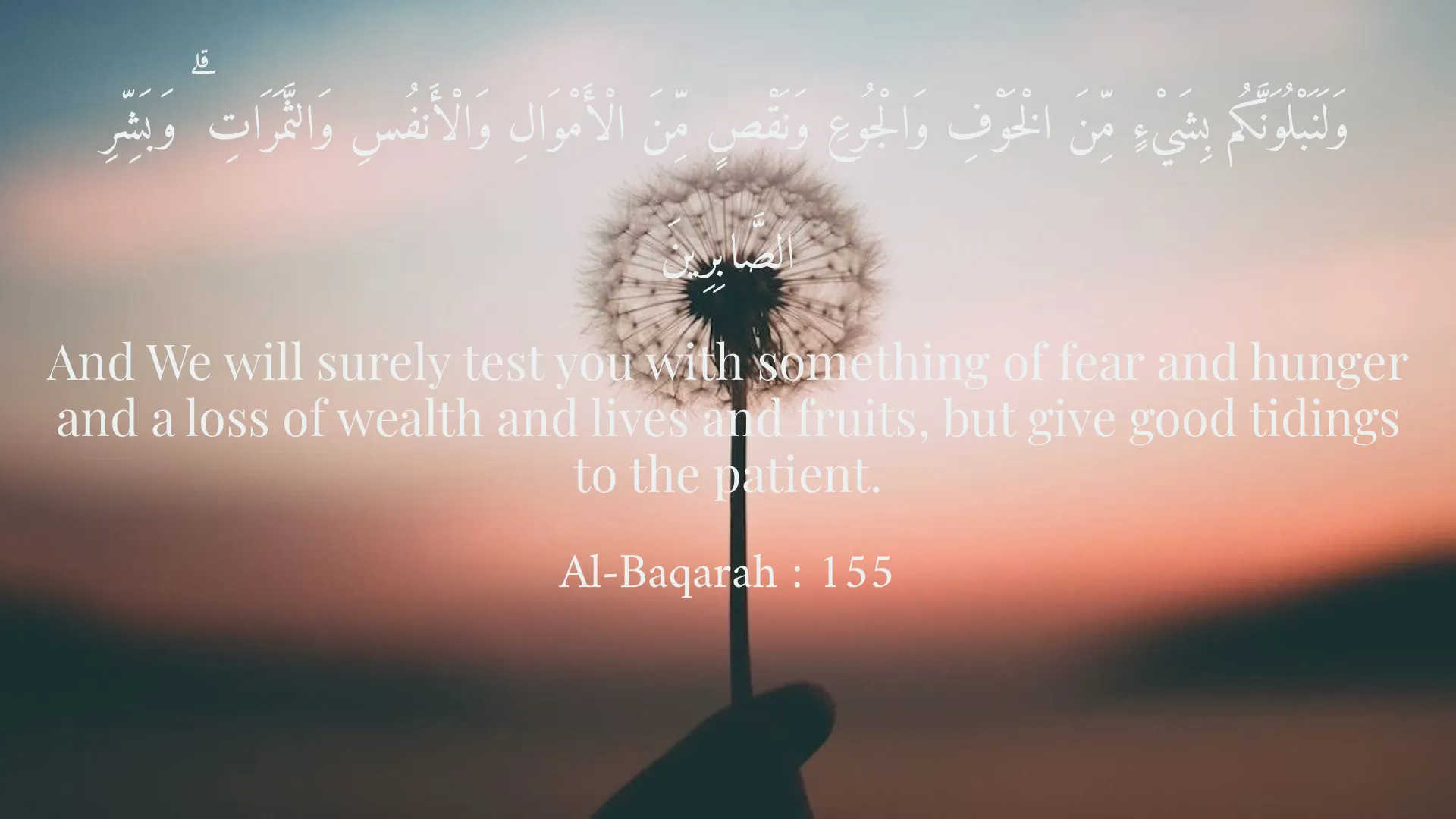
وَلَنَبْلُوَنَّكُم بِشَيْءٍ مِّنَ الْخَوْفِ وَالْجُوعِ وَنَقْصٍ مِّنَ الْأَمْوَالِ وَالْأَنفُسِ وَالثَّمَرَاتِ ۗ وَبَشِّرِ الصَّابِرِينَ
And We will surely test you with something of fear and hunger and a loss of wealth and lives and fruits, but give good tidings to the patient.
Al-Baqarah : 155
وَلَا تَحْزَنُوا وَ لَا تَهْنُوا
And do not grieve or be sad.
Al-Imran : 139
Short Story
Once upon a time, a young man named Sajjad was very dissatisfied with his life and often looked at his tasks through the lens of sorrow. One day, he went to a scholar and asked him if sorrow was a sign of weak faith. The scholar replied: 'Sajjad, sorrow is part of life, and no one is exempt from it. You must manage that feeling and seek refuge in God amidst it. That is when your faith strengthens.' Sajjad listened to this valuable advice and ultimately found true happiness and belief.