Quranic Answer
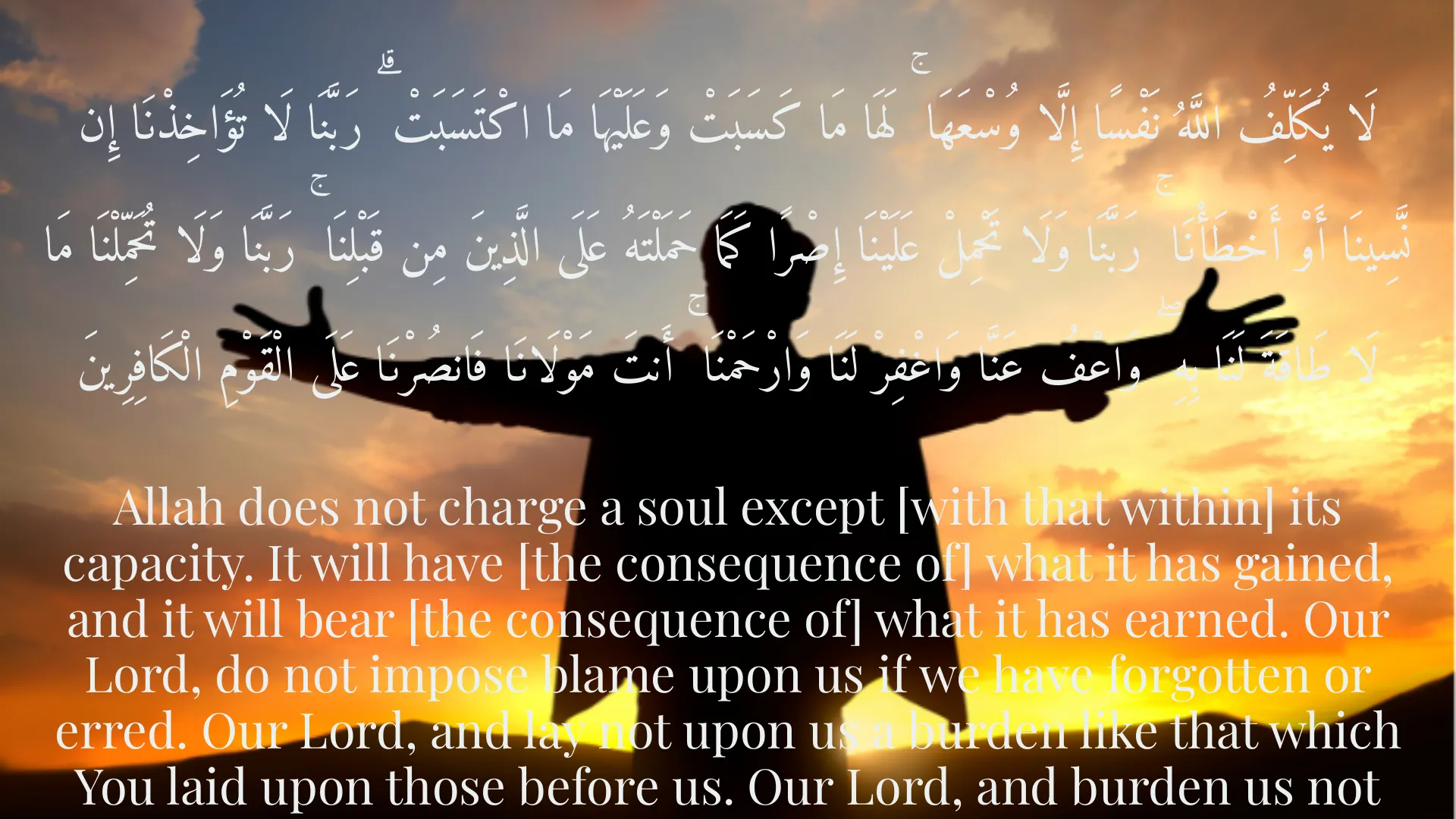
In the rich and profound teachings of the Holy Quran, exhaustion from worship is never directly deemed a sign of weakness in faith or aimlessness. Rather, the Quran provides comprehensive and wise guidance for understanding and dealing with human conditions on the path of servitude to God. Almighty Allah, who is the Creator of humanity and fully aware of all its weaknesses and strengths, never burdens His servants with obligations beyond their capacity. This fundamental truth is explicitly stated in verse 286 of Surah Al-Baqarah: "Allah does not charge a soul except [with that within] its capacity." This divine ease and mercy indicate that if an individual feels tired from worship, it is not necessarily a sign of their faith's weakness, but rather it could be due to multiple reasons that require attention and reassessment, not discouragement or despair. One of the most significant reasons that can lead to a feeling of exhaustion in worship is the lack of moderation and balance. Islam is not a religion of extremism or negligence; instead, it strongly emphasizes the principle of 'Wasatiyyah' or moderation. If an individual engages in worship beyond their capacity and neglects their physical and mental rights, it is natural for them to experience exhaustion and aversion. This exhaustion is not a sign of weakness in faith, but rather a warning to return to balance and adhere to the limits that Islam itself has set for a healthy and sustainable spiritual life. The Holy Quran refers to this principle of moderation in several verses, emphasizing that Allah desires ease for His servants, not hardship: "Allah intends for you ease and does not intend for you hardship" (Al-Baqarah: 185). This verse, revealed in the context of fasting, has a broader meaning and refers to the general nature of divine commandments, which aim to provide ease and comfort for humanity, not difficulty and fatigue. Furthermore, sometimes exhaustion from worship can stem from non-spiritual reasons, such as physical fatigue, psychological pressure, worldly problems, or even insufficient knowledge of the philosophy and wisdom behind acts of worship. In such circumstances, the Quran offers practical and hopeful solutions. The most important solution is to seek refuge in patience and prayer. In verse 153 of Surah Al-Baqarah, we read: "O you who have believed, seek help through patience and prayer. Indeed, Allah is with the patient." This verse teaches us that when facing any difficulty, including spiritual hardships or exhaustion, we should seek assistance from these two powerful divine tools. Patience means steadfastness and endurance in the face of problems, and prayer means renewing one's covenant and connection with the inexhaustible source of power and tranquility. When an individual feels exhausted, this can be an opportunity to reassess the quality of worship, not just its quantity. The Holy Quran places great emphasis on sincerity (Ikhlas) and presence of heart (Hudhur al-Qalb) in worship. Sometimes, a short act of worship performed with full presence of heart has a deeper impact than lengthy acts performed without sufficient attention. Focusing on quality can prevent aversion and increase the spiritual pleasure of worship. The primary goal of worship is the remembrance of Allah and drawing closer to Him: "Unquestionably, by the remembrance of Allah hearts are assured" (Ar-Ra'd: 28). If worship brings fatigue and boredom instead of tranquility, one should reflect on the manner of its performance or one's inner state. Ultimately, exhaustion from worship can be seen as a natural stage in the spiritual journey; like any long journey, it may involve ups and downs and moments of fatigue. These moments are opportunities for self-discovery, correcting one's path, and gaining a deeper understanding of divine mercy and grace. The Holy Quran invites believers to steadfastness and persistence in the right path, but it never compels them to do things beyond their capacity. Therefore, if such a feeling comes upon us, we should consider it a sign for contemplation, rest, renewing our intention, and returning to the principle of moderation, rather than a reason for doubting our faith or purpose. It is an invitation to rectification and growth, not an accusation of weakness.
Related Verses
لَا يُكَلِّفُ اللَّهُ نَفْسًا إِلَّا وُسْعَهَا ۚ لَهَا مَا كَسَبَتْ وَعَلَيْهَا مَا اكْتَسَبَتْ ۗ رَبَّنَا لَا تُؤَاخِذْنَا إِن نَّسِينَا أَوْ أَخْطَأْنَا ۚ رَبَّنَا وَلَا تَحْمِلْ عَلَيْنَا إِصْرًا كَمَا حَمَلْتَهُ عَلَى الَّذِينَ مِن قَبْلِنَا ۚ رَبَّنَا وَلَا تُحَمِّلْنَا مَا لَا طَاقَةَ لَنَا بِهِ ۖ وَاعْفُ عَنَّا وَاغْفِرْ لَنَا وَارْحَمْنَا ۚ أَنتَ مَوْلَانَا فَانصُرْنَا عَلَى الْقَوْمِ الْكَافِرِينَ
Allah does not charge a soul except [with that within] its capacity. It will have [the consequence of] what it has gained, and it will bear [the consequence of] what it has earned. Our Lord, do not impose blame upon us if we have forgotten or erred. Our Lord, and lay not upon us a burden like that which You laid upon those before us. Our Lord, and burden us not with that which we have no ability to bear. And pardon us; and forgive us; and have mercy upon us. You are our protector, so give us victory over the disbelieving people.
Al-Baqarah : 286
يَا أَيُّهَا الَّذِينَ آمَنُوا اسْتَعِينُوا بِالصَّبْرِ وَالصَّلَاةِ ۚ إِنَّ اللَّهَ مَعَ الصَّابِرِينَ
O you who have believed, seek help through patience and prayer. Indeed, Allah is with the patient.
Al-Baqarah : 153
شَهْرُ رَمَضَانَ الَّذِي أُنزِلَ فِيهِ الْقُرْآنُ هُدًى لِّلنَّاسِ وَبَيِّنَاتٍ مِّنَ الْهُدَىٰ وَالْفُرْقَانِ ۚ فَمَن شَهِدَ مِنكُمُ الشَّهْرَ فَلْيَصُمْهُ ۖ وَمَن كَانَ مَرِيضًا أَوْ عَلَىٰ سَفَرٍ فَعِدَّةٌ مِّنْ أَيَّامٍ أُخَرَ ۗ يُرِيدُ اللَّهُ بِكُمُ الْيُسْرَ وَلَا يُرِيدُ بِكُمُ الْعُسْرَ وَلِتُكْمِلُوا الْعِدَّةَ وَلِتُكَبِّرُوا اللَّهَ عَلَىٰ مَا هَدَاكُمْ وَلَعَلَّكُمْ تَشْكُرُونَ
The month of Ramadhan [is that] in which was revealed the Quran, a guidance for the people and clear proofs of guidance and criterion. So whoever sights [the new moon of] the month, let him fast it; and whoever is ill or on a journey - then an equal number of other days. Allah intends for you ease and does not intend for you hardship and [wants] for you to complete the period and to glorify Allah for that [to] which He has guided you; and perhaps you will be grateful.
Al-Baqarah : 185
Short Story
It is narrated that there was an ascetic dervish who spent many nights in worship and fasted during the days. However, after some time, a feeling of exhaustion and weariness overcame him, and worship became a heavy burden. With a troubled heart, he went to a wise Sheikh and recounted his state. The Sheikh, with kindness, said: "My son, worship is not about quantity, but about the presence of heart and steadfastness. God desires from you an eager heart and a pure intention, not a worn-out body and a disheartened soul. A little worship with eagerness and sincerity is better than much worship done unwillingly and without attention. Do not pressure yourself lest you abandon the path, for perseverance in a little is better than cutting off from much. Take it easy so you do not fall, for God is merciful to His servants and does not ask more than they can bear." With these wise words, the dervish found peace and understood that the path of truth is the path of moderation and awareness, not futile hardship.