Quranic Answer
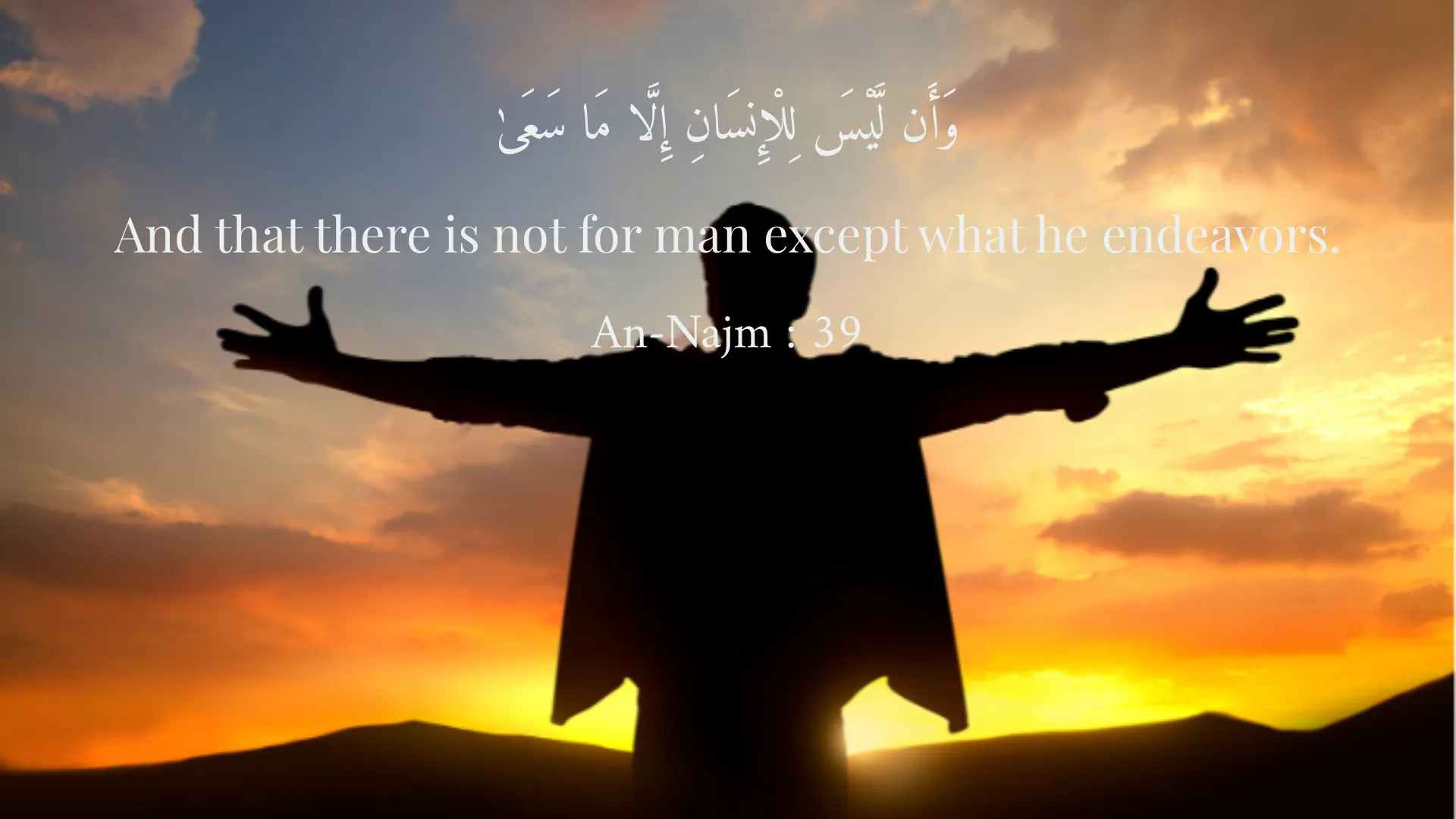
Understanding the connection between human effort, divine blessing, and the strength of faith requires a deep reflection on the teachings of the Holy Quran. The simple and definitive answer to the question of whether extensive effort without blessing is a sign of weak faith is 'no,' but this answer necessitates extensive clarification and elaboration. The Holy Quran consistently emphasizes the importance of effort, striving, and utilizing all human capabilities. In numerous verses, Allah encourages humanity to work and strive, stating that 'there is not for man except what he endeavors.' This emphasis on diligence signifies that humans are obligated to exert their utmost effort to achieve their goals and not to remain idle. However, the concept of 'blessing' (Barakah) in the Islamic worldview extends far beyond mere material gains and apparent outcomes of efforts. Barakah is a spiritual and qualitative increase bestowed by Allah upon one's work, wealth, lifespan, or any aspect of life, such that a small quantity yields abundant fruits, or life is accompanied by peace, contentment, and goodness. Therefore, the lack of observable material results, or what we typically call 'blessing,' does not necessarily mean the absence of blessing. Rather, blessing might manifest in other forms, such as inner peace, health, guidance, spiritual opportunities, or even as a lesson for one's spiritual growth and perfection. Sometimes, Allah withholds what appears to be material success from His servants to guide them towards higher and more enduring values. The Holy Quran explicitly states that sustenance (rizq) and the ultimate outcomes of matters are in the hands of Allah Almighty. Humans strive, but it is Allah who decrees the result. This does not mean disregarding effort; rather, it means understanding the truth that effort is a means to achieve a goal and fulfill a duty, but the ultimate realization of the goal and the attainment of blessing depend on divine will and wisdom. This perspective prevents individuals from despairing when desired outcomes are not achieved, inviting them instead to patience, reliance (Tawakkul), and submission to divine decree. An individual who strives with all their being but does not see the desired result, if they possess strong faith, will not despair. Instead, they will believe in Allah's wisdom and understand that their welfare and benefit lie in what Allah has destined for them. Moreover, worldly life is a field of trial and tribulation. Allah states in the Quran that He will surely test humanity with fear, hunger, and loss of wealth, lives, and fruits. Therefore, extensive effort without desired outcomes might itself be a divine test to gauge the servant's patience, gratitude, and reliance on Allah. In such circumstances, weak faith becomes evident when an individual shows impatience in the face of these trials, forgets gratitude, falls into despair, or deviates from the path of servitude. However, if, despite the lack of desired outcomes, one exercises patience, relies on Allah, continues their efforts with pure intention, this is not a sign of weak faith; rather, it can be a sign of the strength and depth of their faith. Such an individual has certainty in Allah's promise of reward for the patient and those who rely on Him, knowing that the reward for their efforts is preserved with Allah, even if it does not yield material fruits in this world. Furthermore, sometimes the apparent lack of blessing can be due to human sins and shortcomings, which themselves can be interpreted as a form of weakness in practical faith. However, this is not a general or constant rule. Sometimes, a believer is pious and righteous, yet for the preservation of their sincerity, or due to wisdom known only to Allah, the material results of their efforts are limited. Ultimately, it must be said that the criterion for assessing faith is not merely worldly and material successes. Rather, true faith is manifested in steadfastness, gratitude in blessings, patience in adversity, reliance in all matters, and a good opinion of Allah. Therefore, extensive effort without apparent blessing is not, in itself, a sign of weak faith; rather, it can be a fertile ground for the growth and perfection of true faith and reliance, if one views it with divine insight and wisdom.
Related Verses
وَأَن لَّيْسَ لِلْإِنسَانِ إِلَّا مَا سَعَىٰ
And that there is not for man except what he endeavors.
An-Najm : 39
وَمَن يَتَوَكَّلْ عَلَى اللَّهِ فَهُوَ حَسْبُهُ ۚ إِنَّ اللَّهَ بَالِغُ أَمْرِهِ ۚ قَدْ جَعَلَ اللَّهُ لِكُلِّ شَيْءٍ قَدْرًا
And whoever relies upon Allah – He is sufficient for him. Indeed, Allah will accomplish His purpose. Allah has already set for everything a [decreed] extent.
At-Talaq : 3
وَلَنَبْلُوَنَّكُم بِشَيْءٍ مِّنَ الْخَوْفِ وَالْجُوعِ وَنَقْصٍ مِّنَ الْأَمْوَالِ وَالْأَنفُسِ وَالثَّمَرَاتِ ۗ وَبَشِّرِ الصَّابِرِينَ
And We will surely test you with something of fear and hunger and a loss of wealth and lives and fruits, but give good tidings to the patient,
Al-Baqarah : 155
Short Story
It is narrated in Sa'di's Golestan that there was once a diligent and hardworking farmer who irrigated his land with all his heart and sowed seeds. He never stopped striving, working from dawn till dusk in his field. However, by divine decree, his harvest each year was meager and insufficient, while a less industrious neighbor witnessed an extraordinary blessing in his land, and his barn was filled with grain. Tired and heartbroken, the farmer one day approached a wise dervish, who was insightful into divine wisdom, and lamented with sighs: 'O Sage, I strive with all my being, I sweat and do not cease working, but why is there no blessing in my work, and my harvest is so small? Is my effort unrewarded, or has my faith weakened?' The dervish smiled kindly and said: 'My friend, your hand sows the seeds, but it is the cloud that rains and the sun that shines. Your effort is your duty, and your reward is preserved with God. But blessing is sustenance that Allah distributes according to His wisdom, not according to the amount of effort of His servants. Perhaps in your small harvest lies a hidden wisdom; perhaps it is a lesson in patience or a detachment from excessive worldly attachments. True blessing is the peace of heart and contentment with divine decree, not just the filling of barns. Your worry about the outcome is a sign of attachment to this world, not weak faith. Strong faith is to trust in God's wisdom even in hardships and to know that He desires the best for His servants. So, work and entrust your heart to Him, for He is the best provider.' Hearing these words, the farmer found peace and understood that his effort was merely a means and that destiny was in the hands of God. From then on, with a calmer heart and greater reliance, he continued his work, and in this tranquility, he found another blessing he had not known before.