Quranic Answer
Forgiveness is one of the most profound emotions that can impact our lives. Across different cultures, religions, and philosophies, the concept of forgiveness has been emphasized as a vital part of human experience. In essence, forgiveness facilitates healing, growth, and inner peace. A pivotal aspect of this is the idea of self-forgiveness, which is integral to personal development and emotional well-being. In this article, we will explore the significance of forgiving oneself, particularly through the lens of teachings found in the Quran, and reflect on how this process can lead individuals toward a more fulfilling and meaningful life. ### Understanding Self-Forgiveness What is self-forgiveness? At its core, self-forgiveness involves the ability to accept our mistakes, learn from them, and move on without being weighed down by guilt or regret. Too often, we hold ourselves captive to our past errors, which can lead to a cycle of self-blame and negative self-talk. Unfortunately, these feelings can adversely affect our mental and emotional health. Self-forgiveness is not about excusing our behavior; rather, it is about acknowledging our humanity, accepting imperfections, and recognizing that the capacity to err is a common aspect of being human. ### The Teachings of the Quran on Forgiveness Islam places great emphasis on the significance of forgiveness, and many verses throughout the Quran highlight the importance of both forgiving others and ourselves. One of the most poignant verses appears in Surah An-Nur, verse 22: "And let not those of virtue among you and wealth swear not to give to the near relatives and the orphans and the needy and the travelers, and let them pardon and overlook. Would you not like that Allah should forgive you? And Allah is Forgiving and Merciful." This verse serves as a powerful reminder that forgiveness should be an innate part of our character and behavior. The directive to pardon and overlook is a call to embody virtues of compassion and understanding, not only toward others but also within ourselves. It raises the crucial question of self-forgiveness: if we wish to receive forgiveness from Allah, ought we not to extend that same grace to ourselves? Furthermore, in Surah Aal-E-Imran, verse 134, Allah outlines the rewards for those who practice patience and forgiveness: "And those who spend in the cause of Allah during the time of ease and hardship and who restrain anger and who pardon the people— and Allah loves the doers of good." The connection between forgiveness, patience, and goodness is noteworthy. Self-forgiveness entails recognizing our shortcomings and learning to compassionately accept them, thus enabling us to progress in our spiritual journey. ### The Psychological Benefits of Forgiveness Forgiving ourselves has numerous psychological benefits. Studies have shown that individuals who are able to forgive themselves experience lower levels of stress and anxiety, and improved emotional well-being. The act of letting go of negativity can invoke a sense of relief, as carrying the burdens of guilt and shame often escalates into larger mental health issues. By forgiving ourselves, we release the emotional weight that obstructs our path toward progress and fulfillment. Moreover, releasing regret allows us to break free from the cycle of negative self-reinforcement. When we stop beating ourselves up over past mistakes, we open the door to self-improvement. It paves the way for personal growth and development, as we become more compassionate and understanding individuals. In turn, this compassion can strengthen our connections with others and foster healthier relationships, built on understanding and mutual respect. ### The Journey of Self-Forgiveness The journey of self-forgiveness can be intricate, often requiring deep reflection and personal commitment. Here are some steps to facilitate this transformative process: 1. Acknowledge Your Mistakes: The first step toward self-forgiveness is recognizing and accepting the mistakes we have made. It is important to confront our actions, understand the impact they had on ourselves and others, and take ownership of them. 2. Learn from the Experience: Self-forgiveness involves learning from mistakes. What lessons can you derive from your experiences? Understanding how we can grow from these situations can help alleviate guilt and foster personal development. 3. Practice Self-Compassion: Treat yourself with kindness and understanding. Recognize that making mistakes is human; allow yourself the grace you would extend to a friend in the same situation. 4. Let Go of Perfectionism: Many individuals hold themselves to unrealistic standards, which can lead to feelings of inadequacy. Accept that perfection is unattainable, and it is our very flaws that contribute to our uniqueness. 5. Seek Guidance and Support: Sometimes, navigating the journey of self-forgiveness can be challenging. Confiding in friends, family, or seeking professional help can provide necessary encouragement and support. ### The Path to Personal Growth Forgiving oneself is an ongoing process, one that may require continual effort. However, the rewards are well worth the journey. By allowing ourselves the freedom of self-forgiveness, we can cultivate positive feelings, develop resilience, and foster personal growth. We begin to understand that our past does not define us but rather serves as a stepping-stone toward improvement and empowerment. In conclusion, self-forgiveness is not merely an act of compassion towards oneself. It embodies a larger principle that resonates profoundly within the teachings found in the Quran. By embracing forgiveness, we not only allow ourselves the grace to overcome past mistakes but also align ourselves with divine attributes of mercy and compassion. As we develop the ability to forgive ourselves, we simultaneously gain the strength and clarity needed to navigate life’s challenges with grace and resilience. Ultimately, self-forgiveness is a pathway to spiritual tranquility, personal growth, and the fulfillment of living a life of virtue and purpose.
Related Verses
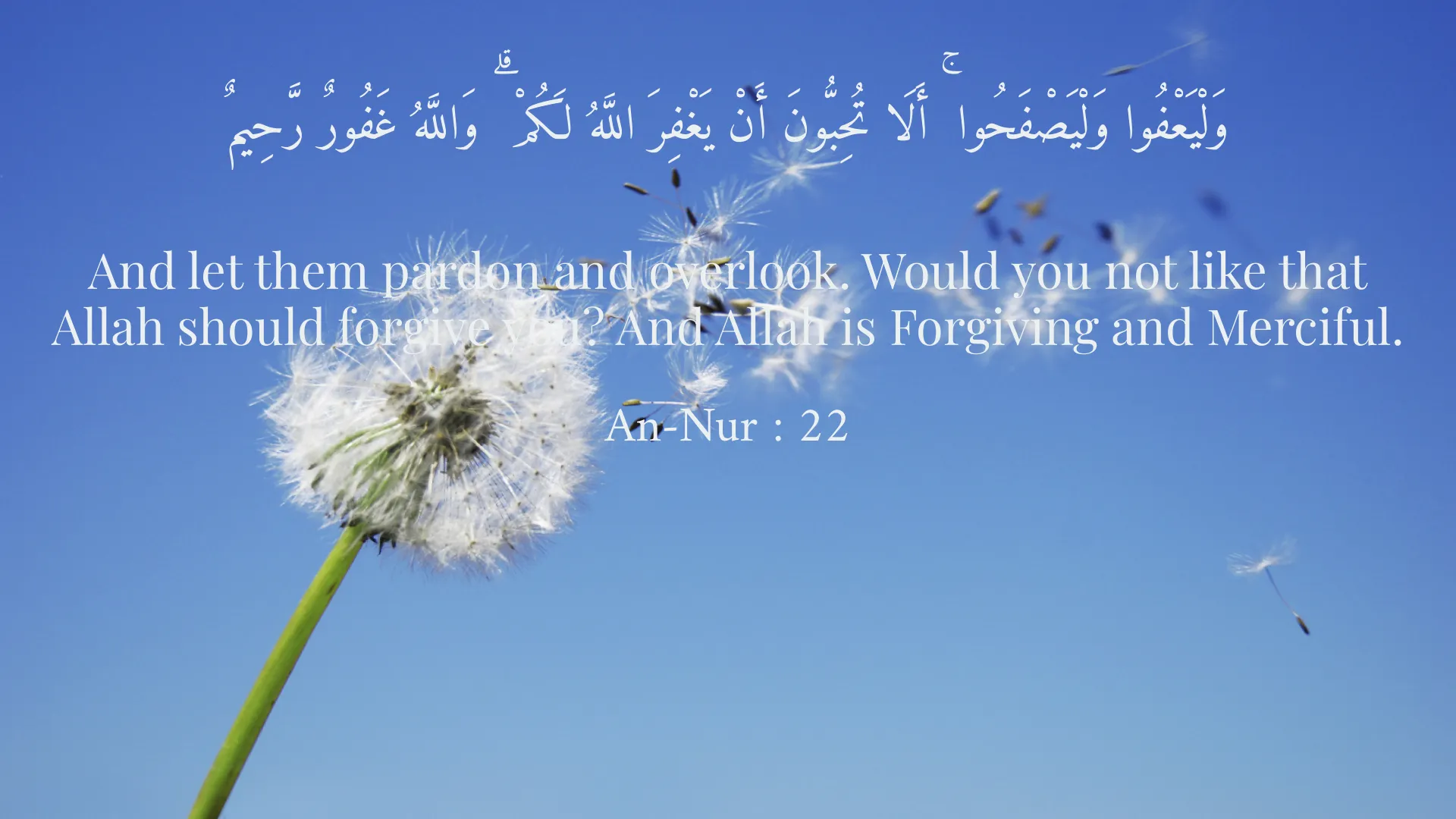
وَلْيَعْفُوا وَلْيَصْفَحُوا ۚ أَلَا تُحِبُّونَ أَنْ يَغْفِرَ اللَّهُ لَكُمْ ۗ وَاللَّهُ غَفُورٌ رَّحِيمٌ
And let them pardon and overlook. Would you not like that Allah should forgive you? And Allah is Forgiving and Merciful.
An-Nur : 22
وَالَّذِينَ يُنفِقُونَ فِي السَّرَّاء وَالضَّرَّاء وَالْكَاظِمِينَ الْغَيْظَ وَالْعَافِينَ عَنِ النَّاسِ ۗ وَاللَّهُ يُحِبُّ الْمُحْسِنينَ
And those who spend in the cause of Allah during the time of ease and hardship and who restrain anger and who pardon people— and Allah loves the doers of good.
Aal-E-Imran : 134
Short Story
One day, Adel was pondering whether he could truly forgive himself. He found himself in a difficult position and felt he had committed a great sin. Therefore, he decided to refer to the Quran. After reading the related verses, he realized that Allah is always ready to forgive, and the priority of forgiveness must first be towards ourselves. After some time, Adel was able to move forward with a better feeling towards life.