Quranic Answer
Marriage is a significant aspect of human life that transcends cultural, religious, and societal boundaries. In the Islamic faith, marriage is not merely viewed as a social contract; it is recognized as a sacred institution that is rooted in divine principles. The Holy Quran provides profound insights into the nature and purpose of marriage, emphasizing its importance in establishing harmony and mutual respect between spouses. One of the most eloquent verses that encapsulates this divine perception of marriage is found in Surah Ar-Rum, verse 21. The verse states: "And among His signs is that He created for you from your own selves mates that you may find tranquility in them, and He placed between you affection and mercy. Indeed, in that are signs for a people who give thought." This verse offers a comprehensive understanding of the divine endorsement of marriage, illustrating that it serves a higher purpose beyond mere social companionship. ### The Divine Purpose of Marriage Marriage, according to the Quran, serves as a means to achieve tranquility and peace within the family unit. In a world where chaos and uncertainty often prevail, the sanctity of marriage presents a refuge for individuals to find solace with one another. The notion of finding a mate "from your own selves" signifies that within the union is an innate understanding and compatibility that strengthens the bond between partners. The qualities of affection and mercy that Allah has decreed to exist between spouses highlight the importance of compassion and empathy in a marital relationship. This divine provision is indicative of a loving and harmonious partnership, which is essential for the nurturing of a family and the upbringing of future generations. ### Joy and Celebration in Marriage The celebration of marriage is not merely a societal obligation but a sacred rite that is encouraged within Islamic tradition. The joy expressed during wedding ceremonies is a reflection of the happiness that the union is expected to bring into the lives of the newlyweds. The wedding day marks the beginning of a shared journey filled with hope, love, and mutual support. Therefore, it is essential that the community and family come together to celebrate this momentous occasion with joy and enthusiasm. Islam recognizes that wedding ceremonies are important communal events that foster relationships within families and communities. The celebration should encompass not only the happiness of the couple but also the joy of family and friends. In many cases, traditional practices are observed, and Islamic customs and guidelines help shape how weddings are celebrated. These traditions help ensure that the ceremony is conducted in a respectful and dignified manner. The significance of joy at weddings is further accentuated by the belief that such celebrations are an expression of gratitude towards Allah for the blessings of love and companionship. ### Upholding Dignity in Celebration While joy in marriage is encouraged, it is essential that the celebration embodies dignity and decorum. An Islamic wedding should be characterized by reasonable and suitable customs that reflect the values of modesty and respect. Extravagant or inappropriate behaviors during these festivities can contradict the purpose of the union. The underlying principle of moderation is central in cultural expressions of joy and celebration. Couples and their families are encouraged to focus on the spiritual significance of marriage rather than on material extravagance. This is rooted in the belief that marriage is, fundamentally, a pursuit of divine pleasure and connection. A wedding, therefore, becomes a sacred commitment that is celebrated with mindfulness and sincerity. It is an opportunity for families to come together, affirm their intentions, and strengthen their bonds through mutual respect. The harmony and joy experienced by the couple can, in turn, radiate into their social circles, fostering a spirit of kinship and community. ### Reflecting Divine Grace in Marriage Islamic teachings convey that happiness and joy in marriage are indeed permissible, and they stand as the best expression of a union that begins with divine grace. The first step towards a blissful and fulfilling marriage is the acknowledgment of its spiritual dimensions. Couples are encouraged to cultivate love and respect that aligns with the principles laid out in the Quran. Engaging in acts of kindness and understanding creates an environment where both partners can thrive together as a unit. Moreover, it is essential to remember that marriage is not always devoid of challenges. Every relationship faces trials, and it is through the application of the values of empathy and mercy that couples can navigate these difficulties. The divine attributes of love, patience, and understanding are paramount in ensuring a lasting and productive marriage. In the Islamic context, marriage is seen not only as a personal journey but a collective experience that contributes to the larger fabric of society. A strong marital relationship cultivates a loving and nurturing environment for the upbringing of children, which is one of the significant responsibilities placed on parents. Hence, the positive impact of a joyful marriage extends beyond the couple and influences future generations. ### Conclusion In summary, marriage in Islam is viewed as a divine tradition and a framework for personal growth and societal harmony. The teachings of the Holy Quran underscore the importance of affection, mercy, and tranquility in a marital relationship. The joy and celebration accompanying weddings are not just permissible but are encouraged as reflections of divine blessings. While embracing happiness in marriage, it is equally vital to uphold the values and principles that guide this sacred institution. By maintaining dignity in the celebration and focusing on the spiritual and moral aspects of marriage, individuals can create a loving, fulfilling partnership that honors both divine commandments and personal commitments. Ultimately, marriage serves as a reminder of the profound bond established between two souls under the grace of Allah, emphasizing that true happiness lies in the foundations of love, respect, and mutual understanding.
Related Verses
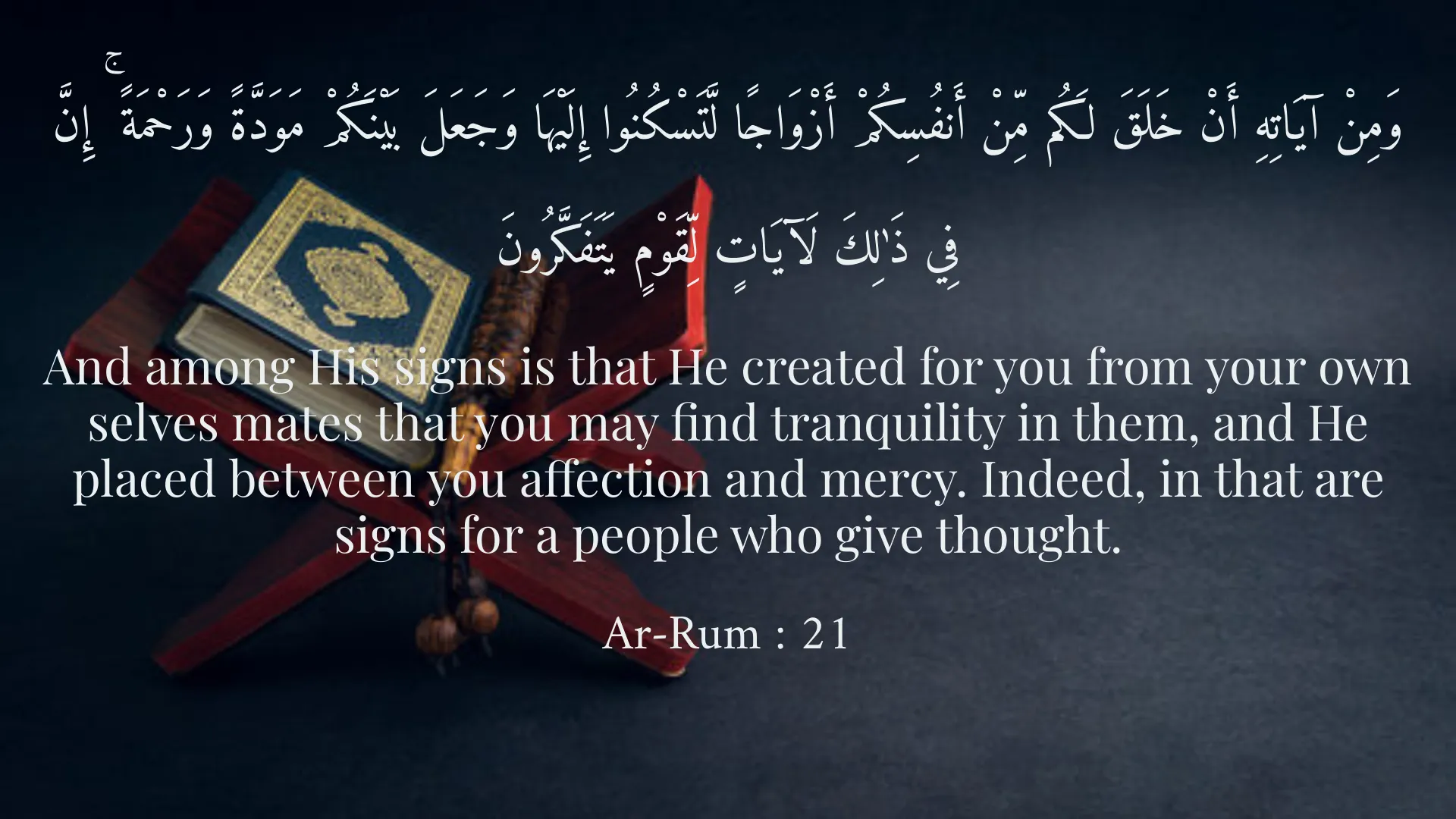
وَمِنْ آيَاتِهِ أَنْ خَلَقَ لَكُم مِّنْ أَنفُسِكُمْ أَزْوَاجًا لَّتَسْكُنُوا إِلَيْهَا وَجَعَلَ بَيْنَكُمْ مَوَدَّةً وَرَحْمَةً ۚ إِنَّ فِي ذَٰلِكَ لَآيَاتٍ لِّقَوْمٍ يَتَفَكَّرُونَ
And among His signs is that He created for you from your own selves mates that you may find tranquility in them, and He placed between you affection and mercy. Indeed, in that are signs for a people who give thought.
Ar-Rum : 21
Short Story
One day, a man named Sajjad was thinking about holding his wedding ceremony. He decided to spend this day with joy and kindness. When the wedding celebration took place, his family and friends gathered around and all participated in this happiness with joy. After the ceremony, Sajjad felt that not only had his bond with his wife become stronger but their friendship had deepened considerably. This day left a sweet memory for them.