Quranic Answer
In the exalted teachings of the Holy Quran, the position of intention (niyyah) and action (amal) is immensely prominent. Intention, which is the inner purpose and motivation for performing a deed, is considered the root of all actions and holds immense significance in Islam. The famous prophetic saying, 'Actions are but by intentions,' testifies to the truth that the value of every act depends on the intention behind it. However, is merely having a good intention, without it leading to an external action, or in the case of committing a sin, without repentance and rectification, sufficient for achieving divine forgiveness? The Quran's answer to this question is more complex and comprehensive than a simple 'yes' or 'no,' requiring an examination of various dimensions. The Quran clearly states that Allah is aware of what is in the hearts and knows intentions. In Surah Al-Baqarah, verse 284, it says: 'To Allah belongs whatever is in the heavens and whatever is on the earth. Whether you disclose what is in your minds or conceal it, Allah will call you to account for it. Then He forgives whom He wills and punishes whom He wills. And Allah is over all things competent.' This verse indicates that even hidden thoughts and intentions are subject to divine knowledge and accountability. However, note that this verse refers to accountability, not merely forgiveness based on intention alone. Forgiveness, after accountability, is realized by divine will and specific conditions. In numerous instances, the Quran explicitly emphasizes the necessity of accompanying intention with righteous deeds. Faith (Iman) and righteous deeds (Amal Saleh) are considered the two wings that carry a human being towards divine pleasure and Paradise. In many verses, after mentioning faith, Allah immediately refers to righteous deeds, indicating the inseparable connection between the two. For example, Surah Al-Asr states: 'Except for those who have believed and done righteous deeds and advised each other to truth and advised each other to patience.' This verse clearly indicates that faith (of which intention and heartfelt belief are an integral part) alone is not sufficient; it must be accompanied by righteous deeds for a person to avoid loss. For the forgiveness of sins, the Quran places great emphasis on the concept of 'Tawbah Nasuha' (sincere and earnest repentance). Repentance is not just an inner intention to not repeat a sin; rather, it is an active process that includes sincere regret for past sins, a firm resolve to abandon them in the future, and making amends (if possible and necessary). In Surah At-Tahrim, verse 8, we read: 'O you who have believed, repent to Allah with sincere repentance. Perhaps your Lord will remove from you your misdeeds and admit you into gardens beneath which rivers flow...' This verse shows that Tawbah Nasuha (which includes both sincere intention and the act of abandoning sin and returning to the right path) is the key to forgiveness. Furthermore, the Quran clarifies that some sins, especially those that infringe upon the rights of others (Huquq al-Ibad), are not forgiven merely by repentance to Allah; they also require restitution and seeking forgiveness from those whose rights have been violated. In such cases, even the purest intentions, without practical action to make amends, cannot lead to complete forgiveness. On the other hand, one must also consider the vastness of divine mercy and forgiveness. Allah is Most Forgiving, Most Merciful, and even a sincere intention to perform a good deed, if for any reason it cannot be carried out, may be met with divine favor, and the reward for that intention may be recorded for the person. This is also mentioned in narrations that if someone intends to do a good deed but fails to do so, the reward for that intention is recorded for them. However, this 'recording of the intention's reward' is different from 'forgiveness of sins.' Forgiveness of sins, especially intentional sins, usually requires active repentance and a renewed turning to the Lord. In summary, good intention is the cornerstone of every righteous deed and a necessary condition for the acceptance of actions before Allah. Without sincere intention, even a good deed holds little value. However, for the forgiveness of sins, especially intentional ones, mere good intention or mere regret is not enough. Sincere repentance (Tawbah Nasuha), which includes genuine remorse, abandoning the sin, resolving not to return to it, and, if necessary, making amends for the rights of others, is essential. Additionally, performing righteous deeds can be an expiation for minor sins and open a door to receiving divine mercy. Therefore, it can be said that good intention is a vital and fundamental component in the process of achieving divine forgiveness, but by itself, and without corresponding action (whether righteous deeds or repentance and reform), it will often not be sufficient for cleansing all sins. Allah is aware of the intentions of the heart and also observes actions, determining reward and punishment based on both. He is Just and Wise, rewarding or forgiving each person according to their effort, sincerity of intention, and actions.
Related Verses
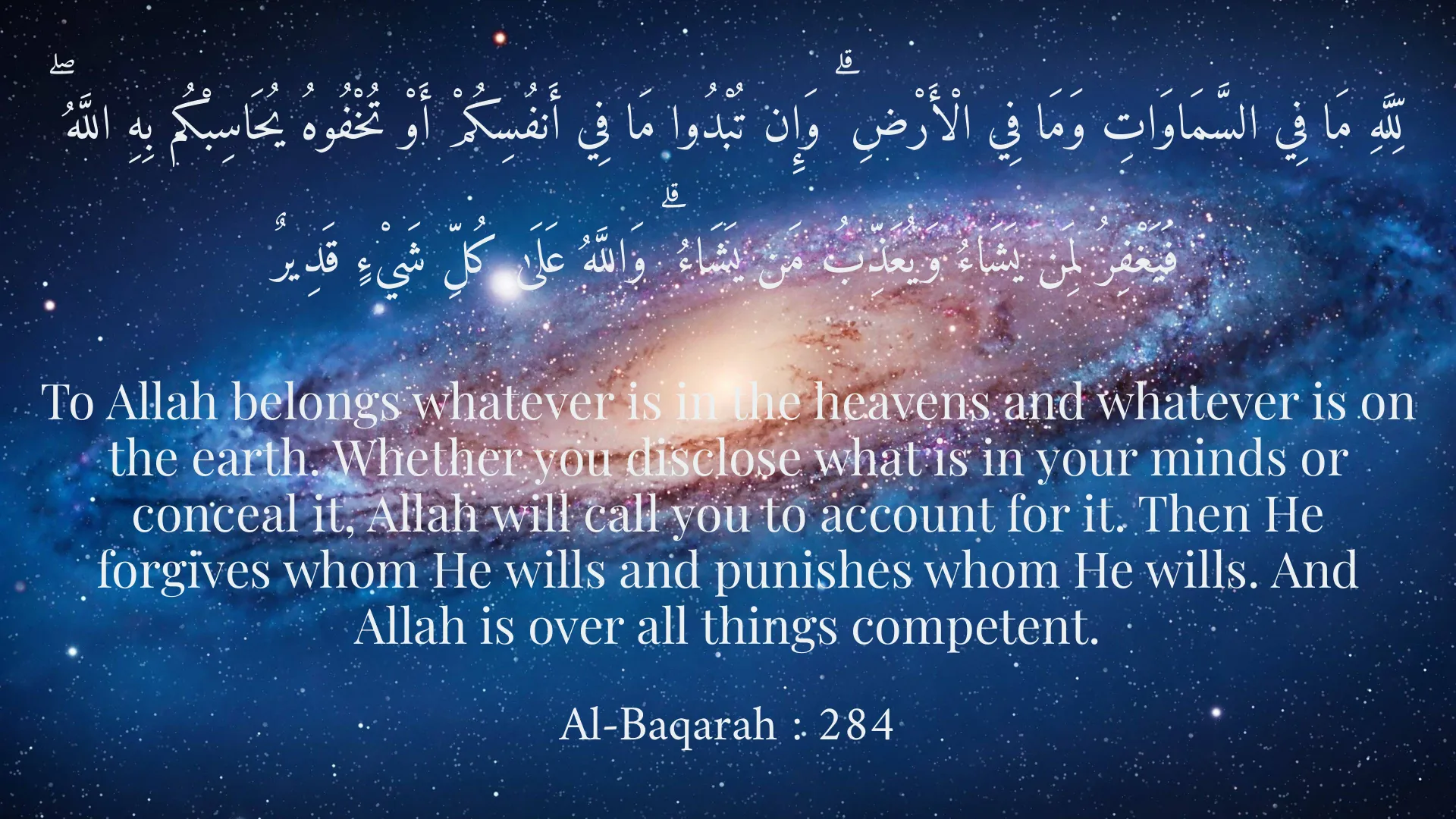
لِّلَّهِ مَا فِي السَّمَاوَاتِ وَمَا فِي الْأَرْضِ ۗ وَإِن تُبْدُوا مَا فِي أَنفُسِكُمْ أَوْ تُخْفُوهُ يُحَاسِبْكُم بِهِ اللَّهُ ۖ فَيَغْفِرُ لِمَن يَشَاءُ وَيُعَذِّبُ مَن يَشَاءُ ۗ وَاللَّهُ عَلَىٰ كُلِّ شَيْءٍ قَدِيرٌ
To Allah belongs whatever is in the heavens and whatever is on the earth. Whether you disclose what is in your minds or conceal it, Allah will call you to account for it. Then He forgives whom He wills and punishes whom He wills. And Allah is over all things competent.
Al-Baqarah : 284
يَا أَيُّهَا الَّذِينَ آمَنُوا تُوبُوا إِلَى اللَّهِ تَوْبَةً نَّصُوحًا عَسَىٰ رَبُّكُمْ أَن يُكَفِّرَ عَنكُمْ سَيِّئَاتِكُمْ وَيُدْخِلَكُمْ جَنَّاتٍ تَجْرِي مِن تَحْتِهَا الْأَنْهَارُ يَوْمَ لَا يُخْزِي اللَّهُ النَّبِيَّ وَالَّذِينَ آمَنُوا مَعَهُ ۖ نُورُهُمْ يَسْعَىٰ بَيْنَ أَيْدِيهِمْ وَبِأَيْمَانِهِمْ يَقُولُونَ رَبَّنَا أَتْمِمْ لَنَا نُورَنَا وَاغْفِرْ لَنَا ۖ إِنَّكَ عَلَىٰ كُلِّ شَيْءٍ قَدِيرٌ
O you who have believed, repent to Allah with sincere repentance. Perhaps your Lord will remove from you your misdeeds and admit you into gardens beneath which rivers flow [on] the Day when Allah will not disgrace the Prophet and those who believed with him. Their light will proceed before them and on their right; they will say, 'Our Lord, perfect for us our light and forgive us. Indeed, You are over all things competent.'
At-Tahrim : 8
إِلَّا مَن تَابَ وَآمَنَ وَعَمِلَ عَمَلًا صَالِحًا فَأُولَٰئِكَ يُبَدِّلُ اللَّهُ سَيِّئَاتِهِمْ حَسَنَاتٍ ۗ وَكَانَ اللَّهُ غَفُورًا رَّحِيمًا
Except for those who repent, believe and do righteous work. For them Allah will replace their evil deeds with good. And ever is Allah Forgiving and Merciful.
Al-Furqan : 70
Short Story
Once upon a time, in the city of Shiraz, there lived a wealthy merchant who spoke much of good deeds and helping the needy, always holding the intention to aid the poor. However, in practice, his hands were not open for generosity. A wise sage who knew him, with a cheerful countenance, said to him: 'My friend, a seed that intends to grow, if not planted in the soil and watered, will never bear fruit. The thirsty are not quenched by water in imagination, nor are the hungry satisfied by wishing for food. God, who knows the depths of hearts, also looks upon the deeds of hands. Forgiveness and blessing often come not just from thought, but from sincere effort in the path of righteousness and the genuine act of repentance.' The merchant, moved by these words, transformed. Instead of merely intending, he began to perform acts of charity and truly repented for his past deeds, finding true peace and divine favor in his life.