Quranic Answer
Yes, absolutely and without any doubt, in the Holy Quran, assisting and caring for the needy is considered not merely a moral recommendation or a good deed, but a fundamental and essential religious, social, and humanitarian duty. This topic is one of the main pillars of Islamic teachings and a hallmark of true faith and piety, emphasized repeatedly and emphatically in numerous verses of the Quran. Allah Almighty has, on many occasions in His Book, called upon believers to spend, give charity (sadaqah), pay zakat, feed the poor (miskin), and care for orphans and the destitute. Conversely, He has severely criticized and condemned those who remain indifferent to this vital obligation. One of the most significant manifestations of this duty is the divine obligation of 'Zakat'. Zakat is one of the five pillars of Islam and a symbol of social and economic justice. The Quran regards Zakat, alongside prayer, as a distinguishing characteristic of true believers. Zakat, meaning purification and growth, aims not only to assist the poor but also to cleanse the wealth of the rich from worldly attachments and to facilitate financial circulation within society. In Surah Al-Baqarah, verse 277, Allah states: "Indeed, those who believe and do righteous deeds and establish prayer and give zakah will have their reward with their Lord, and there will be no fear concerning them, nor will they grieve." This verse clearly indicates that giving Zakat, alongside faith, righteous deeds, and prayer, is essential for attaining peace and being free from fear and sorrow in the Hereafter, underscoring its obligatory nature. Beyond the obligatory Zakat, the broader concepts of 'Sadaqah' (voluntary charity) and 'Infaq fi Sabilillah' (spending in the way of Allah) are also highly emphasized in the Quran. Infaq refers to any form of financial or non-financial giving for the sake of Allah, and Sadaqah encompasses all kinds of help and kindness towards the needy. The Holy Quran repeatedly encourages believers to spend from what they love, so that they may attain the status of 'Birr' (true righteousness). This spending includes caring for relatives, orphans, the poor, wayfarers, and beggars. Allah promises immense and multiplied rewards to those who spend, likening it to a seed that grows seven spikes, with each spike bearing a hundred grains. This analogy vividly illustrates the countless material and spiritual blessings of spending, motivating individuals to wholeheartedly fulfill this duty. Furthermore, the Quran emphasizes the 'known right' of the needy in the wealth of the affluent. This implies that what is given to the poor is not merely an act of pity or benevolence, but their undeniable right, which Allah has placed within the possessions of the wealthy. In Surah Adh-Dhariyat, verse 19, we read: "And in their properties was a share for the beggar and the deprived." This verse provides a crucial foundation for economic and social rights in Islam, promoting the view that wealth in society must be managed in a way that meets the needs of all individuals, especially the deprived, ensuring that no one feels disenfranchised or marginalized. Another significant point is the portrayal of the dreadful consequences of indifference towards the needy. The Holy Quran severely reprimands those who neglect the poor and orphans, deeming their actions as a sign of denying the religion and the Day of Judgment. Surah Al-Ma'un explicitly states this. In verses 1 to 7 of this surah, we read: "Have you seen the one who denies the Recompense? For that is the one who drives away the orphan And does not encourage the feeding of the poor. So woe to those who pray, [But] who are heedless of their prayer - Those who make show [of their deeds] And withhold [simple] assistance." These verses strongly condemn the neglect of orphans and the poor, linking it to the denial of religion and the hypocrisy of worshippers, even if they perform prayers, if the spirit of servitude and helping others is absent in them. Those who even withhold minor assistance are condemned. This surah not only highlights the duty of direct help but also considers encouraging others to feed the poor as an obligation. Overall, the Quranic perspective on helping the needy is comprehensive and inclusive. This duty not only involves financial giving but also includes all forms of assistance and support, whether emotional, physical, intellectual, or social. The Quran praises spending in difficult times and in the way of Allah, considering it a sign of true faith. The ultimate goal of this duty is to establish a society founded on justice, solidarity, mercy, and human dignity, where no individual is deprived of their basic rights due to poverty and need. This duty benefits not only the needy but also purifies the heart of the giver, elevates their spirit, and brings countless material and spiritual blessings to both the individual and society. Therefore, it can be concluded that in the Holy Quran, helping the needy is not just a duty, but the backbone of a faithful and responsible life.
Related Verses
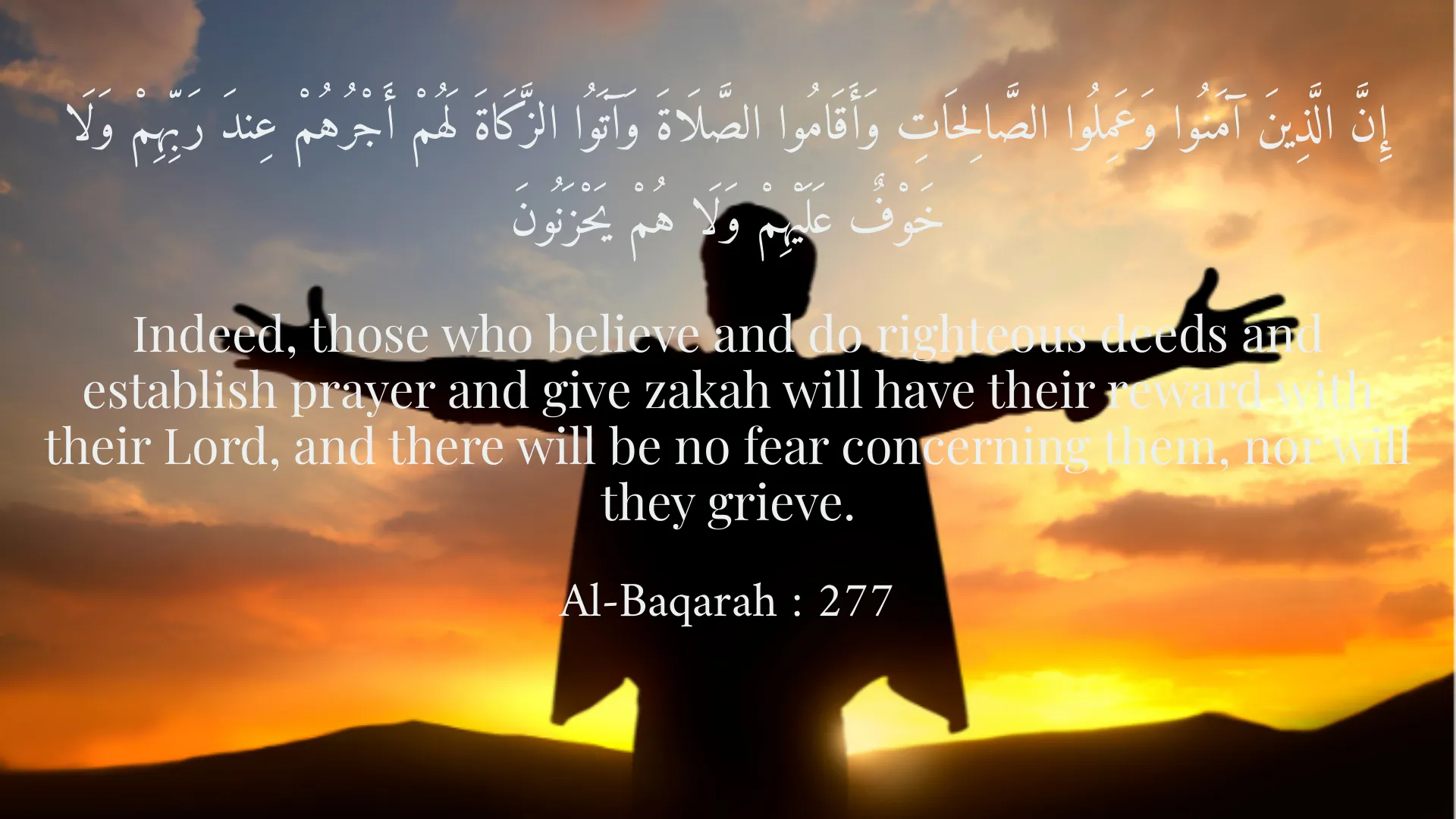
إِنَّ الَّذِينَ آمَنُوا وَعَمِلُوا الصَّالِحَاتِ وَأَقَامُوا الصَّلَاةَ وَآتَوُا الزَّكَاةَ لَهُمْ أَجْرُهُمْ عِندَ رَبِّهِمْ وَلَا خَوْفٌ عَلَيْهِمْ وَلَا هُمْ يَحْزَنُونَ
Indeed, those who believe and do righteous deeds and establish prayer and give zakah will have their reward with their Lord, and there will be no fear concerning them, nor will they grieve.
Al-Baqarah : 277
وَفِي أَمْوَالِهِمْ حَقٌّ لِّلسَّائِلِ وَالْمَحْرُومِ
And in their properties was a share for the beggar and the deprived.
Adh-Dhariyat : 19
أَرَأَيْتَ الَّذِي يُكَذِّبُ بِالدِّينِ
Have you seen the one who denies the Recompense?
Al-Ma'un : 1
فَذَلِكَ الَّذِي يَدُعُّ الْيَتِيمَ
For that is the one who drives away the orphan
Al-Ma'un : 2
وَلَا يَحُضُّ عَلَىٰ طَعَامِ الْمِسْكِينِ
And does not encourage the feeding of the poor.
Al-Ma'un : 3
فَوَيْلٌ لِّلْمُصَلِّينَ
So woe to those who pray,
Al-Ma'un : 4
الَّذِينَ هُمْ عَن صَلَاتِهِمْ سَاهُونَ
[But] who are heedless of their prayer -
Al-Ma'un : 5
الَّذِينَ هُمْ يُرَاءُونَ
Those who make show [of their deeds]
Al-Ma'un : 6
وَيَمْنَعُونَ الْمَاعُونَ
And withhold [simple] assistance.
Al-Ma'un : 7
Short Story
One of Saadi's instructive tales tells of a wealthy merchant who lived in a city, possessing countless treasures, yet his heart was as barren as a dry desert, devoid of generosity. He ate the finest foods and wore the most luxurious clothes, but his nights were restless, and his days were filled with a gnawing emptiness. One day, a wise dervish passed by his palace and, seeing the merchant's perpetually frowning face, asked: “O prosperous one, what troubles your heart? Your coffers overflow, yet your spirit seems parched.” The merchant sighed and said: “I have everything, yet I have nothing. Peace eludes me.” The dervish replied with a gentle smile: “The true spring of joy flows not from accumulation, but from giving. As the sun gives light to the world, so too must the fortunate illuminate the lives of the less fortunate. For in sharing your bounty, you multiply your own blessings.” The merchant, moved by these words, began to open his hands and his heart. He distributed food to the hungry, clothed the naked, and provided shelter for the homeless. Slowly, a transformation began within him. His frown vanished, replaced by a radiant smile. His nights became peaceful, and his days were filled with purpose. He realized that the greatest treasure was not in what he possessed, but in the joy he brought to others, for in serving God's creation, he found true communion with the Creator.