Quranic Answer
The relationship between hope and action is a central theme in the Holy Quran, which serves as a guiding principle for millions of believers around the world. In the Islamic faith, hope without action is not only insufficient but is also seen as a liability. Allah teaches that while it is essential to have faith in His mercy and forgiveness, this faith must translate into concrete actions and efforts to attain that mercy. The teachings from the Quran emphasize that hope should breed effort, and that they are inseparable aspects of a believer's life. This article delves into the intricacies of hope and action in Islamic teachings, exploring the foundational verses from the Quran and their implications for individual and communal growth. Hope is often described as a feeling of expectation and desire for a certain thing to happen. In the religious context, it extends to the hope for God's grace and forgiveness, which serves as a vital component of the believer's journey. However, the Quran clearly articulates that mere hope without accompanying action is not enough. In Surah Al-Isra, verses 13 and 14, it states: 'And every human being We have imposed his fate upon his neck, and We will produce for him on the Day of Resurrection a record which he will encounter.' This fundamental verse underscores the accountability that every human being holds regarding their choices and actions. It implies that wishing for God's mercy cannot absolve one of their responsibilities. On the Day of Judgment, individuals will be held accountable for their deeds—nothing less. Allah is unmistakably clear in the Quran regarding the necessity of effort and striving to achieve one's hopes. Surah An-Najm, verse 39, reinforces this concept by stating: 'And that there is not for man except that [good] for which he strives.' These verses highlight that human beings have the responsibility to work toward what they desire, and they cannot simply sit back and wait for things to fall into their laps. It demands active participation in pursuit of the goals and aspirations that align with one's faith. This is a profound lesson for individuals as well as communities. The Quran promotes a dynamic relationship between hope and action, suggesting that one cannot exist without the other. Hope fuels motivation; it is the flame that ignites the drive for improvement and success. However, it is through action that hopes are realized. In a world filled with challenges, maintaining hope is critical, but acting upon that hope is what brings about change. In many cultural and religious contexts, hope is often viewed as a passive state—a feeling that encourages waiting for divine intervention or help. However, Islam presents a nuanced understanding. Faith in God's mercy should be paired with personal responsibility. This paradigm encourages believers to be proactive in their lives, guiding them to become agents of change in society. Muslims are called to cultivate a robust sense of hope that translates into acts of kindness, charity, and striving for personal and communal betterment. For example, a believer hoping for a peaceful and just society must take action to contribute to this vision, whether it involves volunteering, advocating for justice, or being a source of support for those in need. The essence of this teaching lies in the broader social implications of intertwining hope with action. In a communal context, if individuals believe in the potential for improvement and progress, they will be more driven to work collectively towards shared aspirations. For instance, communities that foster hope through educational initiatives and social support networks thrive, as people come together with shared ambitions and engage in collaborative efforts to achieve those hopes. Furthermore, the relationship between hope and action does not solely apply to individual aspirations but extends to societal objectives as well. The teachings from the Quran encourage believers to pursue justice, equality, and compassion through their actions. A community characterized by hope and action is one where members support one another, uplift each other’s aspirations, and work together towards a future steeped in humanity and righteousness. It is important to emphasize that the transformative power of hope and action is not limited to the individual sphere. It resonates deeply within the community and society at large. When hope leads to action, it paves the way for collective growth, supporting a culture of responsibility and engagement. Faith brings hope into the picture, while action propels that hope into reality. This synergy enables communities to address challenges such as poverty, injustice, and discrimination, nurturing environments where dreams are not only envisioned but actively chased with diligence and determination. In conclusion, the teachings in the Holy Quran about hope and action serve as a profound reminder for believers to embrace their responsibilities. As articulated in various verses, without effort, hope risks becoming a mere illusion—an empty promise. The challenge lies not only in nurturing hope within our hearts but also in manifesting it through our deeds. Individual accountability, collective aspirations, and community engagement are the cornerstones of this dynamic interplay between hope and action. Ultimately, it is this combination that leads to personal and social progress, fostering environments where hope can flourish, and where believers can experience the fullness of God's mercy and grace through their endeavors.
Related Verses
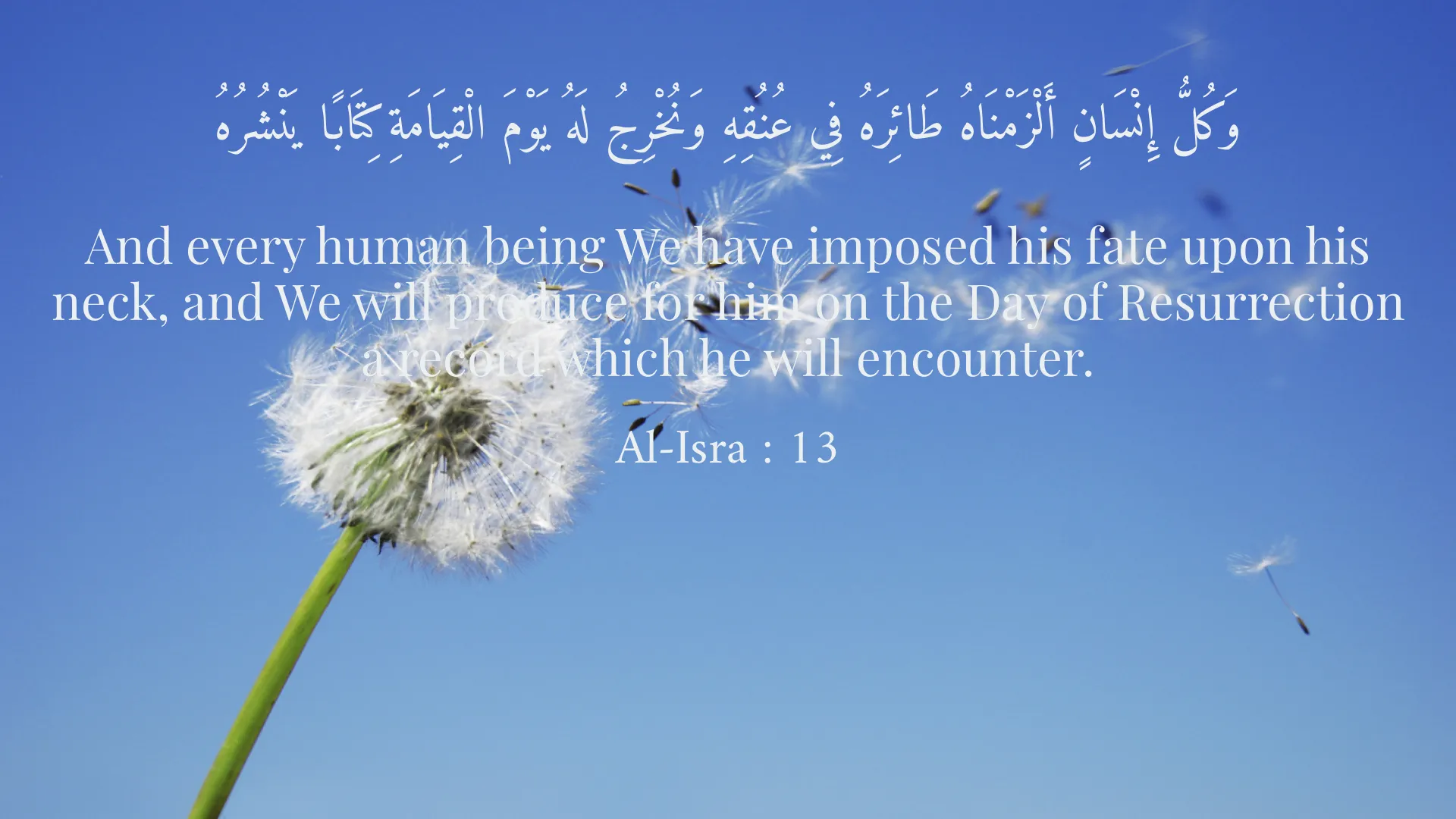
وَكُلُّ إِنْسَانٍ أَلْزَمْنَاهُ طَائِرَهُ فِي عُنُقِهِ وَنُخْرِجُ لَهُ يَوْمَ الْقِيَامَةِ كِتَابًا يَنْشُرُهُ
And every human being We have imposed his fate upon his neck, and We will produce for him on the Day of Resurrection a record which he will encounter.
Al-Isra : 13
وَأَنَّ لَيْسَ لِلْإِنْسَانِ إِلَّا مَا سَعَى
And that there is not for man except that [good] for which he strives.
An-Najm : 39
Short Story
Once there was a young man named Ali who was facing the issue of hope and action in his life. He always hoped for success in his exams, but whenever his grades were low, he felt discouraged. One day, while studying a topic, he came across a verse from the Quran that emphasized the necessity of effort. He decided to focus more on studying and working hard for his success rather than just relying on hope. Over time, he received better grades and realized that his hard work helped turn his hope into reality.