Quranic Answer
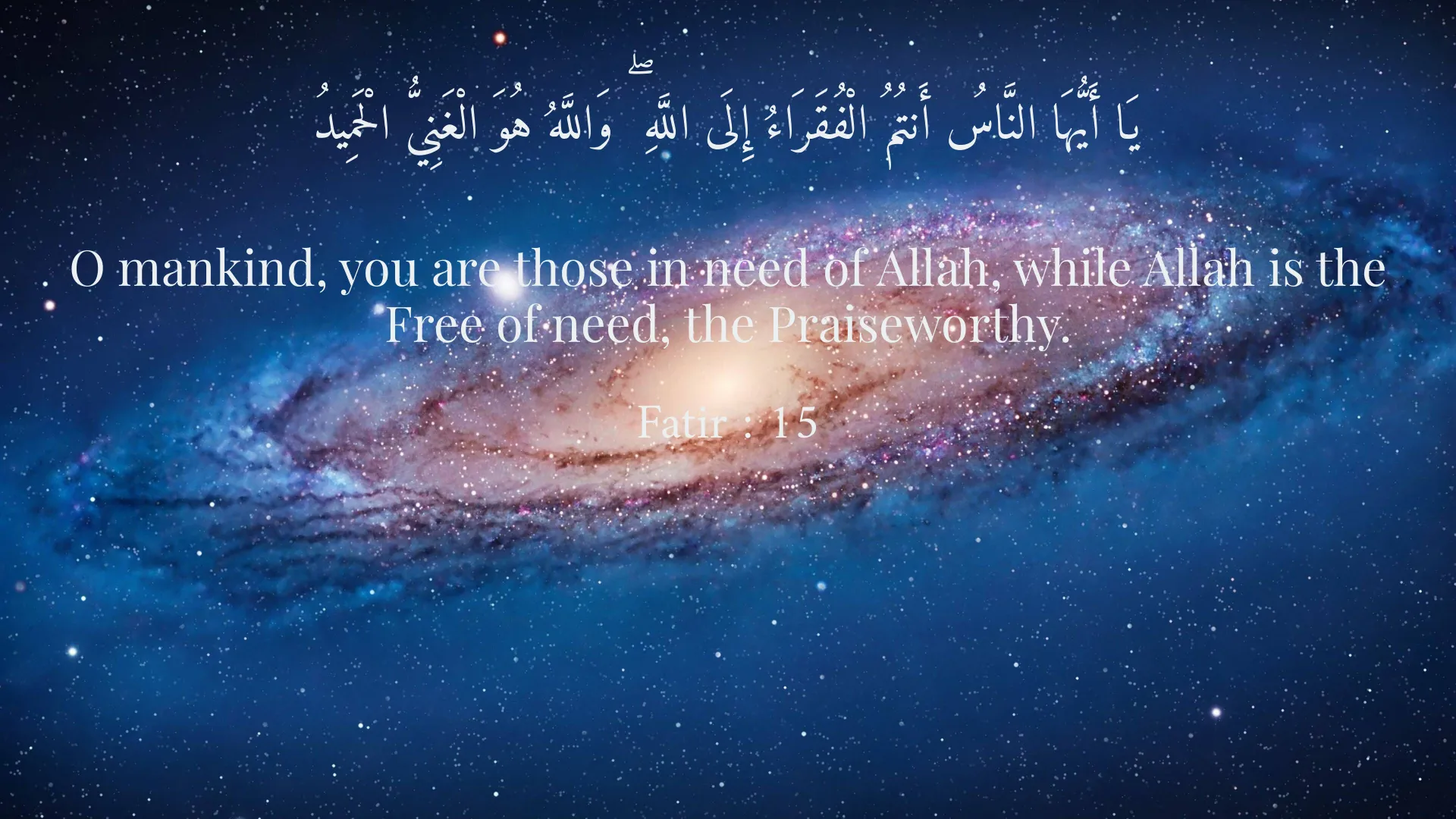
Yes, indeed, true independence from creation is one of the most significant and profound paths to reaching the Almighty God. This path is not merely a moral virtue but the very backbone of a life rooted in faith and monotheism. However, to correctly understand this concept, we must first precisely define what "independence from creation" entails. This concept does not imply isolation, withdrawing from social interaction, or refraining from utilizing worldly means and resources. Rather, it refers to a state of heart and soul where an individual recognizes Allah alone as the true source of power, sustenance, aid, and the fulfillment of all their needs, without attaching their heart to anything or anyone else. This is the essence of "complete reliance" (Tawakkul) upon Allah, which is highlighted in numerous verses of the Holy Quran as a defining characteristic of true believers. The Holy Quran explicitly states that all beings, including humans, are inherently poor and needy, while Allah alone is the Absolute Rich and Self-Sufficient. This truth is beautifully articulated in Surah Fatir, verse 15: "O mankind, you are those in need of Allah, while Allah is the Free of need, the Praiseworthy." This verse lays the fundamental groundwork for the concept of independence from creation. When a person profoundly understands that all of existence, from the smallest particle to the largest galaxy, is dependent and needy of its Creator, and that the only boundless source of power and mercy is the Divine Essence, then their heart detaches from material and non-material dependencies on created beings, and they experience genuine freedom. This realization is akin to discovering a fundamental truth that transforms one's perspective on life, circumstances, and even challenges. This true independence from creation is an inner journey; a journey in which an individual learns not to tie their hopes to the hands of others, nor to wealth and status, nor to the power and position of other people. Instead, all their hope and reliance rest solely and exclusively upon Allah. This genuine Tawakkul frees a person from the worries, anxieties, and fears stemming from dependency on anything other than God. For instance, someone who understands that their sustenance is from Allah, the ultimate Provider, will not be overly afraid of poverty or destitution, nor will they chase worldly gains with insatiable greed. One who knows that honor and disgrace are solely in His hands will not debase themselves to gain worldly esteem or resort to flattery. And one who knows that absolute power belongs to Him will not fear the oppression of any powerful individual and will not bow down to any tyrant. This inner freedom, originating from deep reliance on God, is the greatest step towards divine proximity and the attainment of true tranquility. It liberates the human being from the servitude of worldly attachments and from servitude to fellow created beings. In Surah Al-Imran, verse 160, the Quran explicitly emphasizes this point: "If Allah should aid you, no one can overcome you; but if He should forsake you, then who is there that can aid you after Him? And upon Allah let the believers rely." This verse demonstrates that aid and abandonment are solely in Allah's hands, and reliance should be placed only upon Him. This concept forms the basis of independence from the help of creatures and seeking refuge in the only true Helper. Such an understanding grants a person the power of steadfastness in the face of difficulties and courage in confronting adversities, for they know that their supporter is an eternal and invincible power. Furthermore, independence from creation allows an individual to focus their spiritual and intellectual energy on knowing and worshipping Allah and fulfilling their duties, rather than being preoccupied with expectations from others or worldly material concerns. When the heart is liberated from the bondage of the world and its creatures, and cleansed from the dust of attachments, a space opens within it for the presence and manifestation of Allah's Names and Attributes. This is the "pure heart" (Qalb-e Salim) that is cleansed from worldly attachments and hidden shirk (polytheism), becoming ready to receive divine illuminations. Such a heart, with every beat, revives the remembrance of Allah and propels the individual towards perfection and divine proximity. This process of purifying the heart paves the way for divine inspirations and a deeper understanding of the truths of existence. Independence from creation, in a sense, is akin to attaining "Fana' fi Allah" (annihilation in God); not in the sense of existential destruction, but in the sense of the annihilation of dependencies and selfish desires for anything other than God. When a person relinquishes everything besides Allah and sees and desires nothing but Him, that is when the truth of Tawhid (Oneness of God) manifests within their being. This stage, which is the pinnacle of spiritual journey (Suluk) and sincere servitude, grants a person profound insight and lasting peace. In this state, the individual not only asks for nothing from others but also sees themselves as utterly poor and needy before Allah, recognizing that everything they possess comes from Him, not from their own efforts. This is the ultimate degree of independence from creation and richness through Allah (Ghina billah), where the state of "inherent poverty" (Faqr Dhati) coexists with "divine richness" (Ghina Rabbani). It must be emphasized that this independence never implies indifference towards society, refraining from work and effort to earn a livelihood, or neglecting social responsibilities. On the contrary, a person who has achieved independence from creation and whose heart is devoted to God can serve God's creation with greater tranquility, sincerity, and devotion, because their sole aim in serving is to gain Allah's pleasure, not to seek personal gain, fame, or appreciation from people. They are no longer concerned with the rewards or gratitude of people, for they seek their true reward from Allah, who is the best Rewarder. This type of service is purer and more effective, embodying the "doing good in the way of Allah" and "ihsan" (excellence) that are greatly emphasized in the Holy Quran. A believer who is independent of creation is actively present in society but with a heart free from attachments and with a sublime purpose. In conclusion, independence from creation is a great moral and spiritual virtue that frees a person from the bondage of the world, greed, and reliance on creatures, and bestows upon them the wings to soar towards the Beloved. This liberation not only brings worldly peace and happiness and frees them from the heavy burden of undue expectations but also opens the path to attaining the highest degrees of divine proximity, true knowledge of the Lord, and experiencing His infinite richness. This path requires continuous self-purification, spiritual refinement, contemplation of divine verses, and deep and constant reliance on the unique essence of Allah. In truth, independence from creation is the ultimate need and servitude before the Creator, connecting a person to the source of all goodness and perfections.
Related Verses
يَا أَيُّهَا النَّاسُ أَنتُمُ الْفُقَرَاءُ إِلَى اللَّهِ ۖ وَاللَّهُ هُوَ الْغَنِيُّ الْحَمِيدُ
O mankind, you are those in need of Allah, while Allah is the Free of need, the Praiseworthy.
Fatir : 15
إِن يَنصُرْكُمُ اللَّهُ فَلَا غَالِبَ لَكُمْ ۖ وَإِن يَخْذُلْكُمْ فَمَن ذَا الَّذِي يَنصُرُكُم مِّن بَعْدِهِ ۗ وَعَلَى اللَّهِ فَلْيَتَوَكَّلِ الْمُؤْمِنُونَ
If Allah should aid you, no one can overcome you; but if He should forsake you, then who is there that can aid you after Him? And upon Allah let the believers rely.
Al-Imran : 160
وَيَرْزُقْهُ مِنْ حَيْثُ لَا يَحْتَسِبُ ۚ وَمَن يَتَوَكَّلْ عَلَى اللَّهِ فَهُوَ حَسْبُهُ ۚ إِنَّ اللَّهَ بَالِغُ أَمْرِهِ ۚ قَدْ جَعَلَ اللَّهُ لِكُلِّ شَيْءٍ قَدْرًا
And will provide for him from where he does not expect. And whoever relies upon Allah - then He is sufficient for him. Indeed, Allah will accomplish His purpose. Allah has already set for everything a [decreed] extent.
At-Talaq : 3
Short Story
It is related in Saadi's Gulistan that a king asked a dervish: "What has made you so tranquil and free from sorrow?" The dervish replied: "Because I have a heart that is attached neither to the world nor to its people. Whatever I possess, I know it is from God, and whatever I lack, I know it is His wisdom. If the world were full of blessings and all were in the hands of people, I would have no need of them; and if all the world were to slip from my grasp, I would not mind, for I have asked for nothing but Him." The king pondered the dervish's words and realized that true treasure lies in independence from creation and reliance on the Creator.