Quranic Answer
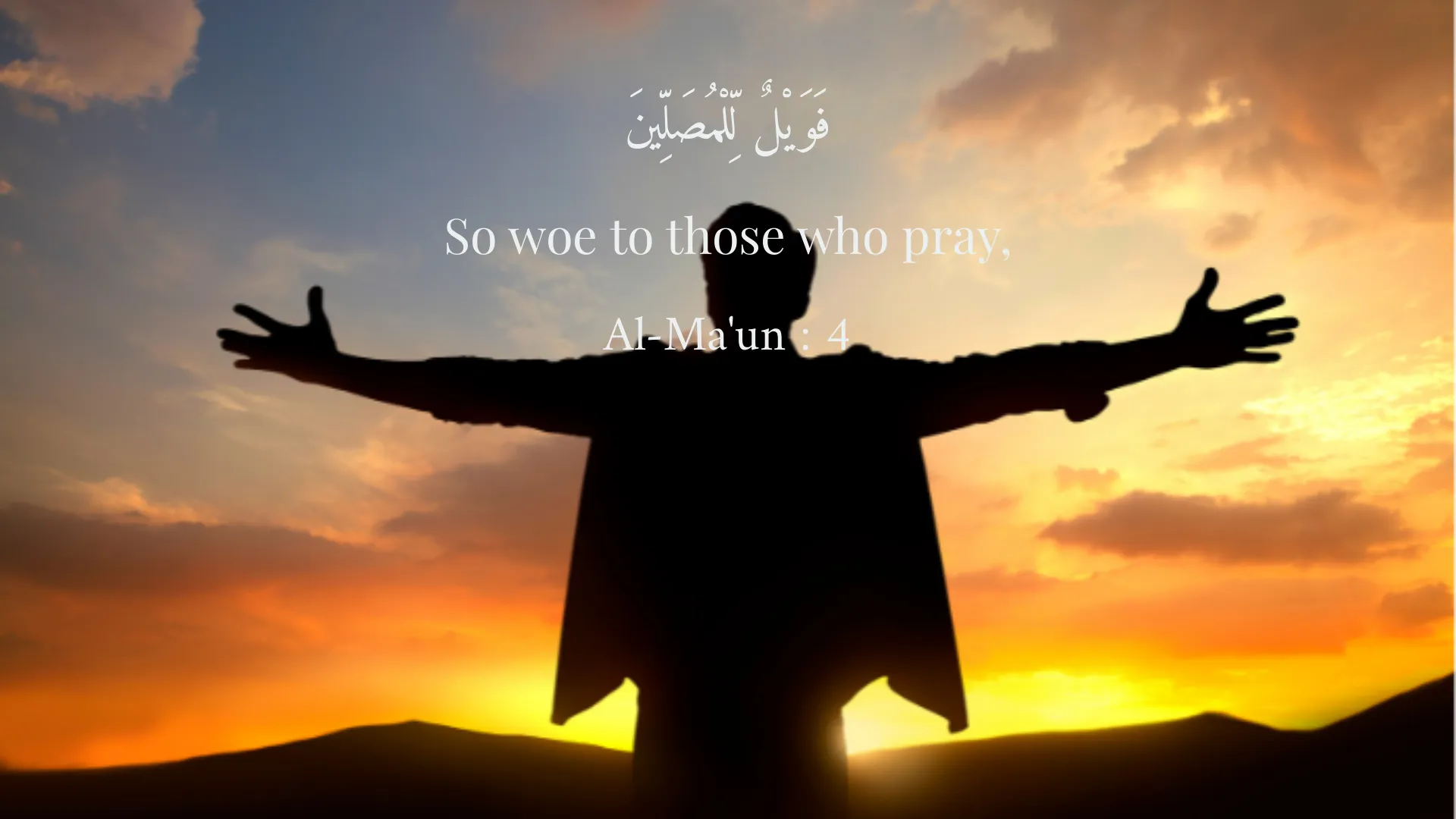
Yes, without a doubt, it is a serious and very real challenge that every believer might face on their spiritual journey. 'Habituation' in worship means that acts of worship, such as prayer, fasting, remembrance (dhikr), and supplication, gradually become devoid of their spiritual and moral content, transforming into mere physical movements or verbal repetitions without the presence of the heart and mind. The Holy Quran, although not directly using the term 'habituation,' frequently speaks of concepts like 'heedlessness' (ghaflah), 'unmindfulness' (sahw), 'hypocrisy' (nifaq), and 'showing off' (riya'), all of which indicate a kind of detachment from a deep connection with the Lord and the emptying of worship from its true spirit. In essence, the Quran's purpose in prescribing acts of worship is not merely to perform a series of dry, lifeless rituals, but to establish a vibrant and dynamic relationship with God that leads to spiritual growth, inner peace, and positive transformation in one's character. If this objective is not achieved, then worship has indeed become a habit. One of the clearest verses pointing to this issue is Surah Al-Ma'un (107:4-5): 'So woe to those who pray, those who are heedless of their prayer.' This verse warns not those who do not pray, but rather those who pray yet are 'unmindful' or 'neglectful' of their prayer. This unmindfulness and heedlessness are precisely what can turn prayer into a lifeless habit. The 'sahw' (unmindfulness) here does not refer to forgetting prayer entirely or abandoning it, but rather to a lack of attention to the spirit and purpose of prayer, or the absence of humility (khushu') and presence of heart within it. When prayer becomes mere mechanical movements performed without attention to the meaning of the verses, the remembrances, and its lofty objectives, one effectively falls into habituation and is deprived of its spiritual fruits. Such a prayer not only fails to deter one from sin but may, in some cases, even lead to showing off and ostentation, as Surah Al-Ma'un (107:6) states: 'Those who make show.' This indicates that the danger of habituation is so significant that it can strip a good deed of its original essence and turn it into a means for worldly purposes. The Quran heavily emphasizes 'sincerity' (ikhlas) in worship. Sincerity means purifying one's intention for God and performing deeds solely for His pleasure, without associating any worldly objectives or seeking people's approval. In Surah Az-Zumar (39:2), it states: 'So worship Allah, [being] sincere to Him in religion.' This verse clearly shows that true worship must be accompanied by sincerity. Habituation stands in direct opposition to sincerity, because in habituation, the act is performed without the presence of intention and heartfelt attention, becoming merely a meaningless repetition. To counter habituation, one must constantly renew their intention, understand the meaning of acts of worship, and prevent monotony and lifelessness through reflection and contemplation. For instance, in every unit of prayer, when Surah Al-Fatiha and other surahs are recited, if one pays attention to the meaning of the words and divine addresses, and perceives oneself in the presence of the Lord, they will never fall into apathy and habituation. Indeed, the recitation of the Holy Quran and contemplation of its verses is itself a way to combat habituation in other acts of worship, as the Quran is the living word of God, and hearing and understanding it awakens the soul and purifies the heart. In addition to heedlessness and lack of sincerity, the absence of 'humility' (khushu') is another significant factor in habituation. Khushu' means humility and submissiveness of the heart before the greatness of God. In Surah Al-Ankabut (29:45), we read: 'Recite, [O Muhammad], what has been revealed to you of the Book and establish prayer. Indeed, prayer prohibits immorality and wrongdoing, and the remembrance of Allah is greater. And Allah knows that which you do.' This verse shows that the primary purpose of prayer is to deter from immorality and wrongdoing, an objective that is only achieved with the presence of the heart and true remembrance of God. If the worshipper merely performs outward actions without establishing a deep inner connection with God, this educational and deterrent effect is lost, and prayer turns into an ineffective habit. The Quran strongly emphasizes 'dhikr' (remembrance of Allah) and considers it the greatest act of worship, because it is continuous and conscious remembrance that breathes life into acts of worship and prevents them from becoming dry habits. Constantly remembering God's greatness, His power, and His countless blessings can keep the heart awake and prevent heedlessness and habituation. Quranic remedies for combating habituation include: Firstly, continuous analysis of intentions; one must constantly ask themselves for whom and with what purpose they are performing this worship. Secondly, contemplation of meanings; a deep understanding of the meanings of verses and devotional phrases, not just their parrot-like repetition. Thirdly, presence of heart and humility; striving for complete focus and humility before God during worship. Fourthly, spiritual renewal; studying the Quran, participating in religious gatherings, supplicating to God for help in increasing sincerity and attentiveness. Fifthly, variety in supererogatory worship; sometimes performing voluntary acts of worship that have not become routine can help break the cycle of habituation and infuse new zeal into one's devotions. The Quran invites us to reflect on creation, on God's signs in the horizons and within ourselves, and to ponder on the Day of Judgment and the recompense for deeds. These reflections keep the spirit of awakening alive within a person and save them from getting lost in routine and habituation. Ultimately, every act of worship is an opportunity to draw closer to God, and it is only with attentiveness and presence of heart that this opportunity bears fruit and prevents it from becoming a useless habit.
Related Verses
فَوَیْلٌ لِّلْمُصَلِّینَ
So woe to those who pray,
Al-Ma'un : 4
الَّذِینَ هُمْ عَن صَلَاتِهِمْ سَاهُونَ
Those who are heedless of their prayer -
Al-Ma'un : 5
إِنَّا أَنزَلْنَا إِلَيْكَ الْكِتَابَ بِالْحَقِّ فَاعْبُدِ اللَّهَ مُخْلِصًا لَّهُ الدِّينَ
Indeed, We sent down to you the Book with truth; so worship Allah, [being] sincere to Him in religion.
Az-Zumar : 2
اتْلُ مَا أُوحِيَ إِلَيْكَ مِنَ الْكِتَابِ وَأَقِمِ الصَّلَاةَ ۖ إِنَّ الصَّلَاةَ تَنْهَىٰ عَنِ الْفَحْشَاءِ وَالْمُنكَرِ ۗ وَلَذِكْرُ اللَّهِ أَكْبَرُ ۗ وَاللَّهُ يَعْلَمُ مَا تَصْنَعُونَ
Recite, [O Muhammad], what has been revealed to you of the Book and establish prayer. Indeed, prayer prohibits immorality and wrongdoing, and the remembrance of Allah is greater. And Allah knows that which you do.
Al-Ankabut : 45
Short Story
It is narrated that a pious man spent many years in the city's grand mosque, diligently performing his prayers on time every day. One day, a wise scribe observed him praying and rising hastily from prostration. The scribe said to him: 'O virtuous one, do you know that God looks more at the presence of the heart and the state of His servant than at the number of prostrations? Such haste in prayer turns it into a fruitless habit, not a stairway to divine proximity. Rebuild your prayer, and recite with a present heart, for the Almighty desires the heart, not just clay and water.' The pious man understood these words and from then on, performed every prayer with a present heart and sincere intention, tasting the sweet flavor of intimate communion.