Quranic Answer
A common question that arises in the minds of many believers is whether it is permissible and proper to pray and ask God Almighty for material and worldly success. Does this type of prayer contradict the primary purpose of life, which is to achieve spiritual perfection and closeness to God? The answer to this question, based on the teachings of the Holy Quran, is remarkably clear and positive. Islam is a religion of life, constantly inviting humanity towards balance, moderation, and benefiting from lawful divine blessings alongside focusing on the Hereafter. Contrary to some perceptions, material success is not only permissible but can also be a powerful tool for achieving greater goals and more good deeds, provided it is accompanied by righteous intention, continuous effort, and gratitude. The Holy Quran explicitly states in several verses that one can ask God for the good of both this world and the Hereafter. For instance, in Surah Al-Baqarah, verse 201, Allah teaches believers a comprehensive prayer: “Our Lord, give us in this world [that which is] good and in the Hereafter [that which is] good and protect us from the punishment of the Fire.” This verse clearly indicates that asking for “Hasana” (goodness) in this world includes legitimate material success, health, peace, and anything that improves one’s life. Islam never encourages monasticism or withdrawal from worldly life. On the contrary, it calls upon believers to work and strive for lawful sustenance and to develop the earth. Allah Almighty introduces Himself as “Ar-Razzaq,” the Sustainer, and encourages humanity to enjoy pure and lawful provisions. In Surah Al-Mulk, verse 15, we read: “It is He who made the earth subservient to you, so walk upon its regions and eat from His provision. And to Him is the resurrection.” This verse is a clear emphasis on striving to earn a livelihood and utilizing worldly bounties. However, more important than merely asking is our attitude towards wealth and material success. The Holy Quran teaches us that wealth and possessions should be a means to achieve higher goals, not an end in themselves. In Surah Al-Qasas, verse 77, Allah Almighty says: “But seek, through that which Allah has given you, the home of the Hereafter; and [yet], do not forget your share of the world. And do good as Allah has done good to you. And desire not corruption in the land. Indeed, Allah does not like corrupters.” This verse is pivotal because it emphasizes the importance of the Hereafter while also reminding humans not to forget their share of this world. This “share” includes benefiting from lawful sustenance, legitimate business, and a dignified life. Furthermore, this verse reminds us that wealth and prosperity should be used for good deeds and to avoid corruption. That is, material success is only valuable when it is used in the path of good and for the benefit of society and divine pleasure. Among other important conditions that the Quran sets forth regarding earning a livelihood and material success is gratitude. In Surah Ibrahim, verse 7, Allah promises: “If you are grateful, I will surely increase you [in favor]; but if you deny, indeed, My punishment is severe.” This verse indicates that gratitude is not only a moral duty but also the key to increasing provision and divine blessings. Gratitude is not merely verbal; it must also manifest in actions, meaning spending wealth in the right way, helping the needy, and observing divine and human rights. Therefore, praying for material success is not only permissible but, within the framework of Quranic teachings, is desirable and legitimate. However, this prayer must be accompanied by effort and diligence, good intention, gratitude, and lawful and proper expenditure. Muslims can confidently pray to Allah Almighty for an increase in their provision, success in business, and improvement in their financial situation, while always remembering that all of this comes from divine grace and mercy and must be used in a way that pleases Him. Ultimately, one must distinguish between attachment to the world and its proper use. Islam condemns excessive attachment to worldly life and forgetting the Hereafter, but it encourages using the world as a bridge to the Hereafter and as a means of serving creation and drawing closer to God. So, with a heart full of hope and reliance on God, let us pray for all the good of this world and the Hereafter, knowing that Allah hears and answers the prayers of His servants, provided we strive and follow the right path. In this way, material success can not only contribute to our worldly happiness but also serve as a stepping stone for spiritual elevation and ultimate bliss in the Hereafter. Indeed, many acts of charity, helping the needy, building mosques and educational centers, and even Hajj and Umrah, require financial resources. Therefore, material success can provide a platform for performing these good deeds. This balanced approach demonstrates the comprehensiveness of Islam and its attention to all dimensions of human existence, both material and spiritual.
Related Verses
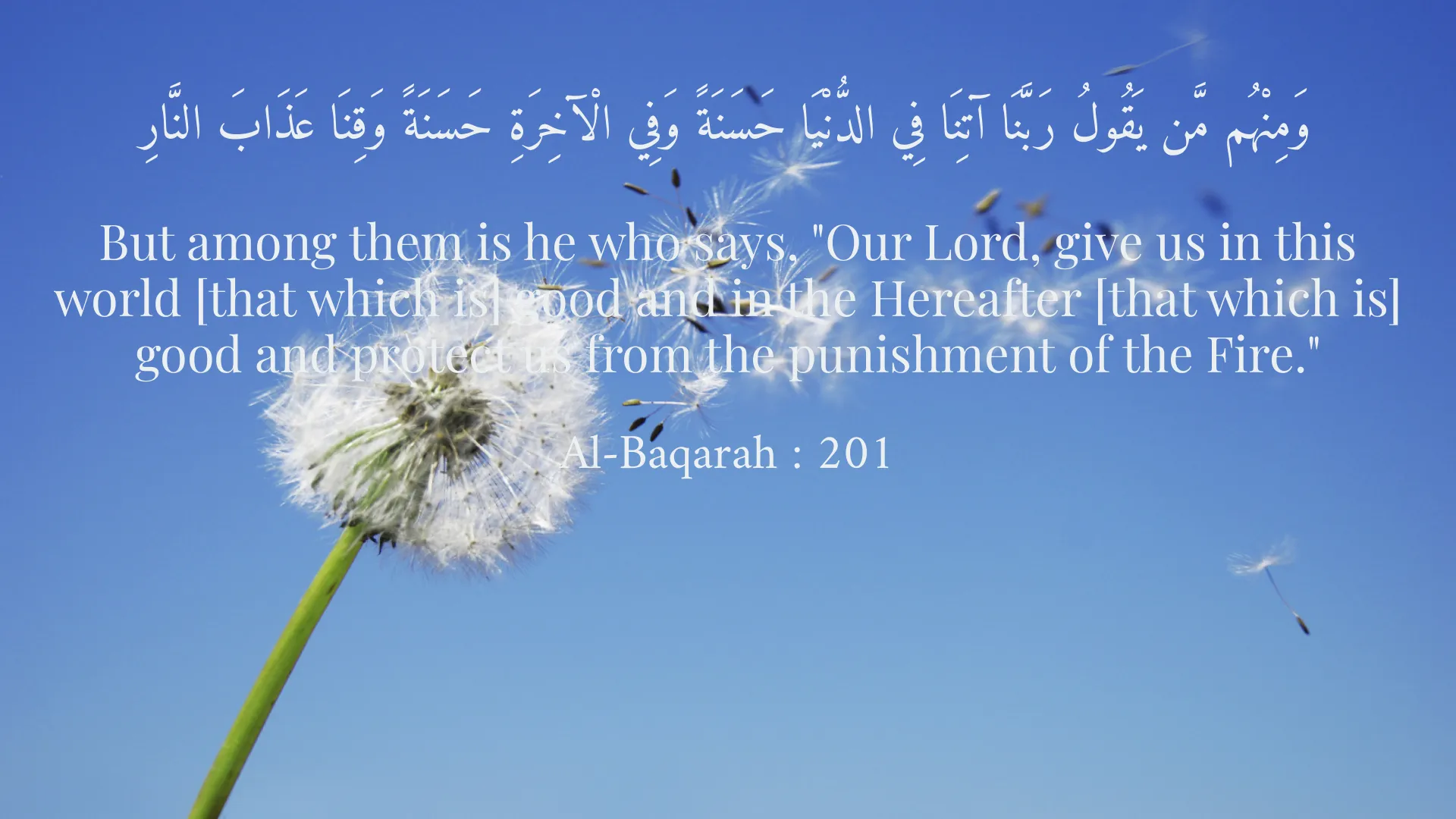
وَمِنْهُم مَّن يَقُولُ رَبَّنَا آتِنَا فِي الدُّنْيَا حَسَنَةً وَفِي الْآخِرَةِ حَسَنَةً وَقِنَا عَذَابَ النَّارِ
But among them is he who says, "Our Lord, give us in this world [that which is] good and in the Hereafter [that which is] good and protect us from the punishment of the Fire."
Al-Baqarah : 201
وَابْتَغِ فِيمَا آتَاكَ اللَّهُ الدَّارَ الْآخِرَةَ ۖ وَلَا تَنسَ نَصِيبَكَ مِنَ الدُّنْيَا ۖ وَأَحْسِن كَمَا أَحْسَنَ اللَّهُ إِلَيْكَ ۖ وَلَا تَبْغِ الْفَسَادَ فِي الْأَرْضِ ۖ إِنَّ اللَّهَ لَا يُحِبُّ الْمُفْسِدِينَ
But seek, through that which Allah has given you, the home of the Hereafter; and [yet], do not forget your share of the world. And do good as Allah has done good to you. And desire not corruption in the land. Indeed, Allah does not like corrupters.
Al-Qasas : 77
وَإِذْ تَأَذَّنَ رَبُّكُمْ لَئِن شَكَرْتُمْ لَأَزِيدَنَّكُمْ ۖ وَلَئِن كَفَرْتُمْ إِنَّ عَذَابِي لَشَدِيدٌ
And [remember] when your Lord proclaimed, 'If you are grateful, I will surely increase you [in favor]; but if you deny, indeed, My punishment is severe.'
Ibrahim : 7
وَمَن يَتَّقِ اللَّهَ يَجْعَل لَّهُ مَخْرَجًا
And whoever fears Allah - He will make for him a way out
At-Talaq : 2
وَيَرْزُقْهُ مِنْ حَيْثُ لَا يَحْتَسِبُ ۚ وَمَن يَتَوَكَّلْ عَلَى اللَّهِ فَهُوَ حَسْبُهُ ۚ إِنَّ اللَّهَ بَالِغُ أَمْرِهِ ۚ قَدْ جَعَلَ اللَّهُ لِكُلِّ شَيْءٍ قَدْرًا
And will provide for him from where he does not expect. And whoever relies upon Allah - then He is sufficient for him. Indeed, Allah will accomplish His purpose. Allah has already set for everything a [decreed] extent.
At-Talaq : 3
Short Story
They say there was a benevolent man who, every morning, would raise his hands in prayer, asking God for abundant lawful provision, yet he would not engage in any work or effort. One day, a wise sage passed by and saw him. He asked, “My friend! Why do you not go about your work and rely solely on prayer? Is God not the Provider?” The ascetic man replied, “Yes, God is the Provider, and I place my trust in His provision.” The sage smiled gently and said, “Indeed, God is the Provider. But He does not drop the grain into the bird’s nest; rather, He gives it wings to fly and seek its own sustenance. And for the lion, He does not place the prey in its mouth; instead, He gives it strength to hunt for it. So, pray with all your heart, but let your hands strive and your feet walk, for effort and diligence are the practical prayers of the body, and both are beloved to God.” From that day on, the man both prayed and, through great effort, attained lawful provision, benefiting from the blessings of his labor and supplications.