Quranic Answer
In the Quran and Islamic tradition, the care for animals and kindness towards them is unequivocally emphasized, highlighting a fundamental moral responsibility that lies within human beings. This intrinsic value is not only a spiritual doctrine but also a practical guideline for how we should interact with the animal kingdom. Animals, like humans, are seen as part of Allah's creation and as such, they have rights and needs that must be acknowledged and respected. The teachings found in both the Quran and Hadith underline the importance of compassion towards all living beings, establishing a moral framework that encourages empathy, responsibility, and stewardship. One of the profound aspects of Islam is the emphasis on kindness and compassion towards animals, which is frequently illustrated through the life and sayings of the Prophet Muhammad (peace be upon him). Known for his remarkable character, the Prophet consistently advocated for humane treatment of animals and demonstrated this in his own conduct. Through various narratives, he exemplified what it means to be a responsible caretaker of animals. A significant hadith reported in Sahih Muslim narrates a cautionary tale about a woman who was punished in Hell for her treatment of a cat. The Prophet (PBUH) relayed this story saying, 'A woman was punished in Hell because of a cat that she had confined until it died; she did not give it to eat or drink when it was confined.' This account serves as a stark reminder that our responsibilities extend beyond human beings to encompass all creatures, highlighting that neglect and cruelty against animals can have severe spiritual consequences. The importance of such teachings can be seen in how they resonate with the innately human virtue of compassion. In Islam, kindness to animals is considered one of the noble traits that exemplify the best of human character. The Prophet Muhammad's (PBUH) life was filled with numerous examples of compassion towards animals, whether it was caring for a thirsty dog by providing it water or protecting a bird's nest from harm. These actions not only demonstrate kindness but also encourage followers of Islam to adopt similar attitudes, reinforcing the significance of being gentle and caring. Moreover, the Quran explicitly acknowledges the status of animals in creation. In Surah Al-An'am (6:38), Allah states, 'And there is no creature on earth, nor a bird that flies with its wings, but they are communities like you.' This verse not only recognizes the existence of multiple creatures but also emphasizes their communal nature, implying that all living beings have their own forms of social organization and life, much like human beings. It suggests that humans should reflect on their relationship with animals and understand that these beings have their own lives, social structures, and matter to the ecosystem. The Quran also addresses animals in a broader ecological context, encouraging humans to act with consideration for the natural world. By viewing animals as fellow inhabitants of the earth, Islam shifts the perspective from one of ownership and exploitation to one of companionship and guardianship. This paradigm promotes a sustainable relationship with nature, where humans are seen as custodians rather than conquerors. Furthermore, the Quran provides guidance on the ethical treatment of animals, even in cases where their meat is deemed permissible for consumption. In Surah Al-Ma'idah (5:1), it mentions that certain animal meats and skins are lawful, yet this allowance does not imply that their rights can be disregarded. Instead, Islam mandates adherence to ethical standards in the slaughtering of animals and emphasizes that they must be treated with dignity and respect. Proper care should be taken during the process to ensure they experience minimal suffering. This underscores the idea that faith is intertwined with ethics, extending even to the treatment of animals. In practical terms, these teachings compel Muslims to cultivate a sense of empathy and responsibility towards animals in their everyday lives. It can manifest in various ways, such as adopting stray animals, ensuring that pets are well cared for, and speaking out against animal cruelty in any form. The Islamic community is encouraged to engage actively in practices that promote animal welfare, highlighting that a compassionate heart need not be limited to human interactions but should also embrace all aspects of life. Additionally, the teachings of Islam regarding animal care can be beneficial not only for animals themselves but also for human society. By nurturing empathy towards animals, communities can cultivate a culture of kindness, which can extend to interpersonal relationships and societal interactions. Empathetic individuals are more likely to carry these values into their relationships with fellow human beings, reducing conflicts and promoting harmony within society. As we consider the implications of these teachings in today's world, the urgency of animal welfare becomes increasingly apparent. Global concerns regarding animal rights, habitat destruction, and environmental sustainability resonate deeply with Islamic principles. As a result, many Muslim organizations and communities have begun to respond to these challenges, advocating for better treatment of animals and increased awareness about the impact of human actions on the well-being of other creatures. In conclusion, the principles found in both the Quran and Hadith clearly illustrate the imperative for kindness and duty to care for animals. The emphasis on compassion reflects a deeper moral calling that reaches beyond mere acts of kindness; it beckons us to understand our place within the broader tapestry of life. The Prophet Muhammad's (PBUH) exemplary treatment of animals and the Quranic verses advocating for their rights reveal a profound understanding of interconnectedness in creation. By embracing and promoting these values, Muslims can contribute to a more compassionate society where all beings are treated with the respect and dignity they deserve. In practicing the care of animals, humanity fulfills its divine responsibility, which is ultimately to engage in acts of goodness and compassion towards all of God's creations.
Related Verses
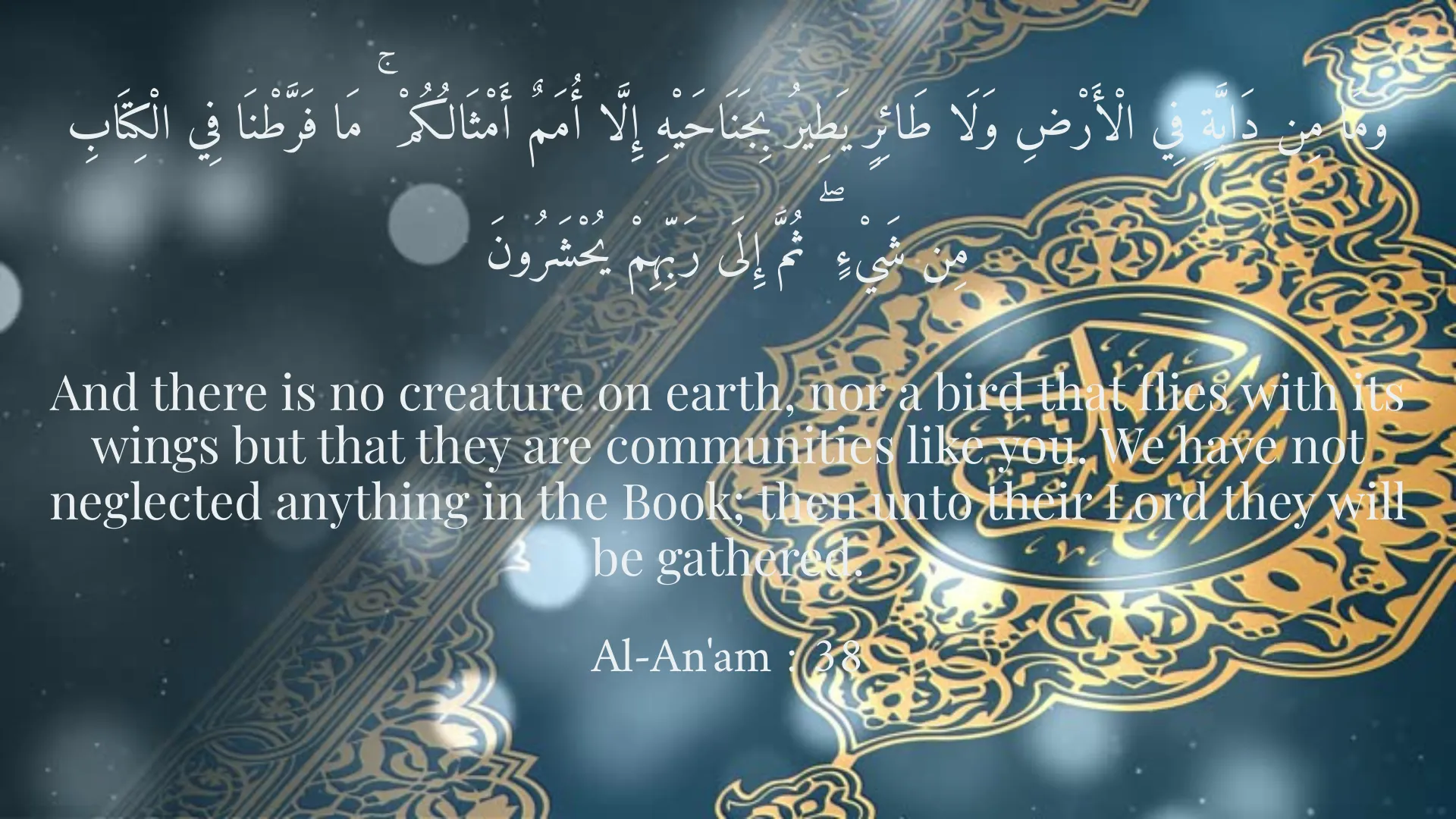
وَمَا مِن دَابَّةٍ فِي الْأَرْضِ وَلَا طَائِرٍ يَطِيرُ بِجَنَاحَيْهِ إِلَّا أُمَمٌ أَمْثَالُكُمْ ۚ مَا فَرَّطْنَا فِي الْكِتَابِ مِن شَيْءٍ ۖ ثُمَّ إِلَى رَبِّهِمْ يُحْشَرُونَ
And there is no creature on earth, nor a bird that flies with its wings but that they are communities like you. We have not neglected anything in the Book; then unto their Lord they will be gathered.
Al-An'am : 38
يَاأيُّهَا الَّذِينَ آمَنُوا أَوْفُوا بِالْعُقُودِ أُحِلَّتْ لَكُمْ مَطَائِبُ الْأَكْلِ إِلَّا مَا يُتْلَى عَلَيْكُمْ غَيْرَ مُحِلٍّ لِصَيْدٍ وَأَنْتُمْ حُرُمٌ ۚ إِنَّ اللَّهَ يَأْمُرُ مَن يَشَاءُ
O you who have believed, fulfill [all] contracts. Legal for you are the foods of the game, except what is disclosed to you, and you are not permitted to hunt while you are in a state of ritual consecration. And Allah decrees what He wills.
Al-Ma'idah : 1
Short Story
One day, a man and woman were traveling to the market. On the way, the man noticed an injured dog lying by the roadside. He said to his wife, 'Let's give some of our food to this dog so it can feel better.' The woman responded, surprised, 'But we are struggling ourselves!' The man replied, 'This animal's pain and suffering matter too. We should help it.' And they gave it some food. Their act of kindness made their day better, and they felt a good sense of joy from helping others.