Quranic Answer
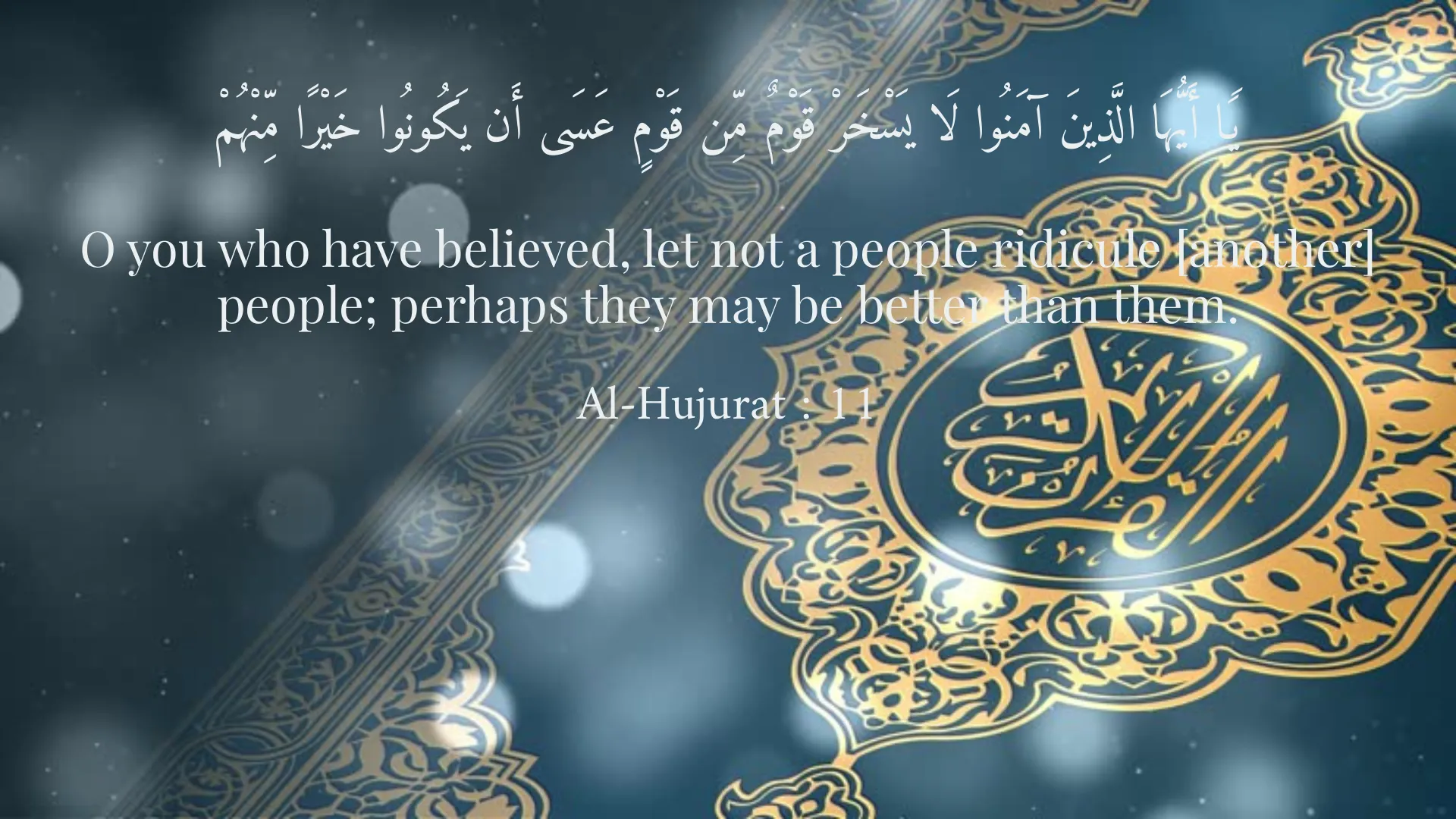
The Holy Quran, the divine scripture of Islam, serves as a profound guide for human behavior, moral conduct, and community interactions. Among the multitude of lessons contained within its verses, one of the most significant themes addressed is the issue of discrimination and the negative practice of looking down upon others. This concern is not merely a social issue but intertwines with deeper spiritual implications, ultimately affecting one's relationship with the Creator. In this article, we will explore the verses of the Quran that address these matters, their implications for believers, and the broader consequences of harboring a contemptuous view of others. In Surah Al-Hujurat, verse 11, Allah explicitly advises believers against ridiculing others. It states, "O you who have believed, let not a people ridicule [another] people; perhaps they may be better than them." This verse is rich in meaning, emphasizing humility and the need to approach social interactions with an open heart and mind. It indicates that outward appearances or perceived shortcomings may conceal inner virtues, strengths, or righteousness. Thus, judging others based on superficial characteristics is fundamentally flawed and misguided. The implication of this verse transcends mere social etiquette; it directly addresses the inner moral compass of the believer. When individuals engage in ridiculing others, they not only undermine the dignity of those they target but also risk becoming tainted by feelings of arrogance and superiority. These negative emotions can lead to a vicious cycle of animosity, where individuals cultivate resentment towards one another, ultimately leading to discord within communities. The Quran seeks to cultivate society based on mutual respect and understanding, where shared humanity takes precedence over superficial differences. Furthermore, the act of looking down upon others can lead to destructive behaviors, which can escalate beyond mere ridicule into acts of violence and oppression. When a community is plagued by contempt, it sets the stage for discrimination, exclusion, and violence against marginalized groups. History provides numerous examples where such contempt has spiraled into systemic inequality, hostilities, and, in the worst cases, genocide. By emphasizing the importance of respecting every individual, regardless of their background, the Quran advocates for peace, unity, and solidarity among humanity. Additionally, Surah Al-Baqarah provides insight into the detrimental impact of harboring contempt for others. Verse 165 states, "And of the people are some who take for granted the worldly life and do not recognize God as they should. This group harbors contempt for others and, as a result, is distanced from Allah's mercy and guidance." This verse indicates a direct correlation between one's attitude towards others and one's spiritual state. In recognizing the potential worth of every individual, believers not only enrich their social interactions but also strengthen their faith and spiritual connection to Allah. This connection between social behavior and spiritual well-being is a central tenet of Islamic teachings. The Quran places significant emphasis on the importance of compassion, empathy, and understanding. When individuals reject these principles and allow contempt to dictate their relationships, they risk alienating themselves from Allah's grace. In Islamic tradition, the heart's purity and the integrity of one's intentions hold immense weight; thus, it becomes imperative that believers strive to cultivate positivity and understanding in their interactions. On a practical level, the message conveyed in these verses entails the necessity of self-reflection and continuous self-improvement. Believers are urged to examine their biases and prejudices, as well as their perceptions of those around them. This process of self-examination encourages individuals to empathize with others' experiences and challenges, fostering a more inclusive environment that uplifts everyone. Furthermore, by focusing on personal growth, believers can contribute to a more harmonious society, where differences are celebrated rather than scorned. The Quran's teachings on looking down upon others resonate across cultures and contexts. They call for a global perspective rooted in dignity and respect for all. In contemporary society, where interactions often occur across vast cultural divides, the emphasis on recognizing the value of every individual takes on an even greater significance. As technology facilitates increased communication and understanding among diverse populations, the teachings of the Quran serve as a critical reminder of the human responsibility to engage with our fellow beings in kindness and respect. Moreover, community leaders and influencers are called upon to embody these principles and set a precedent for others to follow. Engaging in dialogue that promotes acceptance and understanding can mitigate prejudices and facilitate deeper connections between different groups. Educational initiatives, workshops, and community dialogues focused on empathy and cultural competence can empower individuals to challenge their assumptions and prejudices. In conclusion, the Holy Quran's teachings on looking down upon others and discriminating against individuals are profound and far-reaching. The verses remind believers that every person has intrinsic value, and judging others based on appearances or worldly circumstances is not only misleading but detrimental to one's faith and social harmony. To embrace the Quran's message is to acknowledge the richness of human diversity while striving towards compassion and understanding. Through these efforts, believers can nurture a society that reflects the values of mercy, solidarity, and humanity as envisioned by the Quran, leading to a spiritually enriched and cohesive community.
Related Verses
يََا أَيُّهَا الَّذِينَ آمَنُوا لَا يَسْخَرْ قَوْمٌ مِّن قَوْمٍ عَسَى أَن يَكُونُوا خَيْرًا مِّنْهُمْ
O you who have believed, let not a people ridicule [another] people; perhaps they may be better than them.
Al-Hujurat : 11
وَمِنَ النَّاسِ مَن يَتَّخِذُ مِن دُونِ اللَّهِ أَندَادًا يُحِبُّونَهُمْ كَحُبِّ اللَّهِ. وَالَّذِينَ آمَنُوا أَشَدُّ حُبًّا لِّله.
And of the people are some who take for granted the worldly life and do not recognize God as they should.
Al-Baqarah : 165
Short Story
One day, Saadi was sitting in a mosque, pondering the behaviors of humans toward one another. He realized that having a negative outlook towards others could lead to tension and wrongful judgments. Following this insight, he began teaching others that one should look at each other with love and kindness, focusing solely on one’s essence. He consistently embedded this message in his poetry to invite others towards love and friendship.