Quranic Answer
Is permanent peace possible through faith? This is a profound and fundamental question that occupies the hearts and minds of many individuals. In their quest for tranquility, humans have historically explored various paths, from material pleasures to philosophical and mystical schools of thought. However, from the perspective of the Holy Quran, the answer to this question is clear and hopeful: Yes, lasting inner peace is attainable through true faith, although "permanent" does not imply the absence of any challenges or difficulties in this worldly life, but rather refers to an inner stability and resilience against external turmoil. The Quran explicitly states that hearts find tranquility in the remembrance of Allah. This is not merely a claim but a truth experienced by millions of believers throughout history. To understand this type of peace, we must delve deeper into the concept of "Iman" (faith) in the Quran. Faith is not merely a mental assent to the existence of God; rather, it is a comprehensive set of beliefs, actions, and states of the heart that connect an individual to the Creator of the universe. This connection serves as an endless source of strength, hope, and reassurance. When a person has faith in a God who is All-Knowing, All-Powerful, All-Wise, and Absolutely Merciful, they cease to fear anything. The belief that everything that occurs in the world is under divine will and wisdom, and that there is good embedded within it, reassures the individual that even in the worst circumstances, they are not alone and have a firm refuge. This sense of assurance forms the bedrock of peace, as the individual knows they are supported by an infinite power. One of the key Quranic terms in this regard is "Sakina." Sakina refers to tranquility, serenity, and dignity that Allah bestows upon the hearts of believers. This is a peace that cannot be achieved by mere logic; it is a divine gift that, in difficult moments, removes anxiety from the heart and replaces it with stability and calm. For instance, the Quran states that Allah sent down Sakina upon the hearts of believers during battles to keep them steadfast and fearless. This demonstrates that the peace derived from faith is effective even on the battlefield and in the face of death, enabling individuals to perform their duties with courage and patience. This kind of peace, despite external dangers, remains firm within the heart of the believer, allowing them to proceed with strength and confidence. Another factor through which faith leads to peace is "Tawakkul" (reliance on God). Tawakkul means trusting and entrusting one's affairs to Allah after exerting all possible efforts. When an individual knows that their destiny is in the capable hands of God and that He desires the best for His servants, they are liberated from worries about the future and the fear of loss. This liberation lifts a heavy burden from one's shoulders. A person who practices Tawakkul understands that if they lose something, it was due to divine wisdom, and if they do not attain something, then surely their good lies in something else that Allah has destined for them. This perspective empowers individuals to face life's events with contentment and peace, whether sweet or bitter. This active acceptance stems not from weakness but from an inner strength derived from a connection to the infinite divine source. Furthermore, faith in the Hereafter and life after death also plays a vital role in fostering peace. When an individual knows that this worldly life is transient and that a higher purpose awaits beyond it, their attachment to the world and its fleeting pleasures diminishes. Worries about poverty, fear of losing social status, or regret over what has not been achieved lessen. Instead, they strive to build their eternal life through righteous deeds. This worldview provides them with a peace that does not even consider death as an end, but rather a bridge to eternity and the encounter with the True Beloved. This broader perspective minimizes fleeting worldly concerns and allows individuals to live with a wider view and a more assured heart. Worship and remembrance of God are also cornerstones of this enduring peace. Prayer (Salah), supplication (Du'a), recitation of the Quran, and any form of remembering Allah polish the heart and cleanse it from the rust of sin and material attachments. These acts not only strengthen an individual's connection with God but also provide an opportunity for self-reflection and contemplation on the grandeur of creation. The moments when a person speaks privately with their Lord, feeling the divine presence and closeness, immerse them in an ocean of tranquility. The Quran states: "أَلَا بِذِكْرِ اللَّهِ تَطْمَئِنُّ الْقُلُوبُ" (Ar-Ra'd: 28), meaning "Unquestionably, by the remembrance of Allah hearts are assured." This verse clearly indicates that the primary source of peace is the remembrance of Allah. This remembrance can be in the form of prayer, or glorification, or supplication, or even contemplation on divine verses and His blessings. Every form of connection with the Creator leads the heart towards peace and nourishes it. However, it is important to emphasize that "permanent peace" does not mean the absence of problems, illnesses, or sorrow in this worldly life. The world is a place of trial (dar al-ibtila), and humans will always face challenges. But the peace that faith brings is an inner peace that helps individuals cope with these challenges, rather than escape from them. This peace is like an anchor that keeps the ship of one's being steady during life's storms. A true believer may shed tears, yet their heart is at peace; they may be ill, yet they are content with divine wisdom; they may experience poverty, yet they possess spiritual richness. This is the true meaning of peace derived from faith. This peace neither originates from material prosperity nor diminishes with worldly problems; rather, it has deep roots in the connection with the inexhaustible source of peace, which is Allah. This peace is a resilient power in the face of hardships. Ultimately, faith, in its true sense, provides a roadmap for life. By having a sublime purpose, constant values, and divine guidance for decision-making, confusion and doubts are minimized. This clarity in purpose and path is, in itself, a great factor in creating peace. A life of faith is a life with meaning, purpose, and direction. This is how believers, even amidst the fires of adversity, find the lamp of peace and keep it burning in their hearts. Therefore, permanent peace from faith is possible; but not in the sense of negating worldly sufferings, but in the sense of acquiring an inner strength that keeps one resilient and calm in the face of any hardship. This is a divine gift for those who surrender their hearts to Him and walk on His path.
Related Verses
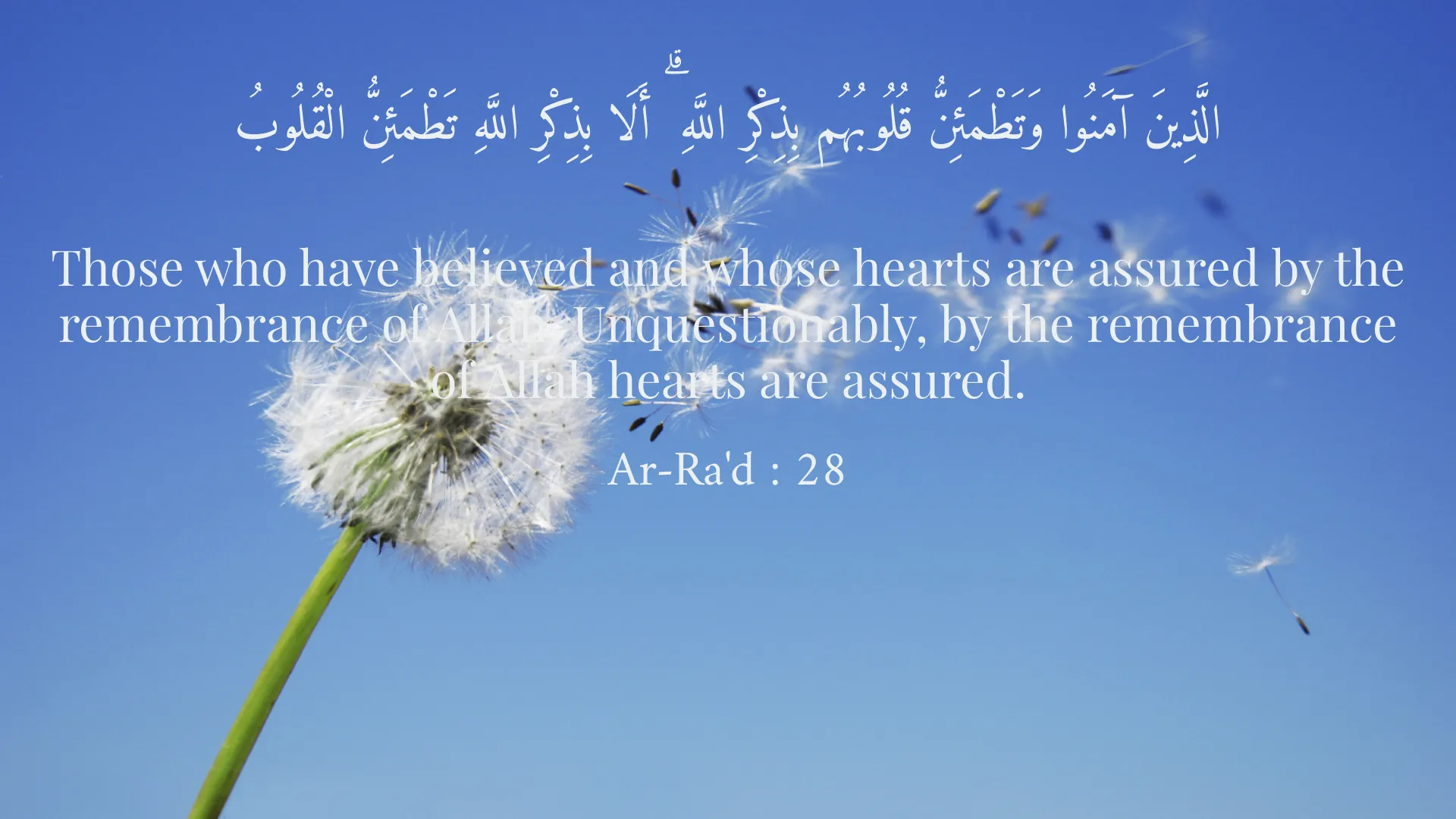
الَّذِينَ آمَنُوا وَتَطْمَئِنُّ قُلُوبُهُم بِذِكْرِ اللَّهِ ۗ أَلَا بِذِكْرِ اللَّهِ تَطْمَئِنُّ الْقُلُوبُ
Those who have believed and whose hearts are assured by the remembrance of Allah. Unquestionably, by the remembrance of Allah hearts are assured.
Ar-Ra'd : 28
وَمَن يَتَوَكَّلْ عَلَى اللَّهِ فَهُوَ حَسْبُهُ ۚ إِنَّ اللَّهَ بَالِغُ أَمْرِهِ ۚ قَدْ جَعَلَ اللَّهُ لِكُلِّ شَيْءٍ قَدْرًا
And whoever relies upon Allah - then He is sufficient for him. Indeed, Allah will accomplish His purpose. Allah has already set for everything a [decreed] extent.
At-Talaq : 3
هُوَ الَّذِي أَنزَلَ السَّكِينَةَ فِي قُلُوبِ الْمُؤْمِنِينَ لِيَزْدَادُوا إِيمَانًا مَّعَ إِيمَانِهِمْ ۗ وَلِلَّهِ جُنُودُ السَّمَاوَاتِ وَالْأَرْضِ ۚ وَكَانَ اللَّهُ عَلِيمًا حَكِيمًا
It is He who sent down tranquility into the hearts of the believers that they might add [more] faith to their [existing] faith. And to Allah belong the soldiers of the heavens and the earth. And ever is Allah Knowing and Wise.
Al-Fath : 4
Short Story
They say that in ancient times, there was a king who found no joy in the vastness of his kingdom or his overflowing treasuries, for he was constantly anxious about losing them. One night, troubled by thoughts, he went to bed but sleep eluded him. Near the palace, he heard the melodious voice of a dervish, who, with a tranquil heart and a mouth full of remembrance, was praising the Lord and possessed a peace the king had never experienced. The king summoned the dervish and said, "O Dervish, with all this wealth and power, I have not a moment of peace, how can you sleep so soundly with such poverty?" The dervish smiled and replied, "O King, the tranquility of the heart is not measured by possessions, but by the degree of reliance on God. I accept what I have, and what I do not have, I entrust to Him. You worry about guarding what you possess, while I am at ease having nothing to guard. It is here that peace arises not from wealth, but from a state of being." The king learned from his words and realized that the true treasure is the peace of heart, attained through faith and reliance on God, not from accumulating worldly possessions.