Quranic Answer
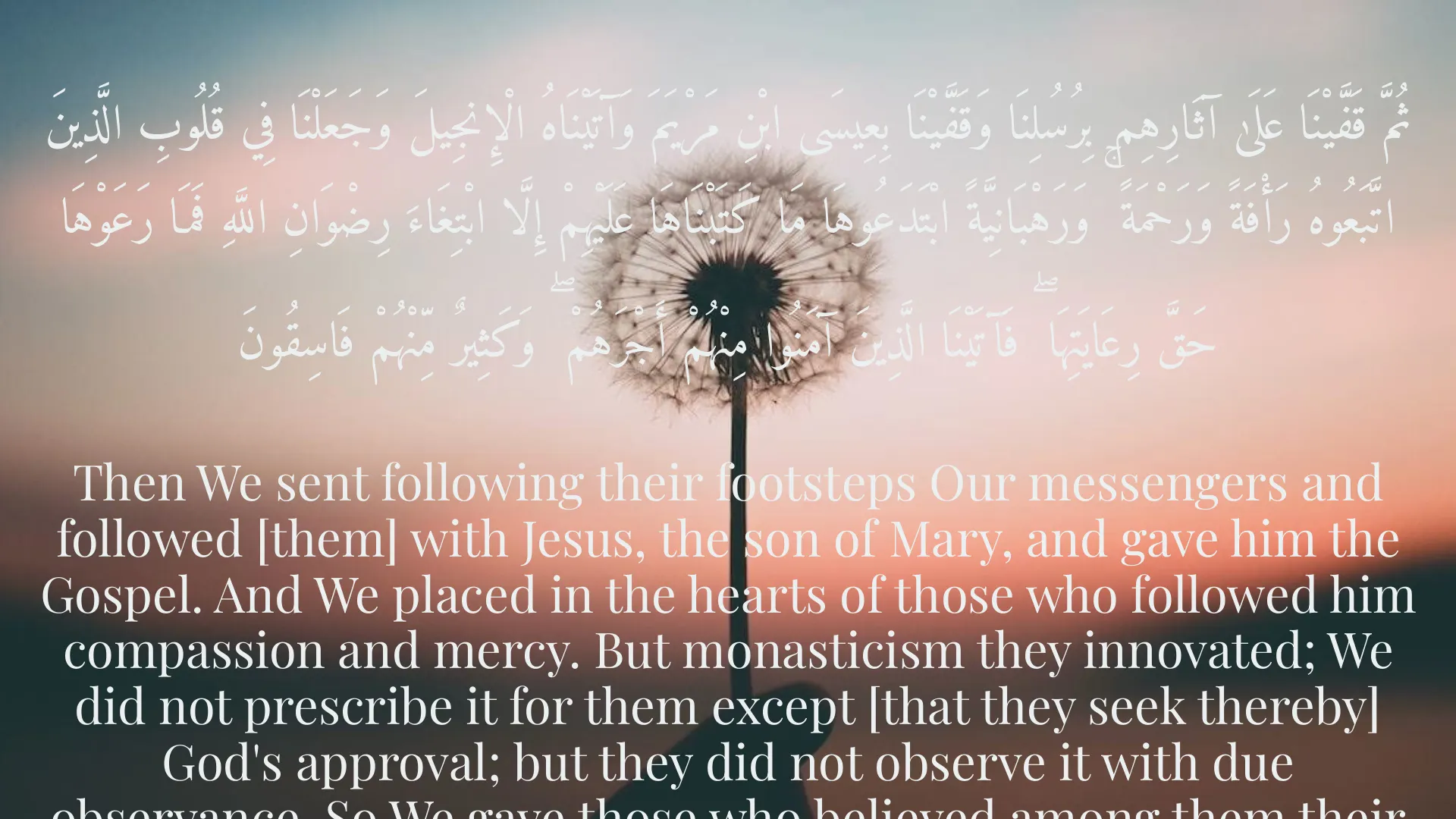
In addressing the question, "Is reclusion a path to closeness with God?" from the perspective of Quranic teachings and the Prophetic tradition, it can be asserted that Islam generally does not endorse monasticism or absolute isolation from society as the primary or sole path to drawing closer to God. While temporary solitude and reflection on divine teachings are highly valuable and at times even necessary for self-purification and deepening one's connection with the Creator, this should not imply a complete severing of ties with society or shirking individual and collective responsibilities. The Holy Quran outlines a balanced and moderate way of life for believers, described as "Ummatan Wasatan" (a moderate nation or middle path). This balance means that a person should contemplate their Hereafter while not neglecting their share of this world. This approach fundamentally contradicts complete isolation. In numerous verses, God emphasizes the importance of healthy social relations, kindness to parents and relatives, caring for the needy, enjoining good and forbidding evil, and active participation in society to establish justice and righteousness. These responsibilities are inherently impossible to fulfill without engagement with the community. In many cases, serving humanity and attending to societal affairs are considered great acts of worship and a means to attain divine pleasure. Therefore, Islam is a comprehensive religion that interweaves the individual and social dimensions of human life, seeing human perfection in the harmony of these two aspects. One of the verses that directly addresses the concept of monasticism is Surah Al-Hadid, verse 27, which states: "Then We sent following their footsteps Our messengers and followed [them] with Jesus, the son of Mary, and gave him the Gospel. And We placed in the hearts of those who followed him compassion and mercy. But monasticism they innovated; We did not prescribe it for them except [that they seek thereby] God's approval; but they did not observe it with due observance. So We gave those who believed among them their reward, but many of them are defiantly disobedient." This verse clearly indicates that monasticism (extreme reclusion) was an innovation by the followers of Christianity and was not prescribed by God for them, although their intention was to seek God's pleasure. This verse demonstrates that such an approach, meaning absolute withdrawal from the world, was not part of the primary divine teachings. This does not mean their intention was condemned, but it highlights that the Islamic Sharia is built upon moderation and engagement within society, and this conscious engagement can add significantly more depth to acts of worship. The Prophet Muhammad (peace be upon him) serves as the ultimate role model for Muslims. While he did engage in periods of solitude and worship in the cave of Hira, and spent time in contemplation even before his prophethood, after the establishment of the Islamic society, he was the most active and dynamic individual within the community. He was a political leader, a judge, a moral educator, a family man, and a warrior in the way of God. His life exemplifies the integration of worship with social responsibility. If absolute reclusion were the primary path to closeness with God, the Prophet (PBUH) would have chosen such a path, whereas his life demonstrates the opposite. This exemplary life indicates that the perfection of faith and servitude is achieved through encountering the challenges of social life and striving to improve it. The purpose of human creation in the Quran is not merely individual worship but also divine vicegerency on Earth and its development (Surah Al-Baqarah, verse 30). This vicegerency necessitates active presence in the world, managing it according to divine principles, and establishing justice and goodness. How can these grand objectives be achieved without presence and participation in society? Humanity is created as a social being, and its growth and perfection are realized within the context of healthy social interactions. The challenges and difficulties of life in society provide opportunities for patience, forgiveness, benevolence, struggle against the lower self, and service to creation, each of which can be a step towards drawing closer to God. From an Islamic perspective, the world is the farm of the Hereafter, and this farm must be cultivated with righteous deeds and active living. However, Islam does not forbid temporary solitude for worship and self-improvement; rather, it encourages it. I'tikaf in mosques, contemplation and reflection on divine verses and cosmic phenomena, and moments of solitude for supplication and intimate communion with God are all valuable forms of temporary seclusion that help individuals strengthen their spiritual connection and turn inward. But these periods of solitude are not the ultimate goal; rather, they are tools for returning to the arena of life more robustly and insightfully to fulfill one's duties. These opportunities for solitude are like recharging the soul for the journey in a busy world. In summary, absolute reclusion and permanent isolation from society are not the approved Islamic path to closeness with God. The true path is one of moderation and balance: deep and sincere worship alongside active and responsible presence in society, fulfilling the rights of people, and striving to reform and develop the world in line with divine objectives. A person who withdraws from God's creation may miss out on many opportunities to gain divine pleasure, including serving fellow human beings, showing benevolence, expressing gratitude for blessings, and enduring social hardships with patience. Closeness to God is achieved amidst an active and challenging life, through observing the rights of God (Huquq Allah) and the rights of people (Huquq al-Nas). The world is neither a prison nor an ultimate goal; rather, it is a farm for the Hereafter and a field for the greater jihad against the self and Satan. Therefore, a conscious and spiritual presence within society, while observing piety and divine limits, provides a more suitable environment for growth and closeness than absolute isolation; because in the course of life, individuals encounter challenges and situations that test their patience, self-sacrifice, forgiveness, and other moral virtues, and it is in these tests that their faith is refined and grows, leading to true closeness to the Creator of the universe.
Related Verses
ثُمَّ قَفَّيْنَا عَلَىٰ آثَارِهِم بِرُسُلِنَا وَقَفَّيْنَا بِعِيسَى ابْنِ مَرْيَمَ وَآتَيْنَاهُ الْإِنجِيلَ وَجَعَلْنَا فِي قُلُوبِ الَّذِينَ اتَّبَعُوهُ رَأْفَةً وَرَحْمَةً ۚ وَرَهْبَانِيَّةً ابْتَدَعُوهَا مَا كَتَبْنَاهَا عَلَيْهِمْ إِلَّا ابْتِغَاءَ رِضْوَانِ اللَّهِ فَمَا رَعَوْهَا حَقَّ رِعَايَتِهَا ۖ فَآتَيْنَا الَّذِينَ آمَنُوا مِنْهُمْ أَجْرَهُمْ ۖ وَكَثِيرٌ مِّنْهُمْ فَاسِقُونَ
Then We sent following their footsteps Our messengers and followed [them] with Jesus, the son of Mary, and gave him the Gospel. And We placed in the hearts of those who followed him compassion and mercy. But monasticism they innovated; We did not prescribe it for them except [that they seek thereby] God's approval; but they did not observe it with due observance. So We gave those who believed among them their reward, but many of them are defiantly disobedient.
Al-Hadid : 27
وَابْتَغِ فِيمَا آتَاكَ اللَّهُ الدَّارَ الْآخِرَةَ ۖ وَلَا تَنسَ نَصِيبَكَ مِنَ الدُّنْيَا ۖ وَأَحْسِن كَمَا أَحْسَنَ اللَّهُ إِلَيْكَ ۖ وَلَا تَبْغِ الْفَسَادَ فِي الْأَرْضِ ۖ إِنَّ اللَّهَ لَا يُحِبُّ الْمُفْسِدِينَ
But seek, through that which Allah has given you, the home of the Hereafter; and [yet], do not forget your share of the world. And do good as Allah has done good to you. And desire not corruption in the land. Indeed, Allah does not like corrupters.
Al-Qasas : 77
وَكَذَٰلِكَ جَعَلْنَاكُمْ أُمَّةً وَسَطًا لِّتَكُونُوا شُهَدَاءَ عَلَى النَّاسِ وَيَكُونَ الرَّسُولُ عَلَيْكُمْ شَهِيدًا ۗ وَمَا جَعَلْنَا الْقِبْلَةَ الَّتِي كُنتَ عَلَيْهَا إِلَّا لِنَعْلَمَ مَن يَتَّبِعُ الرَّسُولَ مِمَّن يَنقَلِبُ عَلَىٰ عَقِبَيْهِ ۚ وَإِن كَانَتْ لَكَبِيرَةً إِلَّا عَلَى الَّذِينَ هَدَى اللَّهُ ۗ وَمَا كَانَ اللَّهُ لِيُضِيعَ إِيمَانَكُمْ ۚ إِنَّ اللَّهَ بِالنَّاسِ لَرَءُوفٌ رَّحِيمٌ
And thus We have made you a just community that you will be witnesses over the people and the Messenger will be a witness over you. And We did not make the Qiblah which you used to face except that We might make evident who would follow the Messenger from who would turn back on his heels. And indeed, it was difficult except for those whom Allah guided. And never would Allah have caused your faith to be lost. Indeed, Allah is, to the people, Kind and Merciful.
Al-Baqarah : 143
Short Story
Once, amidst towering mountains, an ascetic, his head brimming with thoughts of drawing near to God, had secluded himself in a cave. He believed that distancing himself from people and despising worldly matters was the only path to truth. He spent his days in worship and his nights in supplication, shunning anything that hinted of the world. One day, a weary fisherman, on his way home, was caught in a fierce storm near the ascetic's cave. Finding no shelter, out of desperation, he took refuge at the cave's entrance. The ascetic, disturbed by the stranger's presence, reluctantly allowed him in. As the storm intensified, the fisherman pulled out a piece of dry bread from his bag and shared it with the ascetic. The ascetic, who had never tasted anything but his own dry morsels and avoided human company his entire life, found his heart softened by the fisherman's simple gesture. The warmth of the bread and the simplicity of the shared moment made him ponder deeply. He, who had spent his life seeking God in solitude, suddenly realized that perhaps God was present even in these simple moments of compassion and coexistence. On that stormy night, the ascetic not only found shelter from the rain but also learned a profound lesson: that closeness to God is not solely found in isolation and reclusion, but also in serving creation and opening one's heart to His servants. He understood that the real world and opportunities for spiritual growth lay within interaction with fellow human beings and experiencing the challenges of communal life, not in fleeing from it.