Quranic Answer
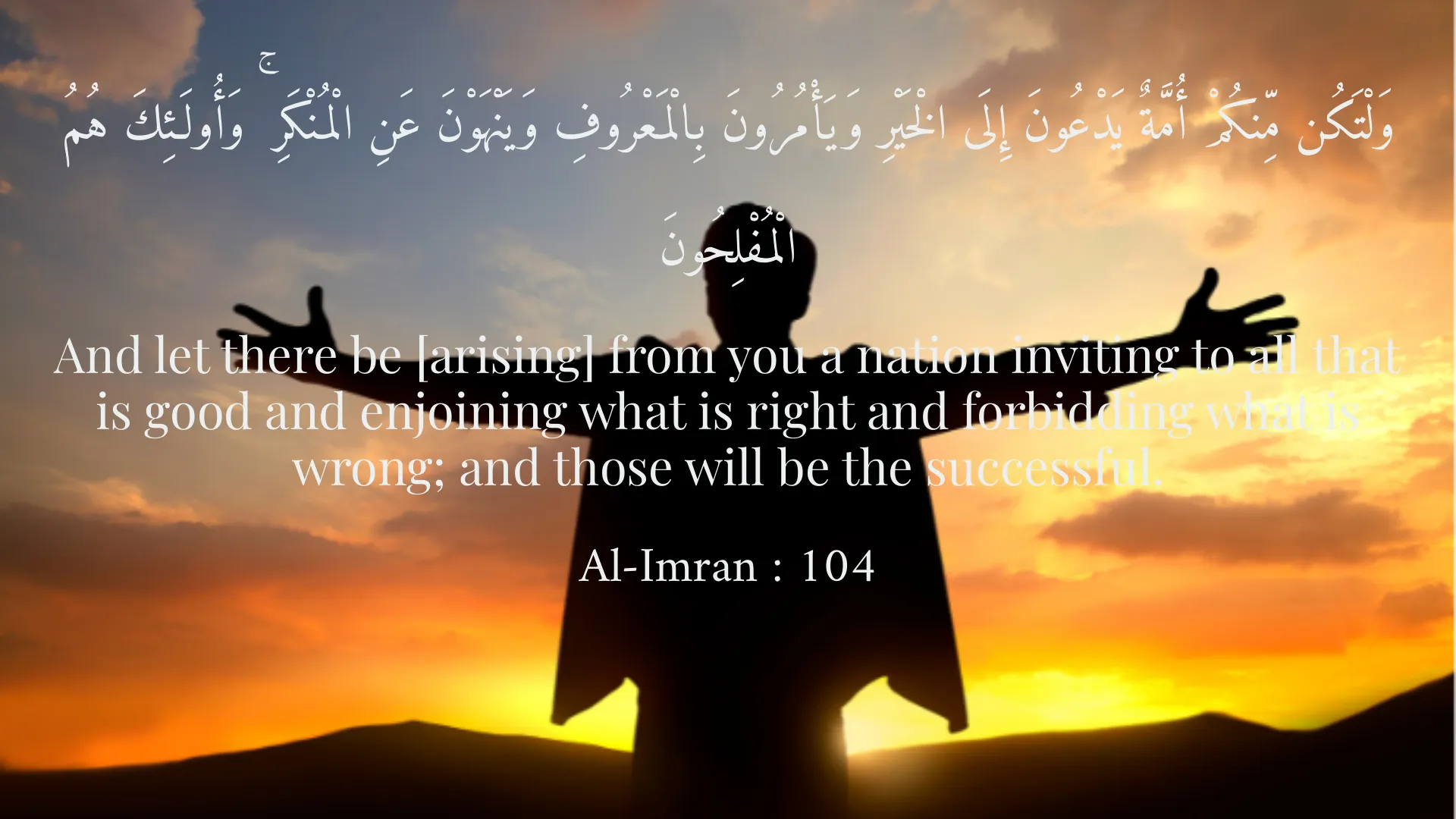
The Holy Quran, as the sacred text of Islam, elucidates the responsibilities of believers in a society, emphasizing the importance of action over passive observation, particularly when facing sin and corruption. This fundamental teaching can be derived from several verses that call upon the faithful to rise against moral decay and advocate for goodness among themselves and within their communities. The significance of this central theme not only lies in individual morality but also resonates throughout the collective conscience of a society. Silence in the face of wrongdoing is a troubling stance, as it threatens to mute the moral compass guiding communal relations. In Surah Al-Imran, verse 104, Allah commands the believers to actively promote good and to prevent evils. The verse reads: ‘Let there arise from you a nation inviting to all that is good and enjoining what is right and forbidding what is wrong, and those will be the successful.’ This verse underlines the necessity for Muslims to engage with one another to encourage virtuous behavior, thereby constructing a morally robust society. The Quran does not present faith as merely a personal affair but as a communal obligation, wherein the responsibility to uphold moral standards is shared. To remain silent when witnessing acts of wickedness is not just a sin against individual conscience but also a sin against the fabric of the community. Silence when confronted with injustices often signals a dangerous apathy toward moral decline. Inaction can breed a culture of indifference, where transgressions are normalized simply through lack of response. This silence reflects a critical void in accountability. Believers are reminded that turning a blind eye to sinful acts, whether in smaller personal contexts or broader societal frameworks, is the antithesis of what is instructed in the Quran. The absence of dissent allows evil practices to flourish unchallenged, leading to an erosion of moral values and a gradual deterioration of societal integrity. Additionally, the Quran warns against concealing the truths revealed by Allah. In Surah Al-Ma'idah, verse 78, Allah states: ‘Those who conceal what Allah has revealed are cursed.’ This verse emphasizes that to accept a false narrative or to ignore the truths that have been clearly articulated is tantamount to a betrayal of one’s faith and commitments. Concealment in this context manifests not only through silence but also through deliberate acts of complicity. When believers fail to speak out against falsehood, they tacitly endorse it, thereby contributing to the advancement of moral corruption. The call to action against wrongdoing is further reinforced in Surah At-Tawbah, verse 71, where believers are instructed not to remain passive in the face of oppression. This verse affirms the notion that active resistance against injustices is a moral duty for every Muslim. It reiterates the importance of vigilance in safeguarding justice and righteousness, encouraging individuals to question and challenge inequities and evildoers in their surroundings. The expectation for believers to take a stand against oppression is not confined to grand gestures; often it requires simple acts of voicing concern, providing support for the oppressed, and creating spaces where open dialogue about sins and injustices can occur. The implications of remaining silent go beyond individual implications; they reflect systemic failures within societal frameworks. When individuals become indifferent to sin, they overlook the social responsibilities that shape not only personal conduct but also community ethics and governance. The inaction of those who deflect or ignore wrongdoing contributes to an environment ripe for corruption and moral decay. Thus, the Quran emphasizes a proactive approach whereby believers become catalysts for change, courageously standing against the tides of immorality. Adopting a Quranic framework, believers are encouraged to cultivate a culture of accountability, not only for themselves but for their communities as well. Building such a culture necessitates continuous engagement with the Quranic teachings, fostering discussions on good, right, and wrong. This can be achieved through various avenues such as religious education, community gatherings, and social activism, where the principles of the Quran are applied in practical and relatable ways. Moreover, fostering an environment where individuals feel empowered to speak out against sin requires a collective willingness to participate in the discourse and hold one another accountable. Support systems within communities, such as mentorship and peer support networks, can serve to embolden individuals to voice their concerns without fear of persecution or retribution. In conclusion, the teachings of the Quran underscore the significance of not remaining silent in the face of sin and corruption. The instruction to speak out, advocate for righteousness, and oppose wrongdoing prevails as a moral imperative for all believers. It reflects a commitment to uphold the tenets of justice, empathy, and accountability that define the essence of faith. Only through the active engagement of individuals in their communities can society collectively navigate the challenges of moral decay and preserve its integrity. Silence in the face of sin is neither correct nor acceptable; it overlooks a social responsibility and leads to the erosion of ethical values essential for both individual and communal well-being. By committing to speaking out and putting faith into action, believers can contribute meaningfully to building a just and righteous society in alignment with the divine standards laid forth in the Quran.
Related Verses
وَلْتَكُن مِّنكُمْ أُمَّةٌ يَدْعُونَ إِلَى الْخَيْرِ وَيَأْمُرُونَ بِالْمَعْرُوفِ وَيَنْهَوْنَ عَنِ الْمُنْكَرِ ۚ وَأُولَـئِكَ هُمُ الْمُفْلِحُونَ
And let there be [arising] from you a nation inviting to all that is good and enjoining what is right and forbidding what is wrong; and those will be the successful.
Al-Imran : 104
إِنَّ الَّذِينَ يَكْتُمُونَ مَا أَنزَلَ اللَّهُ مِنَ الْكِتَابِ وَيَشْتَرُونَ بِهِ ثَمَنًا قَلِيلًا أُو۟لَـئِكَ مَا أَكْلَتْ أَفْوَاهُهُمْ إِلَّا النَّارَ ۖ وَلَا يُكَلِّمُهُمُ اللَّهُ يَوْمَ الْقِيَامَةِ وَلَا يُزَكِّيهِمْ ۖ وَلَهُمْ عَذَابٌ أَلِيمٌ
Indeed, those who conceal what Allah has revealed of the Scripture and exchange it for a small price - those consume not in their bellies except the Fire. And Allah will not speak to them on the Day of Resurrection, nor will He purify them, and they will have a painful punishment.
Al-Ma'idah : 78
وَالمُؤْمِنُونَ وَالمُؤْمِنَاتُ بَعْضُهُم أَوْلِيَاءُ بَعْضٍ ۖ يَأْمُرُونَ بِالْمَعْرُوفِ وَيَنهَوْنَ عَنِ الْمُنْكَرِ وَيُقِيمُونَ الصَّلَاةَ وَيُقْتُونَ الزَّكَاةَ وَيُطِيعُونَ اللَّهَ وَرَسُولَهُ ۚ أُو۟لَـئِكَ سَيَرْحَمُهُمُ اللَّهُ ۗ إِنَّ اللَّهَ عَزِيزٌ حَكِيمٌ
And the believing men and believing women are allies of one another. They enjoin what is right and forbid what is wrong and establish prayer and give zakah and obey Allah and His Messenger. Those will be received by Allah with mercy. Indeed, Allah is Exalted in Might and Wise.
At-Tawbah : 71
Short Story
One day, a group of young men were sitting in a mosque discussing sin and its consequences. One of them, named Mohammad, said, "I always overlook others' sins and remain silent because I don’t want to hurt them." But an elder present said, "Dear friend, silence in the face of sin does not mean accepting it. We have a duty to support each other, and if we see someone making a mistake, we should gently guide them." These words made Mohammad reflect and he decided to no longer just be an observer but to help his friends stay on the right path.