Quranic Answer
Interpersonal interactions and social relationships hold significant importance in the Holy Quran. The divine text emphasizes the necessity of maintaining connections with others as a foundation for cultivating a healthy and supportive community. Such communal bonds not only nurture individual well-being but also reinforce and elevate one's faith. The Quran strongly advocates for believers to engage in positive relations, which in return, contribute to a sense of belonging and fulfillment. Nevertheless, the Quran also presents the notion that moments of solitude and reflection are crucial for strengthening one's spiritual connection with Allah. This duality of engagement and detachment in the Quran equips individuals with the tools necessary for their spiritual journey. Throughout various verses, the Quran articulates the significance of interpersonal relationships. Believers are encouraged to engage in acts of kindness, empathy, and support, fostering an environment where faith can flourish. In Surah Al-Hujurat, verse 10, for instance, it states, "The believers are but brothers, so make settlement between your brothers. And fear Allah that you may receive mercy." This exemplifies the Quran's teaching that a harmonious community, grounded in strong interpersonal ties, has a positive influence on individual and collective faith. The interconnectedness among believers is an essential aspect of Islamic teachings; creating a nurturing community can enhance awareness of Allah and fortify one's spiritual resolve. However, the message of the Quran is multifaceted. Alongside the encouragement for social interaction, there exists a crucial emphasis on the importance of solitude. Surah Maryam, verse 48, exemplifies this principle, indicating that even among prophetic figures, there were periods dedicated to retreating from society. The verse suggests that such isolation allowed the prophets to better connect with Allah through contemplation and worship. This notion holds valuable implications; it indicates that periods of solitude can facilitate an environment conducive for self-reflection, prayer, and ultimately, a deeper understanding of one's spirituality. The Quran acknowledges that life often presents a cacophony of social pressures, distractions, and demands that can lead individuals away from their spiritual path. In Surah Al-Baqarah, verse 153, patience and prayer are highlighted as essential tools for strengthening faith amidst such distractions. The invitation to pursue patience and prayer in the face of adversities underscores the need for moments of withdrawal, wherein believers can engage in an introspective dialogue with themselves and with Allah. These moments of retreat allow for a fresh perspective; they provide the clarity needed to navigate one's struggles and maintain their faith in the face of challenges. Moreover, the experience of separation from the relentless noise of society can unlock a transformative potential within individuals. Distancing oneself during demanding times can enable deeper thought and reflection on personal beliefs, actions, and aspirations. Such self-examination is an integral aspect of spiritual growth, allowing individuals to identify areas in their lives that may require improvement, repentance, or further devotion. Cultivating a sense of awareness and mindfulness in solitude leads to the enhancement of religious spirit. When one takes the time to disengage from external distractions, they create space for personal growth. In solitude, believers can focus on their relationship with Allah, navigate their internal struggles with clarity, and develop a greater understanding of their faith. In bridging the concepts of community engagement and necessary withdrawal, the Quran presents a profound dimension of spiritual practice. Moments of solitude do not indicate a rejection of community but, rather, reflect a healthy balance required for an individual’s spiritual journey. By fostering connections with fellow believers while also recognizing the need for personal time, individuals may cultivate a richer faith experience. It is essential for believers to recognize when the hustle of social interaction becomes overwhelming or detracts from their spiritual focus. These moments of self-awareness can act as a catalyst for individuals to withdraw and engage in practices that rejuvenate their spirit. For instance, engaging in prayer, reading the Quran, or even meditative reflection can provide the necessary grounding to withstand external pressures. The tension between community and solitude, as captured in the Quran, reaffirms a holistic spiritual approach. Both aspects serve distinct purposes within an individual's spiritual development, reminding believers that building a supportive community is essential, but so is the ability to engage in self-care and self-reflection. After all, a strong faith is not solely defined by outward expressions of belief but also by the profound connection one nurtures within oneself and with Allah. In conclusion, the Holy Quran intricately weaves the themes of interpersonal relationships and the necessity of solitude into a coherent framework for nurturing faith. By advocating for communal bonds while also encouraging personal reflection, the Quran empowers believers to seek balance in their spiritual practices. This balance ultimately leads to enhanced personal insight and a deeper connection with the divine. In essence, finding opportunities to withdraw at the right moments can, in fact, serve as a pathway to spiritual growth, allowing individuals to forge a more profound connection with themselves and their faith.
Related Verses
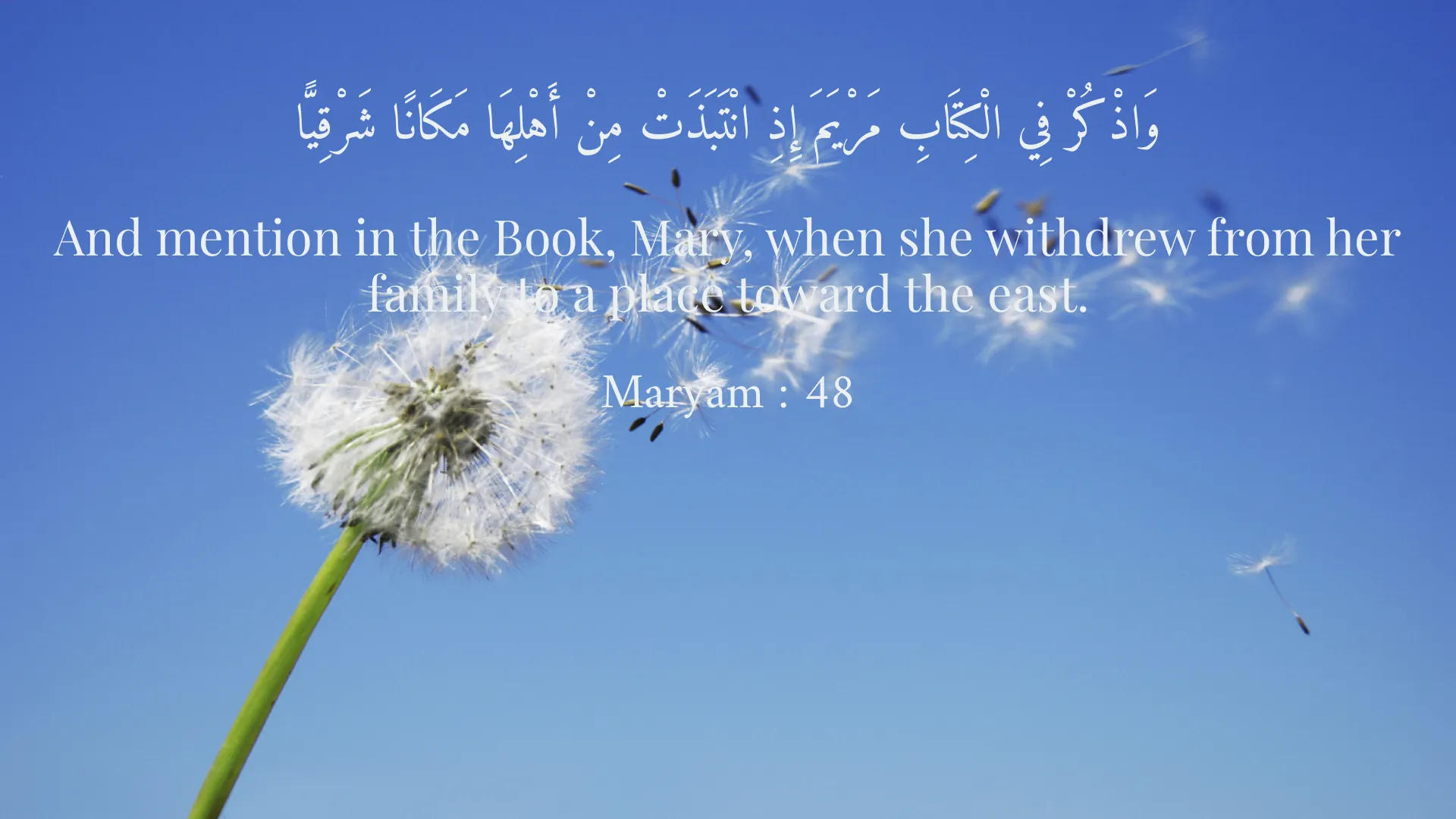
وَاذْكُرْ فِي الْكِتَابِ مَرْيَمَ إِذِ انْتَبَذَتْ مِنْ أَهْلِهَا مَكَانًا شَرْقِيًّا
And mention in the Book, Mary, when she withdrew from her family to a place toward the east.
Maryam : 48
يَا أَيُّهَا الَّذِينَ آمَنُوا اسْتَعِينُوا بِالصَّبْرِ وَالصَّلَاةِ ۚ إِنَّ اللَّهَ مَعَ الصَّابِرِينَ
O you who have believed, seek help through patience and prayer. Indeed, Allah is with the patient.
Al-Baqarah : 153
Short Story
One day, Maryam decided to distance herself from the hustle and bustle of home and society for a while to reflect on her life and faith. During this time, she recalled the verses of the Quran and resolved to engage more in prayer and supplication to strengthen her spiritual connection with Allah. With this decision and her best intentions, she felt a sense of peace and closeness to God, ultimately realizing that this distancing was not only beneficial for her but had also helped her bring more light into her life.