Quranic Answer
In the rich and profound teachings of the Holy Quran, while the exact term 'spiritual fatigue' may not be explicitly used, it unequivocally addresses similar states that can lead to this feeling. It provides comprehensive explanations about human nature, life's challenges, and the ways to cope with them. The Quran views human existence as a combination of soul and body, both of which are subject to trials and tribulations. Therefore, from a Quranic perspective, experiencing emotional or spiritual states that we today refer to as 'spiritual fatigue' is not only natural but an integral part of the journey of spiritual and human growth. Time and again, the Quran emphasizes that worldly life is full of trials and hardships. These trials are not merely for testing one's faith and patience but also for refining and strengthening one's spirit. In Surah Al-Baqarah, verse 155, Allah states: "And We will surely test you with something of fear and hunger and a loss of wealth and lives and fruits, but give good tidings to the patient." This verse clearly indicates that humans will face fear, hunger, financial and personal losses, and scarcity in this world. It is natural that confronting such adversities can lead to weariness, despair, and spiritual lethargy. This state is not a sign of absolute weakness in faith but rather an indication of the immense pressure and burden that the human soul and psyche endure. The Quran also points to the restless and anxious nature of human beings. In Surah Al-Ma'arij, verses 19-21, we read: "Indeed, mankind was created anxious; When evil touches him, impatient; And when good touches him, withholding." These inherent human traits – being anxious, impatient when afflicted, and withholding when blessed – can contribute to the onset of spiritual fatigue. The inability to achieve desires or the encounter with difficulties naturally leads to impatience and subsequent psychological weariness. However, the Quran does not merely depict these states; it also offers solutions and remedies for such fatigue and anxiety. One of the most important solutions is 'Dhikr Allah' or the remembrance of God. In Surah Ar-Ra'd, verse 28, it is stated: "Those who have believed and whose hearts are assured by the remembrance of Allah. Unquestionably, by the remembrance of Allah hearts are assured." This verse offers a healing prescription for spiritual weariness and restlessness. The remembrance of Allah, whether through prayer, recitation of the Quran, supplication, or even contemplation of creation's grandeur, can restore tranquility to weary hearts. This peace is not born from denying problems but from accepting them under the shadow of reliance on an infinite power. In addition to remembrance of Allah, the Quran places special emphasis on the concept of 'Sabr' (patience). Patience in the Quran is not merely passive endurance but active steadfastness and resilience in the face of difficulties. Patience includes perseverance in performing acts of worship, resistance against sins, and forbearance in the face of calamities. One who practices patience actually strengthens their spiritual power and does not allow hardships to overwhelm them. This view of patience transforms spiritual fatigue into an opportunity for inner strengthening. Furthermore, the Quran assures us that ease will follow every hardship. In Surah Ash-Sharh, verses 5 and 6, it is repeated twice: "For indeed, with hardship [will be] ease. Indeed, with hardship [will be] ease." This divine promise gives hope to humanity and prevents falling into the trap of despair and extreme spiritual fatigue. These verses act as a beacon of hope in the darkness of spiritual weariness, reminding us that no state is permanent and that relief follows every constriction. In conclusion, the Holy Quran accepts spiritual fatigue as a natural part of the human experience in this world. These fatigues usually stem from the pressure of trials, inherent human weaknesses, and encounters with adversity. However, at the same time, the Quran provides ways to manage and overcome these fatigues: seeking refuge in the remembrance of Allah, seeking help through patience and prayer, and relying on Him. These guidelines help individuals not only to overcome these fatigues but also to utilize them as stepping stones for spiritual growth and attaining inner peace and assurance. Therefore, feeling spiritual fatigue can be a warning sign to return and renew one's faith and spiritual strength, rather than a reason for discouragement and despair.
Related Verses
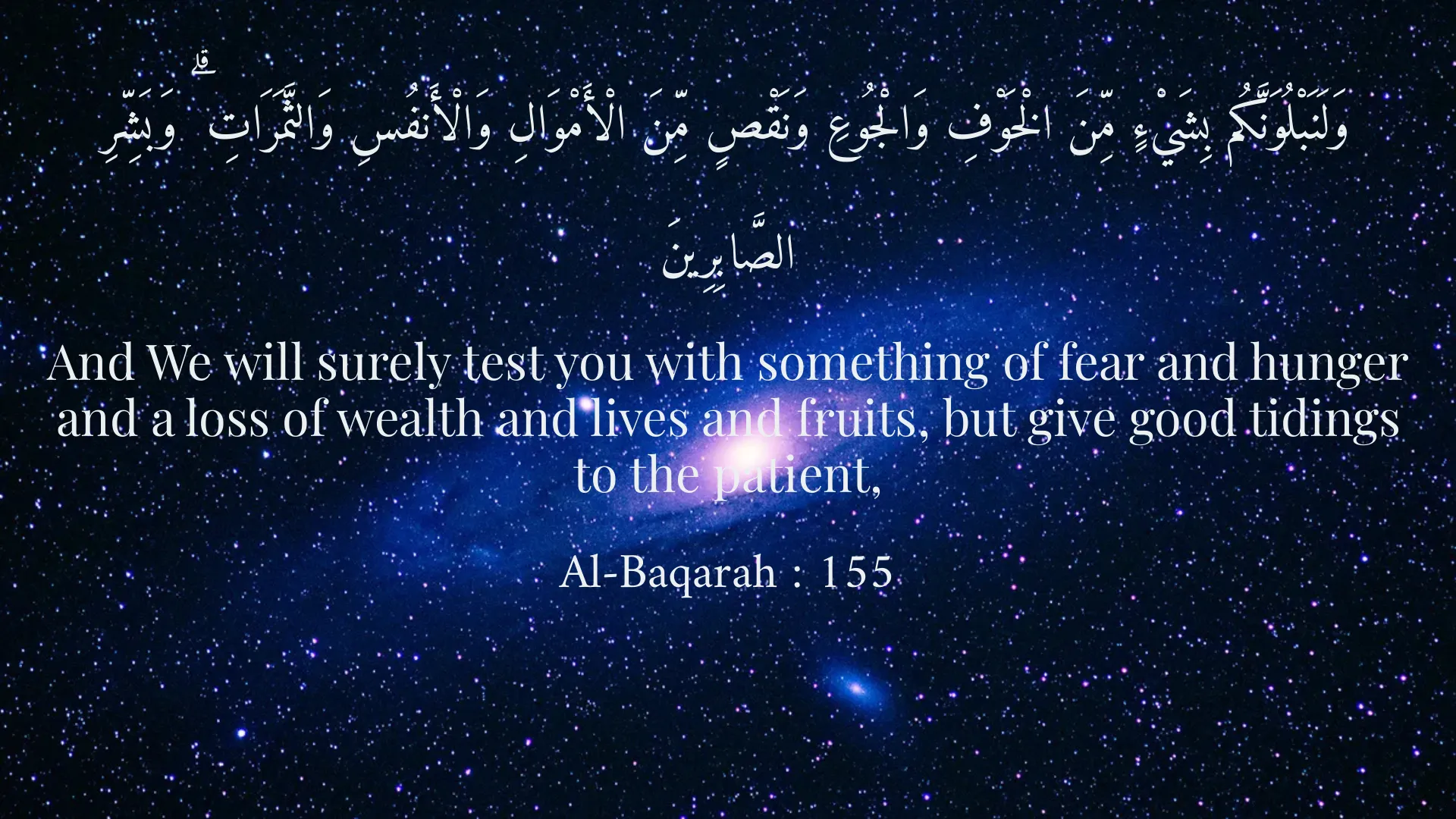
وَلَنَبْلُوَنَّكُم بِشَيْءٍ مِّنَ الْخَوْفِ وَالْجُوعِ وَنَقْصٍ مِّنَ الْأَمْوَالِ وَالْأَنفُسِ وَالثَّمَرَاتِ ۗ وَبَشِّرِ الصَّابِرِينَ
And We will surely test you with something of fear and hunger and a loss of wealth and lives and fruits, but give good tidings to the patient,
Al-Baqarah : 155
الَّذِينَ آمَنُوا وَتَطْمَئِنُّ قُلُوبُهُم بِذِكْرِ اللَّهِ ۗ أَلَا بِذِكْرِ اللَّهِ تَطْمَئِنُّ الْقُلُوبُ
Those who have believed and whose hearts are assured by the remembrance of Allah. Unquestionably, by the remembrance of Allah hearts are assured.
Ar-Ra'd : 28
فَإِنَّ مَعَ الْعُسْرِ يُسْرًا
For indeed, with hardship [will be] ease.
Ash-Sharh : 5
إِنَّ مَعَ الْعُسْرِ يُسْرًا
Indeed, with hardship [will be] ease.
Ash-Sharh : 6
Short Story
It is narrated that a pious man spent years traversing the desert, enduring ascetic practices. One day, overwhelmed by hardships and solitude, his heart grew weary, and he said to himself: "How long must I endure these sufferings? My spirit is tired, and my strength is gone." At that moment, he saw a sparrow with a broken beak, picking up seeds and laboriously carrying them to its nest. The pious man, observing the patient sparrow, came to his senses and pondered: "If this small bird, despite its many weaknesses, does not cease its efforts and hopes in the grace of its Lord, why should I become weary?" Instantly, his heart found peace, and he understood that even weariness is a test from the Beloved, and with patience and reliance, ease will follow. Thereafter, he continued his journey with renewed spirit and tasted true tranquility.