Quranic Answer
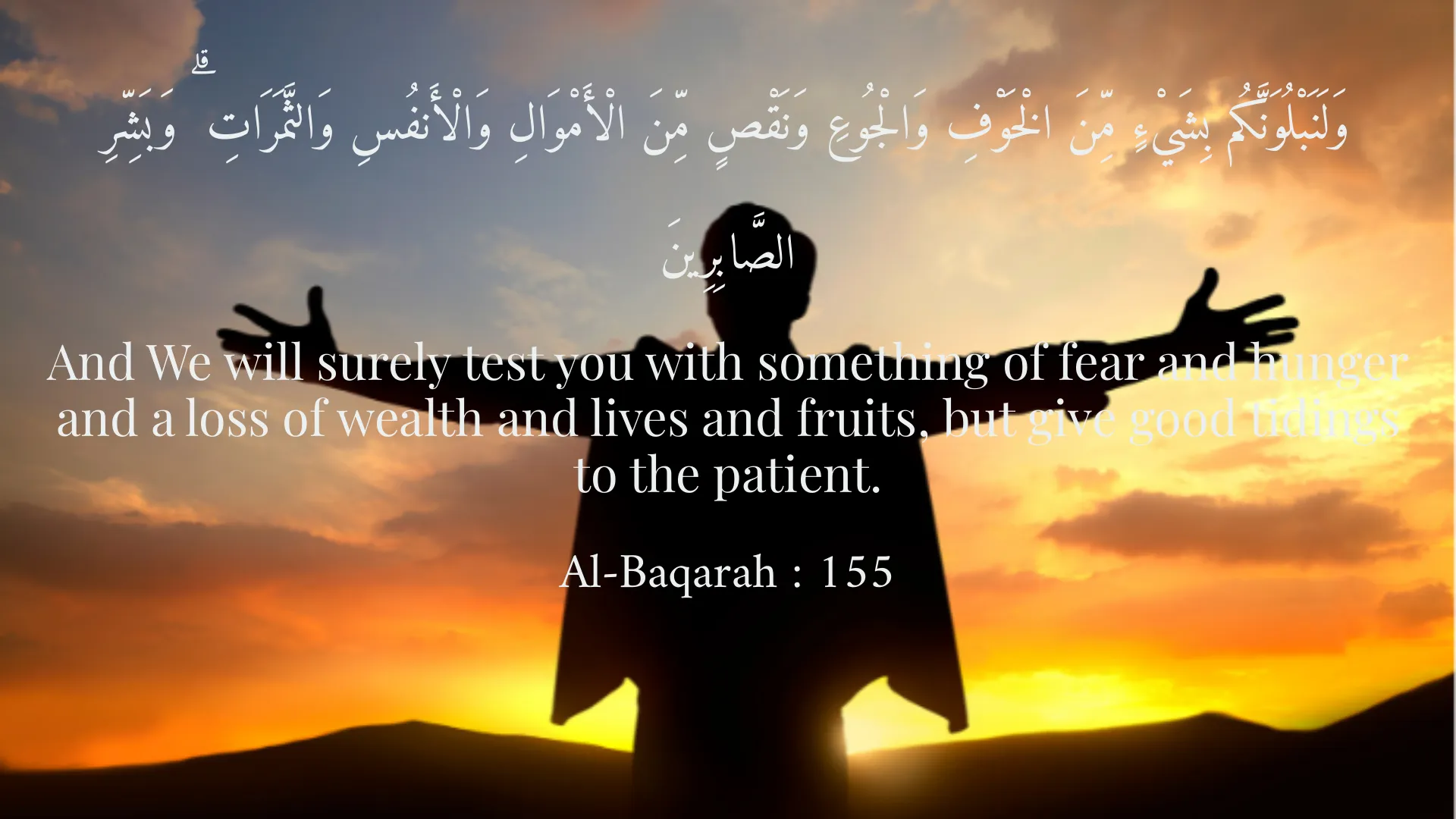
From the perspective of the Holy Quran, suffering and hardship are not meaningless or random occurrences; rather, they are an integral part of Allah’s wise design for human life. This often bitter yet profoundly fruitful reality is presented in divine teachings not merely as a calamity, but as a path towards "spiritual elevation" and "spiritual growth." The Quran teaches us that this world is a realm of tests and trials, and no one's claim of faith will be accepted without passing through the crucible of difficulties. Sufferings, whether in the form of fear, hunger, loss of wealth or loved ones, or various afflictions, are all instruments in the hands of Allah's infinite power to test the essence of human existence, refine one's faith, and guide them to higher levels of closeness to God. One of the most crucial concepts in this regard is "Ibtila'" or "testing." Allah the Almighty explicitly states in Surah Al-Baqarah, verse 155: "And We will surely test you with something of fear and hunger and a loss of wealth and lives and fruits, but give good tidings to the patient." This verse offers a realistic depiction of life, where hardships are inevitable. However, the vital point is the continuation of the verse, which refers to "patience" (sabr) and "good tidings." Patience is not merely passive endurance; it is an active resistance, accompanied by reliance on Allah and hope in His mercy. This patience is an inner strength that enables an individual to remain steadfast amidst life's storms and to learn profound lessons from them. Those who face suffering with patience and submission to divine decree are the ones upon whom "are blessings from their Lord and mercy. And it is they who are the [rightly] guided" (Al-Baqarah: 157). This good tidings represents the pinnacle of spiritual elevation that emerges from the heart of suffering. The Quran further clarifies in Surah Al-Ankabut, verses 2 and 3, that merely uttering belief is insufficient; it must be proven in action: "Do people think that they will be left alone because they say, 'We believe,' and will not be tried? But We have certainly tried those before them, and Allah will surely make evident those who are truthful, and He will surely make evident the liars." These verses clearly indicate that suffering and trials are divine tools to distinguish truth from falsehood, and sincerity from hypocrisy. A person might claim faith during times of ease and prosperity, but it is only when confronted with challenges and hardships that the depth and steadfastness of their faith become apparent. This process itself is a path towards self-knowledge and self-improvement, ultimately leading to spiritual elevation. Humans learn where their weaknesses lie and how, by relying on Allah's infinite power, they can overcome them. Moreover, suffering can turn a person back to Allah and strengthen their bond with their Creator. In difficult moments, when all paths seem blocked and no human help is available, individuals return to their inherent divine nature and find their only true refuge in Allah. This return is a deep and sincere turning, leading to repentance, seeking forgiveness, and complete reliance (tawakkul). Such experiences free a person from worldly and transient attachments and guide them towards absolute truth. As Allah states in Surah Yunus, verse 12: "And when adversity touches man, he invokes Us, lying on his side or sitting or standing; but when We remove his adversity from him, he passes on as though he had not invoked Us for an adversity that touched him. Thus, was made attractive to the transgressors that which they were doing." However, a true believer is one who remembers Allah in both hardship and ease, and whose suffering brings them closer to Allah, rather than making them forget Him once the problem is resolved. The theme of "patience" (sabr) is so vital in the Quran that several verses mention its immeasurable reward. In Surah Az-Zumar, verse 10, we read: "Say, 'O My servants who have believed, fear your Lord. For those who do good in this world is good, and Allah's earth is spacious. Indeed, the patient will be given their reward without account.'" This "reward without account" refers to the immense and boundless recompense Allah has prepared for the patient. It signifies that enduring suffering with patience and contentment not only compensates for worldly losses but also opens doors to Allah's infinite mercies in this world and the hereafter. This reward is beyond human imagination and can only be comprehended by relying on Allah's grace and generosity. Hardships can compel us to reflect and reveal the hidden wisdoms within divine decree. Often, in times of ease, people become oblivious to their inner selves and become attached to the superficialities of life. But with the onset of suffering, they are compelled to delve deep within, reassess their values and priorities, and grasp the hidden truths of existence. This reassessment shifts one's perspective on life and propels them towards intellectual and spiritual maturity. Suffering acts like a purifier, separating impurities from the soul and bringing humans closer to their pure essence. This process ultimately leads to "Taqwa" (piety) and "Basira" (insight), which are the main pillars of spiritual elevation in Islam. The conclusion is that suffering and hardship in the Quran are viewed as a means of spiritual training and elevation. This does not glorify suffering itself, but rather glorifies the response an individual demonstrates towards it: patience, reliance, repentance, reflection, and returning to Allah. In essence, suffering is like a blacksmith's forge that tempers the steel of human existence, preparing it to reach the pinnacles of knowledge and servitude. Spiritual elevation is the fruit that springs from the tree of patient and trust-filled hardships, and this is one of the greatest mysteries of creation that Allah, with His infinite wisdom, has ordained for His servants. This perspective brings peace to the believer, knowing that even in the toughest moments, there is a noble purpose behind it, and their suffering will not be unrewarded.
Related Verses
وَلَنَبْلُوَنَّكُم بِشَيْءٍ مِّنَ الْخَوْفِ وَالْجُوعِ وَنَقْصٍ مِّنَ الْأَمْوَالِ وَالْأَنفُسِ وَالثَّمَرَاتِ ۗ وَبَشِّرِ الصَّابِرِينَ
And We will surely test you with something of fear and hunger and a loss of wealth and lives and fruits, but give good tidings to the patient.
Al-Baqarah : 155
أَحَسِبَ النَّاسُ أَن يُتْرَكُوا أَن يَقُولُوا آمَنَّا وَهُمْ لَا يُفْتَنُونَ
Do people think that they will be left alone because they say, 'We believe,' and will not be tried?
Al-Ankabut : 2
وَلَقَدْ فَتَنَّا الَّذِينَ مِن قَبْلِهِمْ ۖ فَلَيَعْلَمَنَّ اللَّهُ الَّذِينَ صَدَقُوا وَلَيَعْلَمَنَّ الْكَاذِبِينَ
But We have certainly tried those before them, and Allah will surely make evident those who are truthful, and He will surely make evident the liars.
Al-Ankabut : 3
قُلْ يَا عِبَادِ الَّذِينَ آمَنُوا اتَّقُوا رَبَّكُمْ ۚ لِلَّذِينَ أَحْسَنُوا فِي هَٰذِهِ الدُّنْيَا حَسَنَةٌ ۗ وَأَرْضُ اللَّهِ وَاسِعَةٌ ۗ إِنَّمَا يُوَفَّى الصَّابِرُونَ أَجْرَهُم بِغَيْرِ حِسَابٍ
Say, 'O My servants who have believed, fear your Lord. For those who do good in this world is good, and Allah's earth is spacious. Indeed, the patient will be given their reward without account.'
Az-Zumar : 10
Short Story
It is related that a king was seated in a ship with a slave. The slave, who had never seen the sea, began to cry out and weep from anxiety and fear. The king tried to calm him, but it was in vain, and all the comfort of the journey was ruined because of him. A wise man was seated on that ship. He said to the king: 'If you permit, I can quiet him.' The king said: 'Very well.' The wise man ordered the slave to be thrown into the sea. The slave struggled a few times and sank. Then they pulled him by his hair back into the ship. The slave, having escaped certain death, became calm and sat in a corner. The king was astonished and asked the wise man: 'What wisdom was in this act?' The wise man replied: 'He had never tasted drowning and did not know the value of the ship's safety. Whoever does not know the value of well-being, must either taste suffering or learn from those who have suffered.' This delightful story by Sa'di offers a profound lesson about suffering and gratitude. Until the slave experienced drowning, he did not appreciate the safety and tranquility of the ship. Sometimes, hardship and difficulty are precisely the tools that open our eyes to existing blessings and peace, leading us to a deeper understanding of life and gratitude. This experience, though tough, helped him emerge from his heedlessness and attain a higher level of understanding and insight.