Quranic Answer
In the rich and profound teachings of the Holy Quran, the concept of suffering and hardship (بلايا, مصائب, ابتلاء) holds a special place and is never viewed as meaningless or futile. The Quran approaches these phenomena with immense wisdom, often presenting them as divine tests, opportunities for spiritual growth and purification, or even as a means of expiating sins. However, the answer to the question, 'Is suffering always rewarded?' requires further consideration, as the reward depends on how a person faces these sufferings, not merely on the act of suffering itself. The Quran repeatedly emphasizes the role of patience (صبر) and perseverance in the face of difficulties. In Surah Al-Baqarah, verses 155-157, Allah Almighty clearly states that He will surely test His servants with various forms of fear, hunger, loss of wealth, lives, and fruits. But immediately, He gives good tidings: 'And give good tidings to the patient, who, when disaster strikes them, say, 'Indeed we belong to Allah, and indeed to Him we will return.' Those are the ones upon whom are blessings from their Lord and mercy. And it is those who are the [rightly] guided.' This verse clearly indicates that suffering alone is not rewarded; rather, it is patience and submission to divine decree that bring forth immense divine rewards, namely blessings, mercy, and guidance. These rewards not only encompass eternal recompense but also bring inner peace and insight in this world. Patience here does not mean passive endurance but active perseverance coupled with reliance on God, contemplation, and effort to overcome difficulties. In other words, a patient person is one who, even amidst suffering, does not sever their connection with God but strengthens it, and by uttering 'Indeed we belong to Allah, and indeed to Him we will return,' demonstrates the depth of their faith that everything they possess is from God and to Him they will return. Another aspect of suffering in the Quran is the expiation of sins. Although this concept is elaborated more in the prophetic traditions (Hadith), its Quranic roots can be found in verses related to divine wisdom and His vast mercy. Calamities and hardships can serve as atonement for past mistakes and errors. This perspective provides comfort to the believer, knowing that even the hardest moments are not outside the realm of divine grace and wisdom, and can be transformed into a means of purification and spiritual cleansing. Of course, this does not mean that one should deliberately seek suffering; rather, it signifies that when it occurs, there is immense reward for it. Furthermore, the Quran states that worldly life is full of trials, and no one is exempt from them. In Surah Al-Ankabut, verses 2-3, it is stated: 'Do people think that they will be left alone because they say, 'We believe,' and will not be tested? But We have certainly tested those before them, and Allah will surely make evident those who are truthful, and He will surely make evident the liars.' These verses affirm that trials and tribulations are an inseparable part of the path of faith, and sufferings are tools to reveal the sincerity of faith and distinguish true believers from false claimants. In this journey, suffering not only carries reward but is itself part of the process of spiritual evolution and divine self-discovery. Another type of suffering is that which results from one's own actions. The Quran states in Surah Ash-Shura, verse 30: 'And whatever strikes you of disaster - it is for what your hands have earned; but He pardons much.' This verse indicates that some sufferings are a natural consequence or retribution for one's own deeds. In such cases, suffering alone does not bring reward; rather, it is an opportunity for repentance (توبة), seeking forgiveness (استغفار), and reviewing one's actions. The reward here comes from repentance and return to righteousness, not from the suffering itself. Thus, suffering experienced due to one's own mistakes, if accompanied by remorse, learning, and behavioral correction, can lead to good and reward. However, the pain and hardship resulting from sin, by itself, is not inherently rewarding, unless it serves as a prelude to change and return. Ultimately, it must be said that suffering, from a Quranic perspective, is always an opportunity for growth and earning reward, provided it is met with a correct outlook and a faithful response. For a believer, no pain is futile; if accompanied by patience, reliance on God, and heartfelt submission to divine decree, it will lead to mercy, forgiveness, and elevation of ranks in this world and the hereafter. This deep understanding of suffering brings peace and strength to a person, enabling them to stand firm against life's adversities and build a bridge to divine proximity from every hardship. In such a state, suffering not only carries reward but is itself a path to perfection and eternal bliss. Therefore, suffering in Islam is a teacher, a purifier, and a means of drawing closer to Allah, provided we face it with a prepared and patient heart and soul.
Related Verses
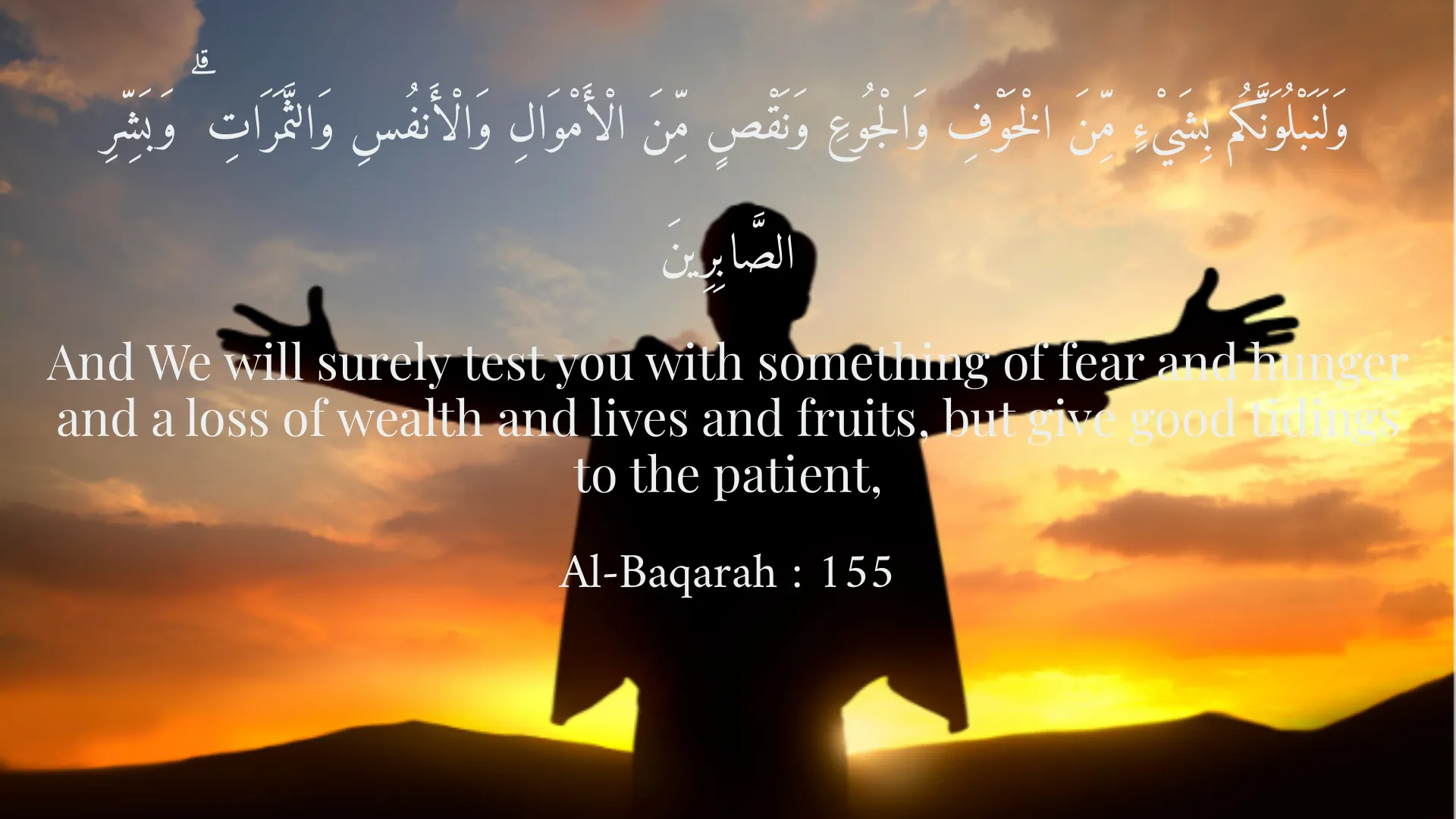
وَلَنَبْلُوَنَّكُم بِشَيْءٍ مِّنَ الْخَوْفِ وَالْجُوعِ وَنَقْصٍ مِّنَ الْأَمْوَالِ وَالْأَنفُسِ وَالثَّمَرَاتِ ۗ وَبَشِّرِ الصَّابِرِينَ
And We will surely test you with something of fear and hunger and a loss of wealth and lives and fruits, but give good tidings to the patient,
Al-Baqarah : 155
الَّذِينَ إِذَا أَصَابَتْهُم مُّصِيبَةٌ قَالُوا إِنَّا لِلَّهِ وَإِنَّا إِلَيْهِ رَاجِعُونَ
Who, when disaster strikes them, say, 'Indeed we belong to Allah, and indeed to Him we will return.'
Al-Baqarah : 156
أُولَٰئِكَ عَلَيْهِمْ صَلَوَاتٌ مِّن رَّبِّهِمْ وَرَحْمَةٌ ۖ وَأُولَٰئِكَ هُمُ الْمُهْتَدُونَ
Those are the ones upon whom are blessings from their Lord and mercy. And it is those who are the [rightly] guided.
Al-Baqarah : 157
أَحَسِبَ النَّاسُ أَن يُتْرَكُوا أَن يَقُولُوا آمَنَّا وَهُمْ لَا يُفْتَنُونَ
Do people think that they will be left alone because they say, 'We believe,' and will not be tested?
Al-Ankabut : 2
وَلَقَدْ فَتَنَّا الَّذِينَ مِن قَبْلِهِمْ ۖ فَلَيَعْلَمَنَّ اللَّهُ الَّذِينَ صَدَقُوا وَلَيَعْلَمَنَّ الْكَاذِبِينَ
But We have certainly tested those before them, and Allah will surely make evident those who are truthful, and He will surely make evident the liars.
Al-Ankabut : 3
وَمَا أَصَابَكُم مِّن مُّصِيبَةٍ فَبِمَا كَسَبَتْ أَيْدِيكُمْ وَيَعْفُو عَن كَثِيرٍ
And whatever strikes you of disaster - it is for what your hands have earned; but He pardons much.
Ash-Shura : 30
Short Story
They say that in ancient times, in a bustling city, there lived a dervish-like man renowned for his patience and contentment. One day, he was suddenly afflicted with a great calamity; all his possessions were lost, and he himself fell severely ill. Friends and acquaintances came to visit him, each asking about his condition with sorrow and regret, distressed by the intensity of his suffering. But this patient man, with a serene smile on his lips, said: 'My friends, do not be sad. I see this suffering not as a misfortune, but as a gift from the Beloved. Although my body is afflicted, my heart is at peace remembering God, and I know that these hardships are keys to unseen paths.' With this spirit, he practiced patience, never withholding gratitude, repentance, or prayer. Gradually, his condition improved, and sustenance reached him from sources he never expected. This story spread throughout the city, and people realized that suffering, if accompanied by patience and reliance on God, is the key to divine treasures and a means to attain comfort and countless rewards, just as Saadi said: 'When you draw aside the veil and reveal a secret, not everyone who has the foot of patience, has the head to endure the foot of suffering.'