Quranic Answer
Understanding the relationship between eagerness for life and the concept of asceticism (zuhd) is a profound and rich discussion within Islamic and Quranic teachings, often subject to misunderstanding. Some might perceive zuhd as abandoning the world, abstaining from lawful pleasures and beauties, and distancing oneself from any worldly activity or striving. At first glance, such an interpretation might suggest that eagerness for life—which includes striving for progress, earning lawful sustenance, building a family, and enjoying divine blessings—is in contradiction with zuhd. However, by referring to the verses of the Holy Quran and the tradition of the Prophet Muhammad (PBUH), it becomes clear that this perception of zuhd is a superficial and incomplete understanding, far from the essence of Islamic teachings. In reality, Islamic zuhd does not mean abandoning the world, but rather signifies a detachment of the heart from the world and from materialism, whereas eagerness for life, in the Quranic sense, involves constructive and responsible striving in this world to attain well-being in both worlds. The Holy Quran explicitly states that Allah has created the blessings and beauties of the world for His servants. In Surah Al-A'raf, verse 32, we read: “Say, 'Who has forbidden the adornment of Allah which He has produced for His servants and the good [lawful] things of provision?' Say, 'They are for those who have believed during the life of this world, [but] exclusively for them on the Day of Resurrection.' Thus do We detail the verses for a people who know.” This verse clearly indicates that the use of lawful blessings and adornments of this world is not only permitted but also encouraged. Eagerness for life, within the framework of this verse, means a proper and grateful utilization of these blessings, not an excessive attachment or forgetting the Hereafter. On the other hand, Islam is a religion that emphasizes moderation and balance. The concept of “wasatiyyah” or the middle path is repeatedly mentioned in the Quran. Neither monasticism and complete withdrawal from the world are approved, nor is absolute immersion in materialism and forgetting the primary purpose of creation. In Surah Al-Qasas, verse 77, Allah says: “But seek, through that which Allah has given you, the home of the Hereafter; and [yet], do not forget your portion of the world. And do good as Allah has done good to you. And desire not corruption in the land. Indeed, Allah does not like corrupters.” This verse testifies that a believing human must strive for the Hereafter while also taking their share from this world. Eagerness for life, in this context, is a constructive effort to create prosperity, societal growth, help others, and build up the earth, with the intention that all these serve as means to attain divine proximity and eternal happiness. True zuhd is rooted in the understanding that the world is transient and fleeting, and the main goal is the Hereafter. Surah Al-Hadid, verse 20, clarifies the nature of the world: “Know that the life of this world is only play and amusement, an adornment and boasting among yourselves, and rivalry in respect of wealth and children. [It is] like the example of a rain whose [resulting] plant growth pleases the tillers; then it dries and you see it turned yellow; then it becomes [scattered] debris. And in the Hereafter is severe punishment and forgiveness from Allah and approval. And what is the worldly life except the enjoyment of delusion.” This verse warns humans not to become attached to the transient, but it does not negate the proper utilization of the world; rather, it means not being emotionally attached to it. A person who is attached to the world is deprived of spiritual and true pleasures and is constantly seeking more, whereas an ascetic (zaahid) is someone whose heart belongs to Allah despite benefiting from the world, and who considers the world a means to reach the Hereafter. Therefore, if eagerness for life means striving for prosperity, progress, earning lawful sustenance, and using blessings to achieve perfection and divine satisfaction, it not only does not contradict zuhd but is an integral part of it. True zuhd is about having the world in one's hand, not in one's heart. The Prophet Muhammad (PBUH) and the infallible Imams (AS) were the best examples of zuhd, even while they were at the peak of social, political, economic, and familial activities. They enjoyed lawful pleasures of life but were never enslaved by the world, always considering the Hereafter as the ultimate destination. Eagerness for life contradicts zuhd only when it transforms into “hubb al-dunya” or worldliness; that is, when the love of wealth, status, and fleeting pleasures distracts a person from the remembrance of Allah and the Hereafter, leading to sin and oppression. In such a case, this eagerness turns into lust and greed, and will be in complete contradiction with zuhd, which is rooted in purity of heart and divine purpose. In conclusion, eagerness for life, if pursued with sincere intention, moderation, and centered on divine pleasure, is itself an embodiment of zuhd, for a true zaahid is one who makes the world serve the Hereafter, and not the other way around.
Related Verses
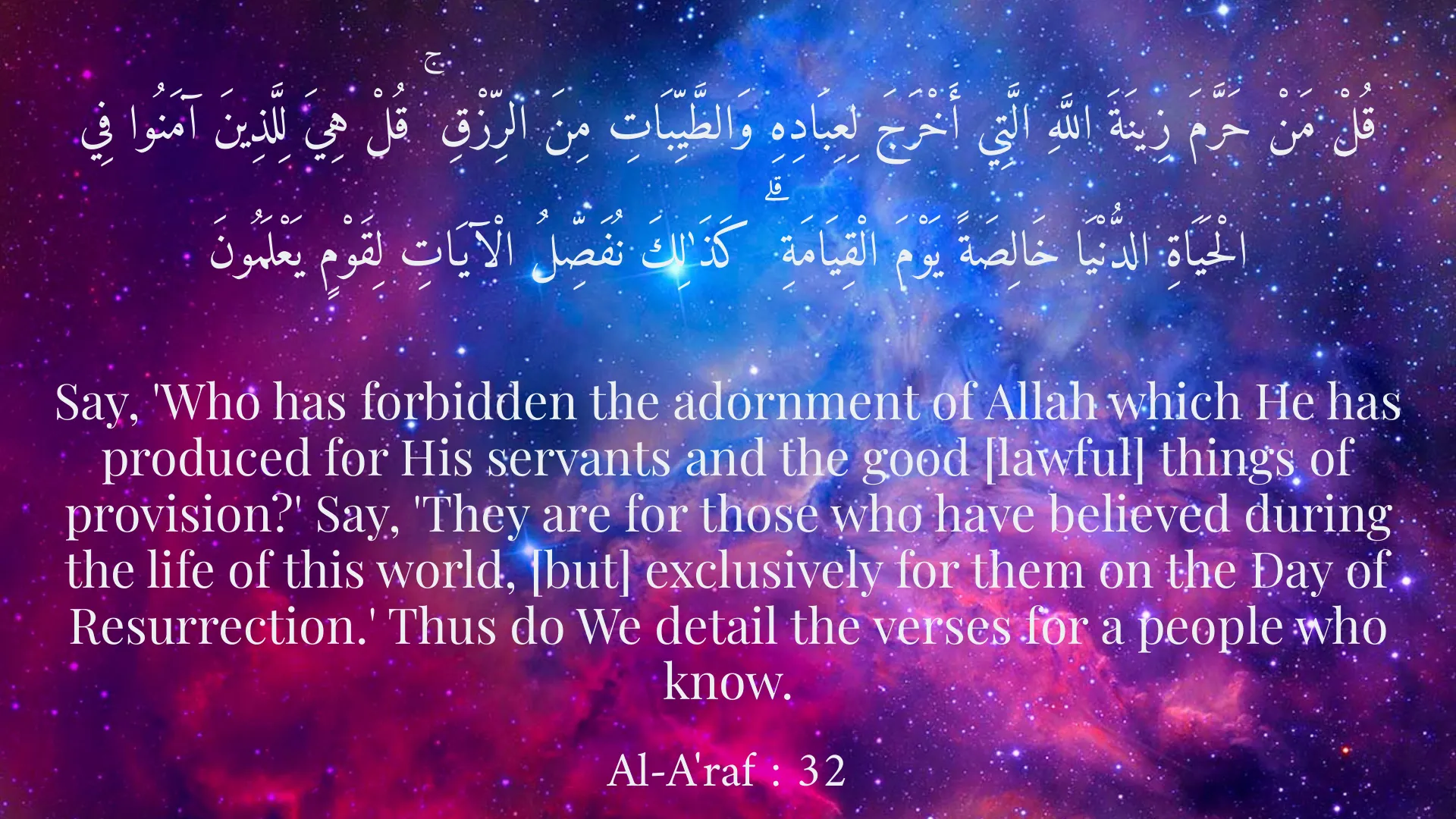
قُلْ مَنْ حَرَّمَ زِينَةَ اللَّهِ الَّتِي أَخْرَجَ لِعِبَادِهِ وَالطَّيِّبَاتِ مِنَ الرِّزْقِ ۚ قُلْ هِيَ لِلَّذِينَ آمَنُوا فِي الْحَيَاةِ الدُّنْيَا خَالِصَةً يَوْمَ الْقِيَامَةِ ۗ كَذَٰلِكَ نُفَصِّلُ الْآيَاتِ لِقَوْمٍ يَعْلَمُونَ
Say, 'Who has forbidden the adornment of Allah which He has produced for His servants and the good [lawful] things of provision?' Say, 'They are for those who have believed during the life of this world, [but] exclusively for them on the Day of Resurrection.' Thus do We detail the verses for a people who know.
Al-A'raf : 32
وَابْتَغِ فِيمَا آتَاكَ اللَّهُ الدَّارَ الْآخِرَةَ ۖ وَلَا تَنسَ نَصِيبَكَ مِنَ الدُّنْيَا ۖ وَأَحْسِن كَمَا أَحْسَنَ اللَّهُ إِلَيْكَ ۖ وَلَا تَبْغِ الْفَسَادَ فِي الْأَرْضِ ۖ إِنَّ اللَّهَ لَا يُحِبُّ الْمُفْسِدِينَ
But seek, through that which Allah has given you, the home of the Hereafter; and [yet], do not forget your portion of the world. And do good as Allah has done good to you. And desire not corruption in the land. Indeed, Allah does not like corrupters.
Al-Qasas : 77
اعْلَمُوا أَنَّمَا الْحَيَاةُ الدُّنْيَا لَعِبٌ وَلَهْوٌ وَزِينَةٌ وَتَفَاخُرٌ بَيْنَكُمْ وَتَكَاثُرٌ فِي الْأَمْوَالِ وَالْأَوْلَادِ ۖ كَمَثَلِ غَيْثٍ أَعْجَبَ الْكُفَّارَ نَبَاتُهُ ثُمَّ يَهِيجُ فَتَرَاهُ مُصْفَرًّا ثُمَّ يَكُونُ حُطَامًا ۖ وَفِي الْآخِرَةِ عَذَابٌ شَدِيدٌ وَمَغْفِرَةٌ مِنَ اللَّهِ وَرِضْوَانٌ ۗ وَمَا الْحَيَاةُ الدُّنْيَا إِلَّا مَتَاعُ الْغُرُورِ
Know that the life of this world is only play and amusement, an adornment and boasting among yourselves, and rivalry in respect of wealth and children. [It is] like the example of a rain whose [resulting] plant growth pleases the tillers; then it dries and you see it turned yellow; then it becomes [scattered] debris. And in the Hereafter is severe punishment and forgiveness from Allah and approval. And what is the worldly life except the enjoyment of delusion.
Al-Hadid : 20
Short Story
A wealthy merchant, whose ships sailed every sea and whose caravans traversed every road, was constantly burdened by worries of profit and loss, theft and storms. He seldom smiled, and his food tasted bland due to his perpetual anxiety. One day, he saw a dervish sitting under a tree, eating a piece of dry bread with evident joy and praising God. The merchant approached him and said, 'O Dervish, how can you be so joyful and content with so little, while I, who possess immense wealth, find no peace?' The dervish smiled warmly and replied, 'O Merchant, you possess the world in your hands, but it possesses your heart. I, however, hold the world in my hands (for I work and strive) but not in my heart. My eagerness for life is not for accumulation, but for gratitude and rightful living. I enjoy what God provides, and I am not anxious about what He withholds, for my true treasure is beyond this fleeting abode.' The merchant pondered these words and began to understand that true richness lies not in what one gathers, but in the peace one finds by detaching the heart from worldly desires while still engaging with life's bounties. He learned that true eagerness for life is found in serving God and humanity, not in endless pursuit of material gain.