Quranic Answer
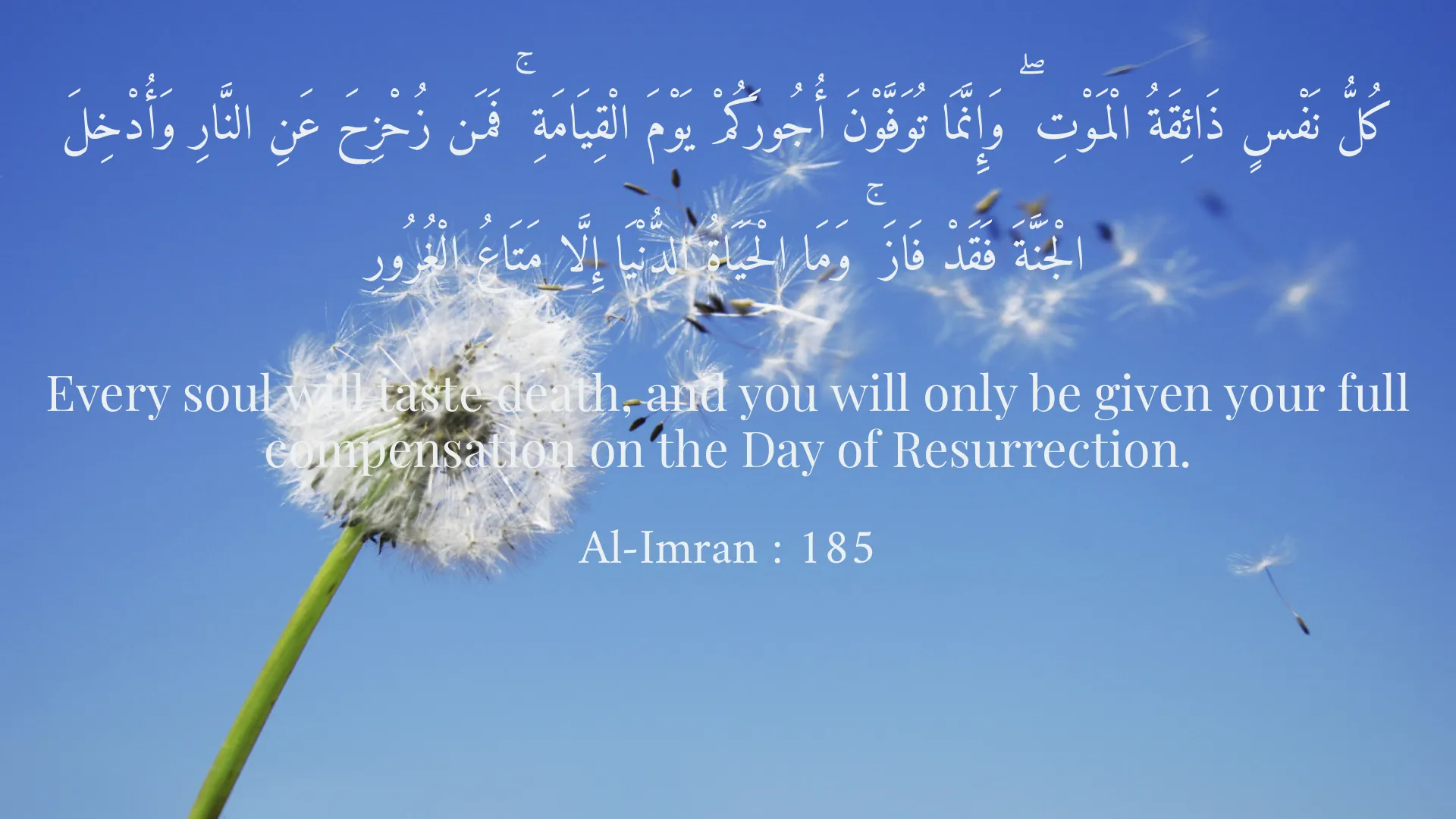
The fear of death is a natural and human emotion that has been a constant thread throughout human history. It is perhaps one of the most primordial fears, deep-rooted in our consciousness, and is even mentioned in sacred texts such as the Holy Quran. This universal fear reflects our instinctive desire to preserve life and avoid the unknown that lies beyond it. In fact, death is one of the unavoidable realities of life, and the Quran addresses it multiple times, reminding believers of its significance and the importance of preparing for what comes after this transient existence. In Surah Al-Imran, verse 185, Allah says: 'Every soul will taste death, and you will only be given your full compensation on the Day of Resurrection.' This profound statement serves as an essential reminder that death is an integral part of life’s journey. It invites individuals to reflect on their actions and choices during their lifetime, emphasizing that our deeds will be evaluated in the afterlife. By acknowledging the inevitability of death, the Quran encourages individuals to view it not merely as an end but as a transitional phase, leading towards either reward or punishment. The recognition that death is inescapable can foster a deeper appreciation for life itself. Fear of death can indicate a love for life and an acute awareness of its value. When individuals confront the reality of death, they often find themselves reconsidering their priorities and what truly matters to them. This fear may guide us toward behavioral correction, pushing us to act with kindness, compassion, and integrity, thereby enhancing our relationships with others and fostering a closer relationship with God. This is evident in various commentaries and interpretations of Quranic verses that suggest that true believers, aware of their mortality, will steer their lives to align more closely with divine expectations. In Surah Yasin, verse 78, Allah poses an intriguing question through the tongue of a man: 'And man says, 'When I have died, will I be brought forth alive?' This question reflects an essential aspect of the human condition—the existential contemplation concerning what happens after death. It indicates that the topic of death and life after it is profoundly present in human minds, and it is, in fact, natural to think about it. Humans have always been curious about the afterlife and what awaits them beyond the grave, which speaks to the inherent awareness of our mortality. This sentiment is not confined solely to the faithful; rather, it permeates human culture, influencing art, literature, philosophy, and spirituality throughout history. The Quran delivers a clear message regarding the fear of death and the consequences of life choices. According to Quranic verses, if the fear of death helps us improve ourselves and strengthen our faith, it can be seen as positive. It acts as an impetus to engage in self-reflection, encouraging believers to actively seek improvement and align their lives with ethical and moral standards. In this sense, the fear of death serves a constructive function, reminding people that they need to be responsible for their actions, seek forgiveness for their misdeeds, and aim for a life that resonates with the teachings of Islam. This personal evolution aligns with the Quranic emphasis on mercy, repentance, and personal growth as integral elements for achieving spiritual fulfillment. However, this same fear can also have adverse effects if it dominates an individual’s consciousness. If it reaches a level where it brings despair and hopelessness, it can have detrimental consequences on a person's mental and emotional state. Extreme anxiety about dying may lead to behavior that is counterproductive, as it may inhibit one from living fully in the present moment. It could breed nihilism or fatalism, where individuals might give up on dreams, ambitions, or meaningful relationships due to an overpowering dread of mortality. Thus, while the fear of death is a natural part of being human, it is essential to strike a balance. In deliberating on this complex emotion, it becomes apparent that the fear of death can serve as both a motivator and a hindrance. It is crucial to transform this fear into positive action—channeling it into the pursuit of righteousness and personal growth. Awareness of life's impermanence should inspire gratitude for every fleeting moment and encourage people to engage deeply with their loved ones and communities. It may even act as a catalyst for altruism, compassion, and service, as individuals realize that life is short, and the impact they have on others can reverberate far beyond their own existence. Moreover, the Quran does emphasize the concept of hope. Believers are encouraged to trust in Allah's mercy and benevolence, including in matters pertaining to the afterlife. In Islam, the belief in the Day of Resurrection offers hope and assurance that there is life after death and that one's actions have significance. This belief can help mitigate the fear of death, providing solace through the understanding that there is a divine plan and purpose governing existence. In conclusion, the fear of death plays a multifaceted role in human life. It can be a source of motivation for improving our lives and drawing closer to God or a debilitating obstacle that leads to despair. Recognizing death as an essential phase in the continuum of life encourages individuals to live meaningfully, engage deeply with their faith, and strive for moral excellence in their daily actions. Rather than allowing this fear to paralyze them, believers can harness it to foster resilience, compassion, and a richer understanding of their existence and the divine. Engaging with the teachings of the Quran can help individuals navigate this natural fear, encouraging them to live with purpose, faith, and an appreciation for the preciousness of life.
Related Verses
كُلُّ نَفْسٍ ذَائِقَةُ الْمَوْتِ ۖ وَإِنَّمَا تُوَفَّوْنَ أُجُورَكُمْ يَوْمَ الْقِيَامَةِ ۚ فَمَن زُحْزِحَ عَنِ النَّارِ وَأُدْخِلَ الْجَنَّةَ فَقَدْ فَازَ ۚ وَمَا الْحَيَاةُ الدُّنْيَا إِلَّا مَتَاعُ الْغُرُورِ
Every soul will taste death, and you will only be given your full compensation on the Day of Resurrection.
Al-Imran : 185
وَقَالَ الْإِنْسَانُ أَئِذَا مِتْنَا وَكُنَّا تُرَابًا وَعِظامًا أَئِنَّا لَمَبْعُوثُونَ حَدِيثًا جَدِيدًا
And man says, 'When I have died, will I be brought forth alive?'
Yasin : 78
Short Story
One day, a man named Ahmad was afraid of death. He pondered what would happen to him after he passed away. One day while he was engaging in a warm conversation with his friends, one of them said, 'Every person who has died has become closer to God.' This statement resonated with Ahmad and gave him hope. He decided to focus more on worship and improve his life. Over time, his fear of death diminished, and he felt a greater sense of peace.