Quranic Answer
Is the need for others' approval a sign of weak faith? This question deeply intertwines with the essence of faith and a person's relationship with God in Islam. At first glance, it might seem natural for humans to desire acceptance and approval from their community and peers. After all, humans are social beings, and the inclination to belong and be accepted is inherent in their nature. However, Islam, by emphasizing Tawhid (monotheism) and Ikhlas (sincerity), draws a clear line between the natural desire for social connection and an excessive dependence on the approval of others. The short answer is yes, in many cases, an excessive need for and conditioning of one's actions and beliefs based on others' approval can indeed be a sign of weak faith. This weakness is not akin to disbelief but rather signifies an incomplete state of Tawakkul (reliance on God), Ikhlas, and inner certainty in Allah. The Holy Quran and the Prophetic Sunnah emphasize the truth that a true believer is one who performs their actions purely for the sake of Allah's pleasure, not to gain human admiration or avoid their censure. The central pillar of faith is Tawhid; meaning not only in worship but also in the intention and purpose of life, only Allah should be acknowledged as the sole partner. When others' approval becomes the primary concern, this Tawhid in action is compromised. Instead of fearing "only" God and hoping in "only" Him, one begins to fear people and place their hope in their commendation. This is precisely what can divert the path of faith from its purity. One of the key concepts in this regard is "Ikhlas," which means purifying one's intention from any non-divine motive. When a person performs an action for Allah, they are not concerned with its acceptance or rejection by people. Their sole aim is the Creator's pleasure. The Quran, in Surah Al-Bayyinah, verse 5, states: "And they were not commanded except to worship Allah, [being] sincere to Him in religion, inclining to truth, and to establish prayer and to give zakat. And that is the correct religion." This verse clearly indicates that the core of religiosity is sincerity in worship and actions for Allah. If our actions are performed to gain people's approval, they lose their true value and sincerity, even if outwardly they appear good. Another concept closely related to this issue is "Tawakkul," which means complete reliance on Allah and entrusting all affairs to Him. A believer who has Tawakkul knows that their sustenance and ultimate validation are in Allah's hands. They do not fear poverty, nor the censure of people, nor their lack of acceptance. They know that if they do something for Allah, Allah Himself is their Protector and Helper. In Surah Al-Imran, verse 173, the Quran describes those with complete Tawakkul: "Those to whom hypocrites said, 'Indeed, the people have gathered against you, so fear them.' But it [merely] increased them in faith, and they said, 'Sufficient for us is Allah, and [He is] the best Disposer of affairs.'" This verse provides an excellent example of disregard for fear of people and absolute reliance on God, which is a sign of strong faith. Conversely, one who is worried about people's approval has weak Tawakkul. Dependence on others' approval can lead a person towards hypocrisy (nifaq) and ostentation (riya'). An individual might engage in actions they do not genuinely believe in, solely to appear good in the eyes of people. This hypocrisy is a great peril to faith, and the Quran has repeatedly condemned it. A believer should be consistent in private and public, and their actions should be for Allah. However, this does not mean completely disregarding others' opinions or not listening to constructive advice and criticism. Islam values good social relationships, consultation (shura), and enjoining good and forbidding evil (amr bil ma'ruf wa nahy anil munkar). But the fundamental difference lies in intention and focus. If our primary intention is to gain Allah's pleasure, and then we manage our social relationships wisely, there is no problem. The issue arises when people's approval becomes the main compass of our lives and actions, diverting us from the path of truth. Individuals with strong faith do not pay attention to "the blame of a blamer" (lawmata la'im). In Surah Al-Ma'idah, verse 54, Allah says: "...and do not fear the blame of a blamer. That is the favor of Allah which He gives to whom He wills. And Allah is all-Encompassing and Knowing." This verse clearly indicates that not fearing the censure of people in the way of Allah is a sign of those whom Allah loves and to whom He grants His favor. This signifies steadfastness and firmness in truth, even if the world stands against one. The need for others' approval can stem from internal insecurity, low self-esteem, and forgetting one's true standing with Allah. When an individual sees themselves entirely dependent on external judgments, they move away from the centrality of "Allah" in their life. Whereas a true believer knows that the most valuable approval is Allah's approval, and His pleasure is superior to all other pleasures. The Quran, in Surah At-Tawbah, verse 72, states: "Allah has promised the believing men and believing women gardens beneath which rivers flow, wherein they will abide eternally, and good dwellings in gardens of perpetual residence; but approval from Allah is greater. That is the great attainment." This verse explicitly states that Allah's pleasure is more valuable than all the bounties of Paradise. How then can we prefer the pleasure of creation over the pleasure of the Creator? To overcome this weakness, a believer needs to focus on strengthening three main pillars of faith: 1. Strengthening Tawhid: Through a deeper understanding of Allah and His attributes, and a heartfelt belief that He alone can benefit or harm, and His approval is the true approval. 2. Practicing Ikhlas: In every action, small or large, purify one's intention for Allah and distance oneself from thoughts related to people's judgment. 3. Increasing Tawakkul: By remembering that Allah is sufficient for all affairs and the best Protector, free one's heart from anxiety and dependence on people. Furthermore, reflecting on the fate of those who, throughout history, concealed the truth or succumbed to falsehood for the sake of people's pleasure can be a lesson. Strong faith means standing firm on truth, even if the whole world stands against it. This is the path that prophets and saints followed. Prophet Muhammad (PBUH), despite all persecution and rejection, never ceased delivering his message, because only Allah's approval mattered to him. Ultimately, an excessive need for others' approval is not only a sign of weak faith but also a serious obstacle on the path of spiritual growth and reaching true peace, because true peace is found only in submission and reliance on Allah. By freeing oneself from the chains of external approvals, one achieves inner freedom and true tranquility, which is a direct result of strong faith and complete reliance on the Lord of the worlds.
Related Verses
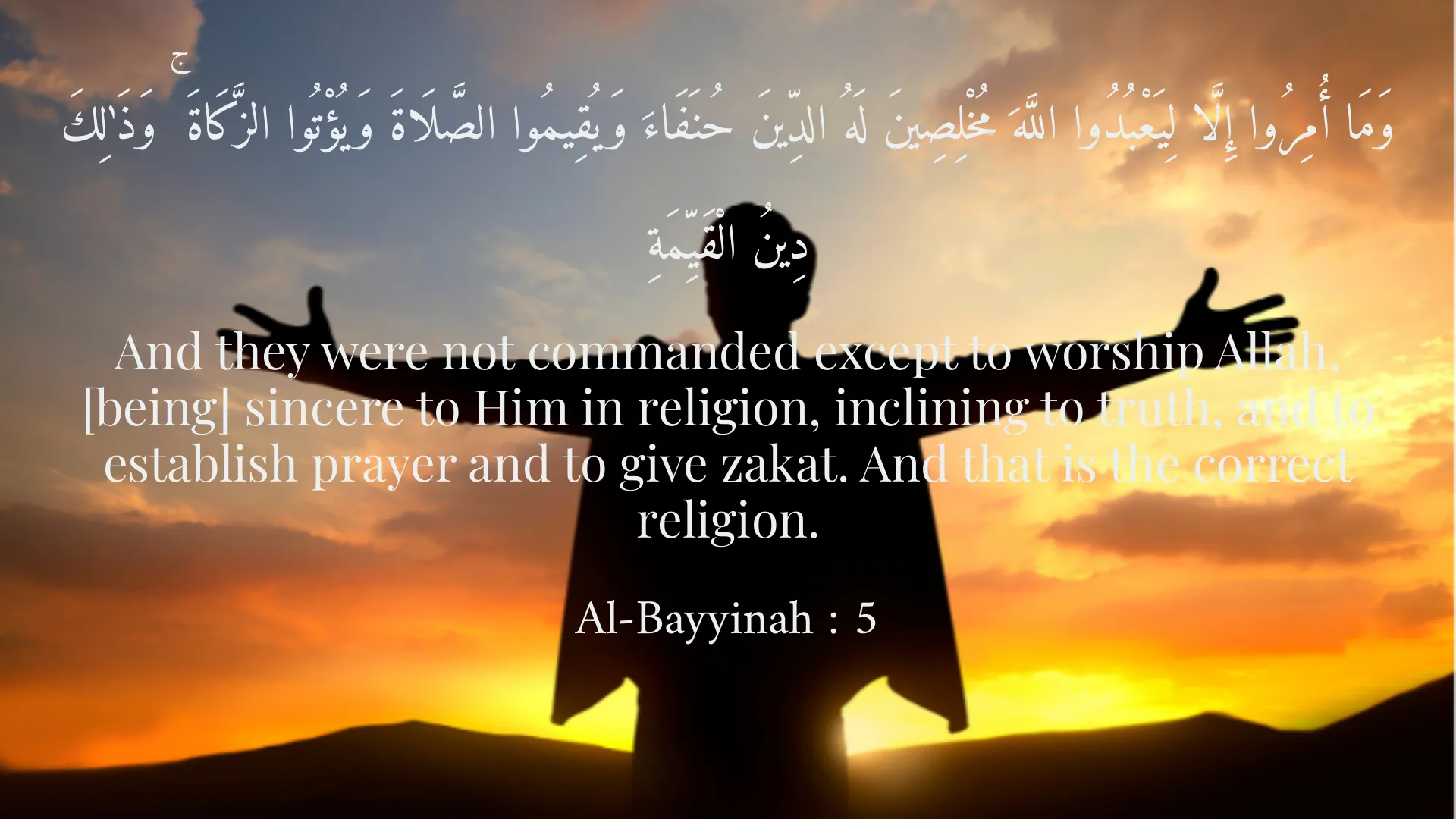
وَمَا أُمِرُوا إِلَّا لِيَعْبُدُوا اللَّهَ مُخْلِصِينَ لَهُ الدِّينَ حُنَفَاءَ وَيُقِيمُوا الصَّلَاةَ وَيُؤْتُوا الزَّكَاةَ ۚ وَذَٰلِكَ دِينُ الْقَيِّمَةِ
And they were not commanded except to worship Allah, [being] sincere to Him in religion, inclining to truth, and to establish prayer and to give zakat. And that is the correct religion.
Al-Bayyinah : 5
يَاأَيُّهَا الَّذِينَ آمَنُوا مَن يَرْتَدَّ مِنكُمْ عَن دِينِهِ فَسَوْفَ يَأْتِي اللَّهُ بِقَوْمٍ يُحِبُّهُمْ وَيُحِبُّونَهُ أَذِلَّةٍ عَلَى الْمُؤْمِنِينَ أَعِزَّةٍ عَلَى الْكَافِرِينَ يُجَاهِدُونَ فِي سَبِيلِ اللَّهِ وَلَا يَخَافُونَ لَوْمَةَ لَائِمٍ ۚ ذَٰلِكَ فَضْلُ اللَّهِ يُؤْتِيهِ مَن يَشَاءُ ۚ وَاللَّهُ وَاسِعٌ عَلِيمٌ
O you who have believed, whoever of you reverts from his religion – Allah will bring forth [in place of them] a people He will love and who will love Him [who are] humble toward the believers, powerful against the disbelievers; they strive in the way of Allah and do not fear the blame of a blamer. That is the favor of Allah which He gives to whom He wills. And Allah is all-Encompassing and Knowing.
Al-Ma'idah : 54
وَعَدَ اللَّهُ الْمُؤْمِنِينَ وَالْمُؤْمِنَاتِ جَنَّاتٍ تَجْرِي مِن تَحْتِهَا الْأَنْهَارُ خَالِدِينَ فِيهَا وَمَسَاكِنَ طَيِّبَةً فِي جَنَّاتِ عَدْنٍ ۚ وَرِضْوَانٌ مِّنَ اللَّهِ أَكْبَرُ ۚ ذَٰلِكَ هُوَ الْفَوْزُ الْعَظِيمُ
Allah has promised the believing men and believing women gardens beneath which rivers flow, wherein they will abide eternally, and good dwellings in gardens of perpetual residence; but approval from Allah is greater. That is the great attainment.
At-Tawbah : 72
Short Story
In a distant time, in a cozy corner, lived a wise dervish whose heart was bound to nothing but God. People flocked from all directions to quench their thirst from his wellspring of wisdom. One day, a renowned merchant, clad in lavish garments and with an air of arrogance, approached the dervish and said, "O wise elder, my generosity is famed far and wide. I donate much wealth and build many mosques. Do people praise me?" The dervish, with a warm smile and kind gaze, replied, "My friend, the praise of people is sweet, but sweeter still is the pleasure of the Lord. A gardener does not sow seeds for the applause of passersby, but for the fruit they bear. If you cultivate the garden of your heart for Allah, then whether people praise or blame, your harvest will be secure and lasting." The merchant pondered these profound words and realized that true worth lies not in outward show or the applause of creation, but in sincere intention and genuine servitude to the One Creator. From that day forward, instead of seeking human commendation, he made divine pleasure his sole aim and found a tranquility he had never experienced before.