Quranic Answer
Answering the question, "Should faith always be accompanied by a good feeling?" from the perspective of the Holy Quran requires a deeper and more comprehensive understanding of the nature of faith (Iman) and the journey of a believer. At first glance, one might assume that since faith is the source of peace, light, and guidance, it should always be accompanied by a perpetual state of happiness, joy, and euphoria. However, the Quranic teachings, along with the life examples of prophets and saints, present a more realistic and complete picture of the path of faith; a path where joys, peace, trials, sorrows, and challenges are all inseparable and complementary components. True faith reveals itself not only in moments of happiness and comfort but also, and most profoundly, in the midst of hardships, calamities, and adversities, where its depth, strength, and authenticity become most evident. Indeed, it is faith that empowers the believer to remain steadfast through life's ups and downs and to stay true to the path of monotheism and servitude to God. The Holy Quran explicitly states that worldly life (Dunya) is fundamentally a realm of test, trial, and tribulation. Allah (SWT) mentions this truth in several verses. For instance, in Surah Al-Baqarah, verse 155, He says: "And We will surely test you with something of fear and hunger and a loss of wealth and lives and fruits, but give good tidings to the patient." This verse clearly indicates that hardships, difficulties, and even the experience of unpleasant emotions such as fear and hunger are an integral and divinely ordained part of the believer's journey. In such circumstances, a believer, like any other human being, may emotionally experience grief, worry, anxiety, or even temporary despair. These emotions are entirely natural and human, and their presence does not contradict the essence of faith. What distinguishes faith is the individual's ability to maintain their connection with Allah, to place complete reliance (Tawakkul) on Him, and to persevere on the path of truth and servitude, even when their inner state does not appear "good" and they are suffering from physical or emotional pain. Faith, in essence, is a "deep conviction of the heart" and an "inner affirmation" that operates beyond emotional fluctuations, with its foundations built upon knowledge, submission, and righteous actions. A person of faith, even if afflicted by temporary grief, sorrow, or despair (which, as mentioned, is entirely natural and unavoidable for human beings, and even prophets of God experienced such emotions, like Prophet Jacob's sorrow at the separation from Joseph, or the grief of Prophet Muhammad, peace be upon him, at the passing of his loved ones), never abandons their firm belief in God, His wisdom in orchestrating the affairs of the universe, and His divine promises regarding the Hereafter and the reward for good deeds. Faith provides an individual with a spiritual and emotional "anchor" that keeps them steady amidst life's raging storms and saves them from sinking into the abyss of hopelessness and meaninglessness. This anchor proves its effectiveness and importance not only in moments of peace and tranquility but especially during periods of emotional and physical turmoil, serving as a roadmap and compass in the darkness. It is crucial to understand that the "good feeling" and tranquility that emanate from faith are often a profound inner peace and spiritual serenity (Sakina), not necessarily a constant state of exhilaration or an absolute absence of any grief or sorrow. Allah (SWT) says in Surah Ar-Ra'd, verse 28: "Those who have believed and whose hearts are assured by the remembrance of Allah. Unquestionably, by the remembrance of Allah hearts are assured." This "assurance" and "tranquility" do not mean the eradication of all hardships or the negation of negative emotions; rather, it means finding a refuge and a source of stable calm against the turbulent waves of life. Even when physical or emotional pain is present, the believer's heart finds peace through the remembrance of Allah and the belief in His power and justice, and this peace prevents them from completely succumbing to despair and confusion. The believer understands that every suffering holds wisdom and a divine purpose, and every hardship eventually leads to ease. Therefore, instead of guaranteeing a constant and superficial "good feeling," faith empowers individuals with the strength of "endurance," "patience," and "steadfastness" in the face of adversities. Ultimately, it paves the way for achieving a "deeper peace" and "heartfelt contentment." The true believer knows that this world is transient, a fleeting abode, and that every hardship has an end. They believe in the divine reward for the patient and in God's promises of recompense in the Hereafter. This macro-perspective, focused on the Hereafter, brings hope even amidst profound grief and distress, saving the individual from spiritual and emotional collapse. Furthermore, the Quran teaches us that believers may encounter trials and tribulations on the path of faith, enduring envy, persecution, and harm, just as prophets and divine saints did. In Surah Al-Ankabut, verses 2 and 3, we read: "Do people think that they will be left to say, 'We believe' and they will not be tried? * But We have certainly tried those before them, and Allah will surely make evident those who are truthful and will surely make evident the liars." These verses explicitly state that trials and tribulations are an inseparable part of the journey of faith, and various emotions, including fear and anxiety, may arise during these trials. True faith helps individuals emerge victorious from these trials and attain a higher degree of proximity to Allah, rather than never facing them or always being happy and joyful during them. Faith is like pure gold, tested in the furnace of events to become purer. It is important to note that grief and sorrow, in themselves, do not contradict faith; rather, sometimes they serve as an opportunity for deepening one's connection with God and understanding divine wisdom. The Prophet Muhammad (peace be upon him) himself grieved and shed tears at the passing of his son Ibrahim and other loved ones, saying: "The eyes shed tears and the heart is grieved, but we do not say except what pleases our Lord." This demonstrates that human emotions, even at the peak of faith and spirituality, are natural and accepted. What matters is the believer's approach to these emotions: not surrendering to absolute despair, maintaining reliance on God, expressing gratitude in all circumstances, and continuing on the path of servitude and drawing closer to Him. Ultimately, the true "good feeling" that faith brings is a state of contentment with divine decree, firm hope in God's vast mercy, and unconditional certainty in His truthful promises. This state is not a superficial, fleeting happiness that vanishes with changing circumstances but a deep, enduring, and rooted peace that nourishes the hearts of believers in all situations, even during overwhelming hardships, and empowers them to continue their journey. This peace stems from understanding the truth that everything is in God's hands, and He is the best Planner and the most merciful Helper and Supporter. Therefore, faith does not mean the absence of experiencing grief and suffering; rather, it means the ability to pass through them with divine support, to comprehend the hidden wisdom behind them, and to maintain hope for a brighter future in this world and the Hereafter, for "Indeed, with hardship [will come] ease." Faith promises eternal happiness in Paradise, not necessarily perpetual happiness in this transient world.
Related Verses
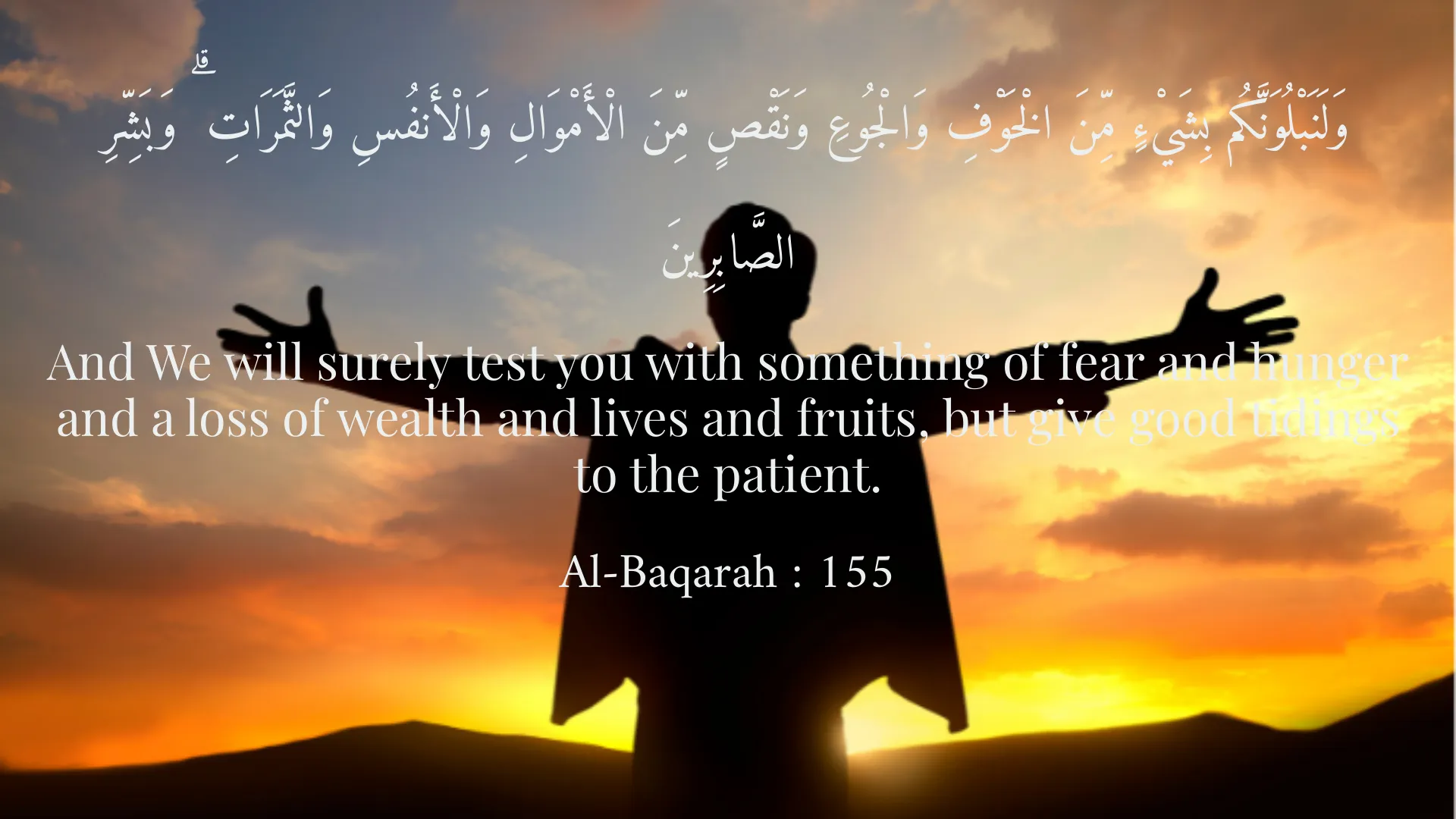
وَلَنَبْلُوَنَّكُم بِشَيْءٍ مِّنَ الْخَوْفِ وَالْجُوعِ وَنَقْصٍ مِّنَ الْأَمْوَالِ وَالْأَنفُسِ وَالثَّمَرَاتِ ۗ وَبَشِّرِ الصَّابِرِينَ
And We will surely test you with something of fear and hunger and a loss of wealth and lives and fruits, but give good tidings to the patient.
Al-Baqarah : 155
الَّذِينَ آمَنُوا وَتَطْمَئِنُّ قُلُوبُهُم بِذِكْرِ اللَّهِ ۗ أَلَا بِذِكْرِ اللَّهِ تَطْمَئِنُّ الْقُلُوبُ
Those who have believed and whose hearts are assured by the remembrance of Allah. Unquestionably, by the remembrance of Allah hearts are assured.
Ar-Ra'd : 28
أَحَسِبَ النَّاسُ أَن يُتْرَكُوا أَن يَقُولُوا آمَنَّا وَهُمْ لَا يُفْتَنُونَ
Do people think that they will be left to say, 'We believe' and they will not be tried?
Al-Ankabut : 2
وَلَقَدْ فَتَنَّا الَّذِينَ مِن قَبْلِهِمْ ۖ فَلَيَعْلَمَنَّ اللَّهُ الَّذِينَ صَدَقُوا وَلَيَعْلَمَنَّ الْكَاذِبِينَ
But We have certainly tried those before them, and Allah will surely make evident those who are truthful and will surely make evident the liars.
Al-Ankabut : 3
Short Story
One day, a wise dervish was seen walking through a desolate desert, his clothes tattered and his provisions scarce. A passerby, observing his serene demeanor despite the harsh conditions, asked, 'O venerable one, how is it that you walk with such peace in this unforgiving land, while others lament their misfortunes in comfortable homes?' The dervish smiled gently and replied, 'My dear friend, the happiness of the heart is not found in the abundance of worldly possessions or the absence of trials. It is found in contentment with God's decree and trust in His boundless mercy. The sun may burn and the wind may bite, but the light of certainty in my heart illuminates my path. For a true believer, every hardship is but a passing cloud, and beneath it lies the steadfast hope of divine grace. Is it not true that even a king, tormented by doubt, lives in a smaller prison than a dervish content with destiny?'