Quranic Answer
In the life-giving school of Islam and the rich teachings of the Holy Quran, a continuous and profound connection with the Almighty is considered one of the fundamental pillars of faith and spiritual perfection. The answer to the question, 'Should one always talk to God?' is, based on the luminous verses of the Quran, definitively yes. This 'talking to God,' however, is not merely limited to verbal communication; rather, it encompasses a state of heart-presence, constant remembrance (Dhikr), supplication (Du'a), gratitude (Shukr), repentance (Tawbah), and living according to Divine pleasure, which flows through every moment of human life. The Holy Quran instructs believers to remember God abundantly. This directive indicates that the remembrance of God should not be confined to specific times or acts of worship but should permeate all aspects of life. For instance, in Surah Al-Ahzab, verses 41 and 42, Allah says: 'O you who have believed, remember Allah with much remembrance, (41) and glorify Him morning and evening. (42)' These verses explicitly command a frequent and ceaseless remembrance of God. The remembrance of God is not solely with the tongue but also with the heart and action. When a person witnesses the beauties of creation and contemplates the Creator's majesty, they are, in essence, conversing with God. When they rely on Him in difficulties and seek His help, they are also engaged in dialogue. One of the most beautiful manifestations of this continuous dialogue is 'Dhikr.' Dhikr is a state of wakefulness and alertness of the heart to the presence of God. This presence can be in the form of Tasbih and Tahlil (uttering 'Subhanallah' and 'La ilaha illallah'), or in the form of contemplation and reflection on the Divine signs in the cosmos and within oneself. Surah Al-Imran, verse 191, describes true believers as: 'Those who remember Allah while standing or sitting or [lying] on their sides and give thought to the creation of the heavens and the earth...' This verse clearly shows that the remembrance of God is not limited to specific times or places and should be continuous in all states and circumstances of life. This remembrance is not merely for fulfilling an obligation but for the tranquility of hearts. As stated in Surah Ar-Ra'd, verse 28: 'Those who have believed and whose hearts are assured by the remembrance of Allah. Unquestionably, by the remembrance of Allah hearts are assured.' This tranquility is the natural outcome of a continuous and heartfelt connection with the inexhaustible source of peace. Another aspect of this conversation is 'Du'a' (supplication). Du'a is the essence and core of worship and a direct way to present one's needs, desires, gratitude, and even complaints before the Most High Creator. In Surah Ghafir, verse 60, Allah explicitly states: 'And your Lord says, 'Call upon Me; I will respond to you.' Indeed, those who disdain My worship will enter Hell in [utter] humiliation.' This verse not only encourages us to supplicate but promises a response and condemns arrogance in not making Du'a. Du'a can be made at any time and in any place; in moments of immense joy and success for gratitude, in moments of extreme sorrow and despair for seeking help and solace, and at every moment for seeking guidance and forgiveness. Making Du'a signifies that a person sees themselves as needy and poor before the Self-Sufficient God, placing all their hope in Him. This communication provides an individual with a firm support system and frees them from loneliness and despair. Salat (formal prayer), which is a structured and obligatory act of worship, represents the pinnacle of this dialogue and intimate communion. In Salat, the worshipper directly addresses their Lord, praising and glorifying Him, seeking His help, and asking for guidance. However, Salat, as a specific act of worship, is actually a training ground for extending this state of connection to all hours of life. The five daily prayers are opportunities that awaken a person from heedlessness and bring them back to the remembrance of God and His presence, so that this sense of presence and connection remains steadfast even between the prayers. Therefore, 'always talking to God' is a Quranic way of life. This does not mean that one should constantly be engaged in verbal glorification and remembrance to the exclusion of worldly affairs, but rather that one's heart should always be turned towards God, every action should be performed with a Divine intention, gratitude should be expressed for blessings at every moment, reliance should be placed on Him in difficulties, He should not be forgotten in times of joy, and His pleasure should be considered in every choice and decision. This state endows a person with insight, keeps them away from sin, and guides them towards goodness. This continuous connection leads to spiritual growth, strengthens faith, and ultimately achieves true happiness in this world and the hereafter. So, yes, one should always talk to God; in a language He understands and with a state of being He approves of, with every breath, every glance, and every step.
Related Verses
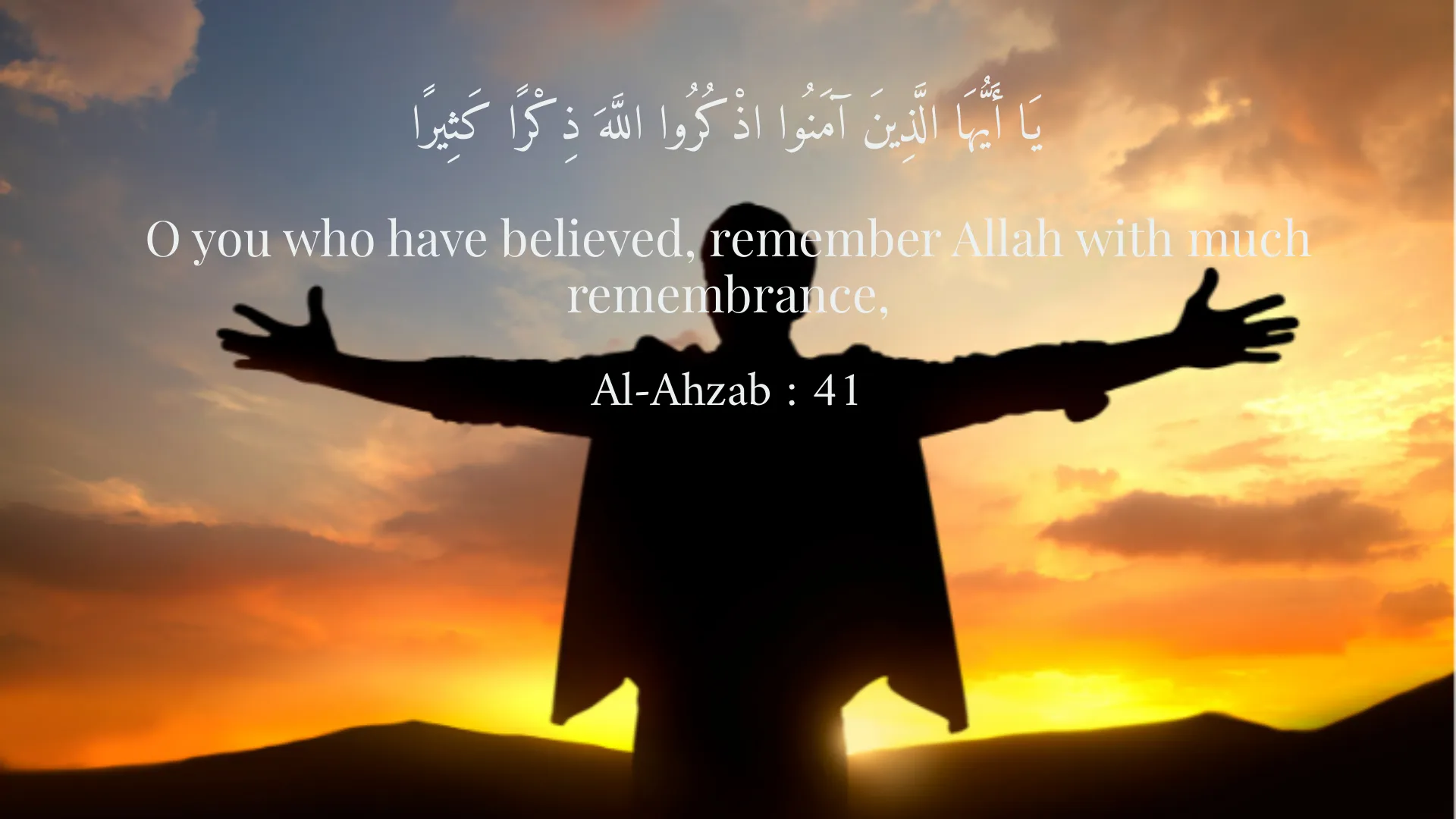
يَا أَيُّهَا الَّذِينَ آمَنُوا اذْكُرُوا اللَّهَ ذِكْرًا كَثِيرًا
O you who have believed, remember Allah with much remembrance,
Al-Ahzab : 41
الَّذِينَ آمَنُوا وَتَطْمَئِنُّ قُلُوبُهُم بِذِكْرِ اللَّهِ ۗ أَلَا بِذِكْرِ اللَّهِ تَطْمَئِنُّ الْقُلُوبُ
Those who have believed and whose hearts are assured by the remembrance of Allah. Unquestionably, by the remembrance of Allah hearts are assured.
Ar-Ra'd : 28
وَقَالَ رَبُّكُمُ ادْعُونِي أَسْتَجِبْ لَكُمْ ۚ إِنَّ الَّذِينَ يَسْتَكْبِرُونَ عَنْ عِبَادَتِي سَيَدْخُلُونَ جَهَنَّمَ دَاخِرِينَ
And your Lord says, "Call upon Me; I will respond to you." Indeed, those who disdain My worship will enter Hell in [utter] humiliation.
Ghafir : 60
الَّذِينَ يَذْكُرُونَ اللَّهَ قِيَامًا وَقُعُودًا وَعَلَىٰ جُنُوبِهِمْ وَيَتَفَكَّرُونَ فِي خَلْقِ السَّمَاوَاتِ وَالْأَرْضِ رَبَّنَا مَا خَلَقْتَ هَٰذَا بَاطِلًا سُبْحَانَكَ فَقِنَا عَذَابَ النَّارِ
Those who remember Allah while standing or sitting or [lying] on their sides and give thought to the creation of the heavens and the earth, [saying], "Our Lord, You did not create this in vain. Exalted are You above [such a thing]; then protect us from the punishment of the Fire."
Al-Imran : 191
Short Story
In a distant time, there was a merchant named Farid who always carried the remembrance of God in his heart during his travels. Once, his caravan lost its way in a dry, barren desert. Everyone became distressed, crying out from hardship and thirst. But Farid raised his hands to the sky and slowly began to murmur: 'O Almighty Lord, You who show the way to the lost, You who are capable of whatever You will, help us.' He spoke to God not just with his tongue, but with his entire being, never losing hope in Him. Even when others fell to their knees, he continued to utter praises, thankful to God with every step he took. After an hour, a cool breeze began to blow, and clouds appeared in the sky, and the rain of divine mercy began to fall. The caravan was saved, and Farid understood that continuous conversation with God is not just for times of need, but at every moment, it is a guiding light and a source of peace. He always remembered Sa'di's wisdom: 'Whoever is always with God, is safe from calamity.'