Quranic Answer
In the comprehensive and luminous school of Islam, founded upon divine mercy and guidance, the answer to the pivotal question of whether one should be kind to everyone, even those who have wronged us, is not merely an ethical recommendation but a foundational Quranic principle. The Holy Quran clearly delineates the conduct required when dealing with ill-wishers and those who cause harm, guiding humanity towards the highest levels of morality and spirituality. The fundamental principle in this regard is to repel evil with good, a concept reiterated in several verses. This teaching is not only for preserving one's inner peace but also highly effective in transforming the hearts of enemies and tormentors. In Surah Fussilat, verses 34 and 35, the Quran beautifully articulates this concept: "And not equal are the good deed and the bad. Repel [evil] with that which is better; then abruptly the one whom between you and him is enmity will become as though he was a devoted friend. But none is granted it except those who are patient, and none is granted it except one having a great portion [of good]." These verses directly instruct believers to respond to ill-treatment with the best possible good. The outcome predicted by the Quran for this approach is truly astonishing: enmity transforms into a close friendship. This signifies the unparalleled power of good character in mending relationships and healing hearts. However, the Quran immediately points out that this elevated moral standing is attained only by those who exercise patience and possess a great share of divine guidance. Patience here means enduring harassment and maintaining inner and outer composure in the face of misconduct. This patience is not passive but active and constructive, paving the way for good to have its effect. Furthermore, in Surah Ash-Shura, verse 40, Allah states: "And the recompense of an evil deed is an evil deed like thereof. But whoever pardons and makes reconciliation - his reward is due from Allah. Indeed, He does not like wrongdoers." This verse initially presents the principle of retaliation in punishment but immediately encourages forgiveness and reconciliation, placing its reward upon Allah Himself. This implies that while the right to retaliation exists, overlooking and striving for reconciliation is superior and carries immense reward from Allah. Forgiveness and reconciliation here mean waiving personal revenge and striving to mend and improve the situation, even if the other party might not seem to deserve it. This shows that the purpose of kindness towards those who have wronged us is not mere submission or ignoring injustice, but a wise and proactive approach to break the cycle of evil and promote peace and mercy. Numerous examples of this approach can be found in the life of Prophet Muhammad (PBUH) and the infallible Imams (AS). The Noble Prophet of Islam (PBUH), who was a mercy to all worlds, consistently dealt with even the severest forms of annoyance and persecution with grace and kindness. He forgave his enemies, and through his good conduct, he attracted many of them to Islam. The conquest of Mecca and the general amnesty granted to its inhabitants, who had persecuted the Prophet and his companions for years, is a prime example of this mercy and kindness. This behavior demonstrates that kindness transcends momentary emotions and can be a divine strategy for guidance and reform. However, this kindness does not mean absolving the wronged individual from the responsibility to defend themselves or society. In cases where there is organized oppression or systematic tyranny that infringes upon the rights of others, or harms the foundations of religion and society, it is necessary to confront it. But even in such instances, the method of confrontation must not deviate from the framework of justice, and the ultimate goal must be the establishment of peace and justice. The difference lies in that kindness and forgiveness are highly recommended in individual and personal relationships and bring abundant blessings, but in the face of injustice against society or religion, one must act with wisdom and authority. In summary, the Quranic perspective is that kindness and beneficence, even towards those who have wronged us, is a great virtue and an effective strategy for change and reform. This approach requires patience, insight, and reliance on Allah. However, its boundaries must be defined by divine wisdom so that it does not amount to submission to injustice and corruption, but rather a path to spread mercy and light in the world. This type of kindness is not weakness; rather, it is the pinnacle of a believer's spiritual and moral strength, capable of conquering hearts and transforming enmity into friendship. So, the answer is yes, Islam and the Quran strongly recommend kindness towards those who have wronged us, with the hope that our goodness and benevolence can sow the seeds of love in their hearts and ultimately pave the way for their guidance. This act is a sign of true faith and adherence to divine ethics.
Related Verses
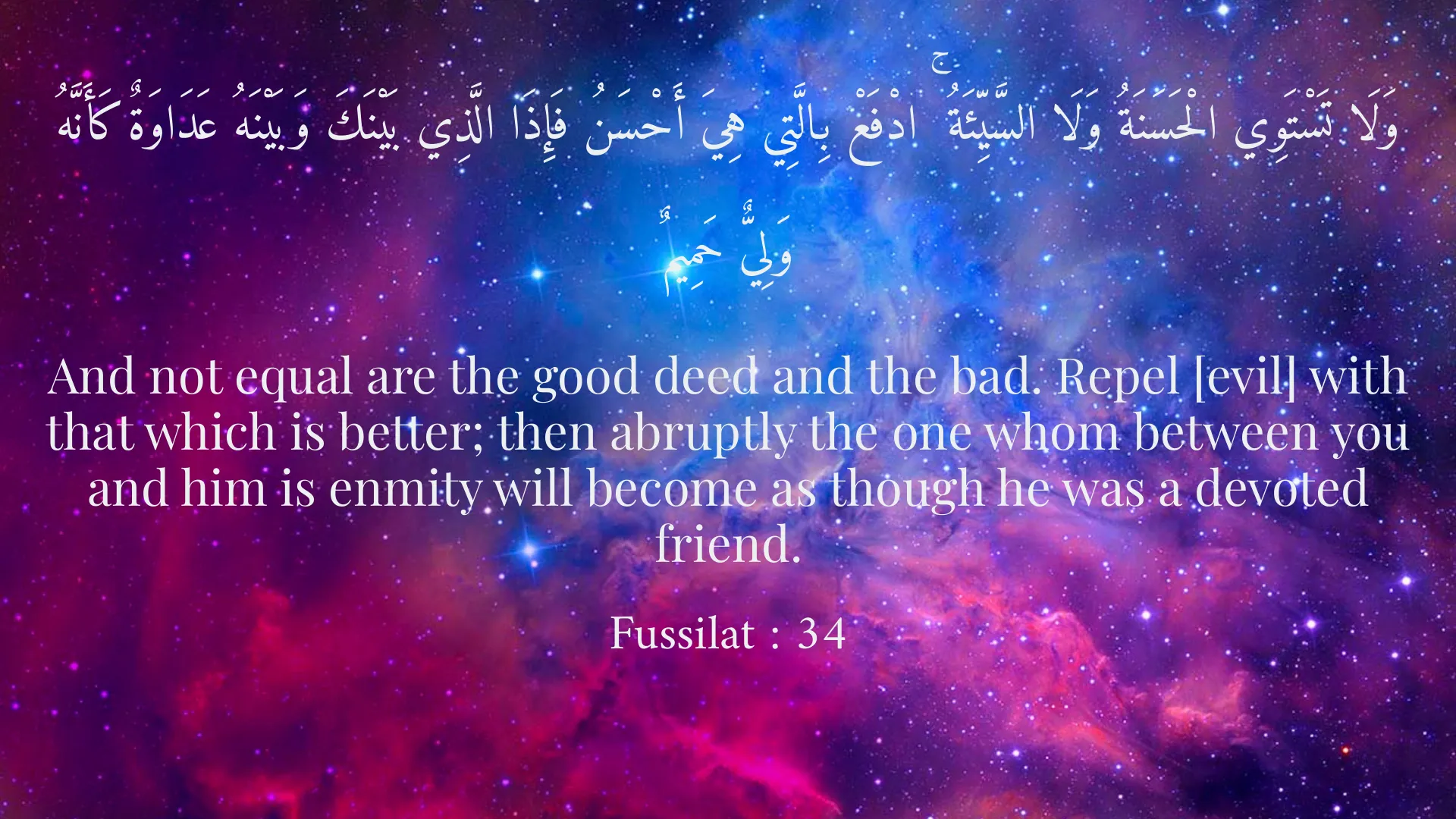
وَلَا تَسْتَوِي الْحَسَنَةُ وَلَا السَّيِّئَةُ ۚ ادْفَعْ بِالَّتِي هِيَ أَحْسَنُ فَإِذَا الَّذِي بَيْنَكَ وَبَيْنَهُ عَدَاوَةٌ كَأَنَّهُ وَلِيٌّ حَمِيمٌ
And not equal are the good deed and the bad. Repel [evil] with that which is better; then abruptly the one whom between you and him is enmity will become as though he was a devoted friend.
Fussilat : 34
وَمَا يُلَقَّاهَا إِلَّا الَّذِينَ صَبَرُوا وَمَا يُلَقَّاهَا إِلَّا ذُو حَظٍّ عَظِيمٍ
But none is granted it except those who are patient, and none is granted it except one having a great portion [of good].
Fussilat : 35
وَجَزَاءُ سَيِّئَةٍ سَيِّئَةٌ مِّثْلُهَا ۖ فَمَنْ عَفَا وَأَصْلَحَ فَأَجْرُهُ عَلَى اللَّهِ ۚ إِنَّهُ لَا يُحِبُّ الظَّالِمِينَ
And the recompense of an evil deed is an evil deed like thereof. But whoever pardons and makes reconciliation - his reward is due from Allah. Indeed, He does not like wrongdoers.
Ash-Shura : 40
Short Story
It is narrated that one day, a resentful man in the market vexed Saadi Shirazi with harsh words and insults. Saadi's companions became angry and wished to confront the man. But Saadi, with a calm smile, restrained them and turned to the man, saying: "My friend, if you have any more words, speak them so I may be fully attentive; for it is good that a person learns a lesson from whomever they can, even if that lesson is patience and courtesy in the face of rudeness." The resentful man, who had expected harshness and retaliation, was ashamed by this kind and calm response, lowered his head, and departed in embarrassment. Saadi then said to his companions: "See how a kind word and a calm heart dull the sharp sword of resentment and turn enmity into shame and perhaps even friendship."