Quranic Answer
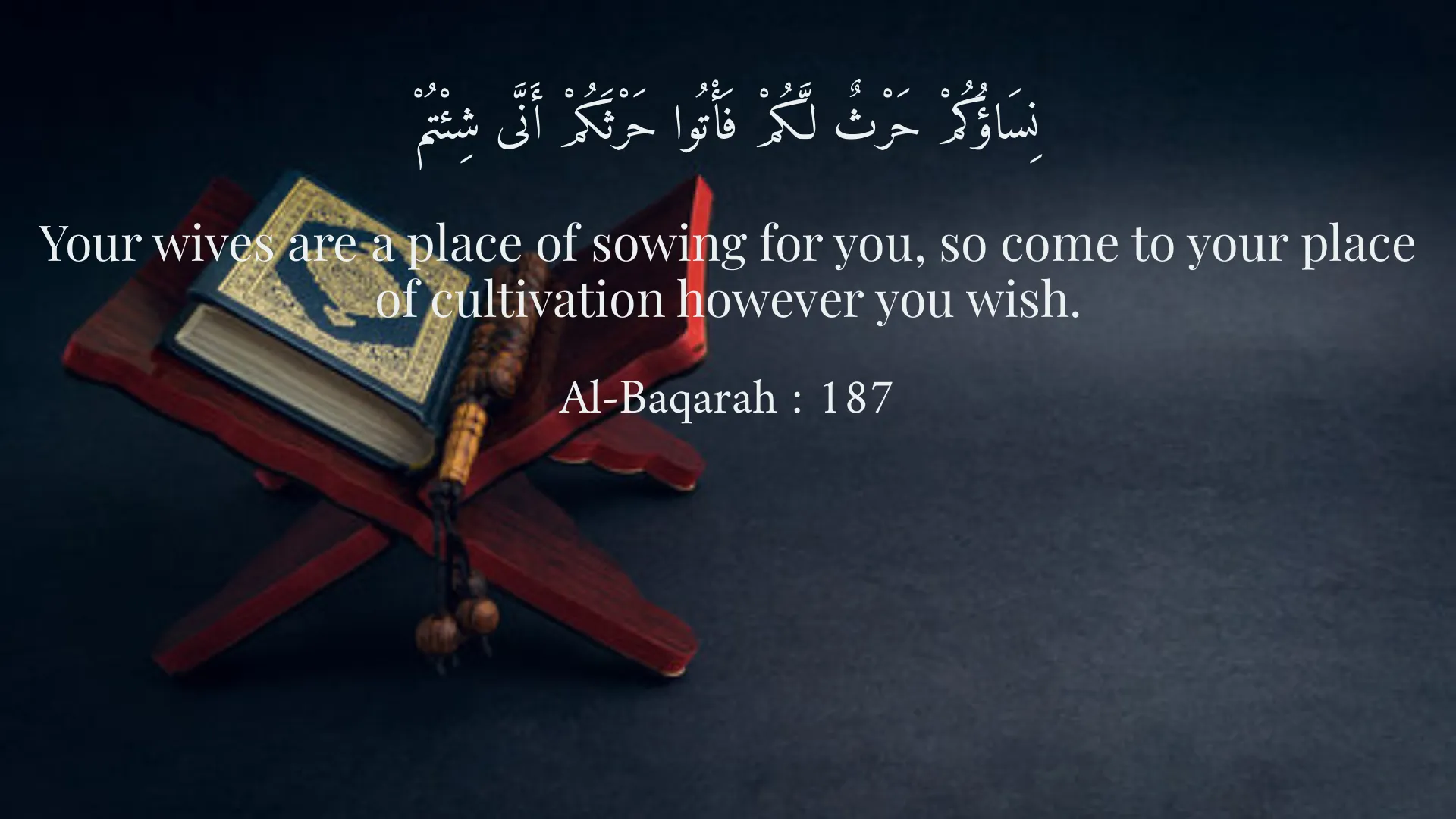
Marriage is often viewed as one of the most sacred bonds in Islam, serving not just as a social contract but as a profound spiritual commitment. This understanding of marriage goes beyond conventional definitions, as it encompasses emotional, spiritual, and ethical dimensions that reflect the essence of human relationships in the context of divine teaching. Throughout Islamic teachings, the intention behind marriage is of paramount significance. The concept of intention, or 'niyyah,' holds substantial value within the Quran and the Hadiths, underscoring the notion that every action, including the act of marrying, should be performed with a pure heart and an aim to please Allah. In the Holy Quran, Allah emphasizes the importance of intention when performing various actions. In Surah Al-Baqarah, verse 187, Allah states: 'Your wives are a place of sowing for you, so come to your place of cultivation however you wish.' This vivid metaphor underscores the idea that the relationship between spouses is not merely physical but is rooted in deeper, metaphorical layers of spiritual growth and nurturing. In this verse, the reference to spouses as a "place of sowing" signifies that the relationship serves as a fertile ground for collaboration, growth, and flourishing—both in worldly matters and in the spiritual realm. Such a relationship should be founded on values of love, companionship, and shared divine objectives as Muslims navigate their lives in pursuit of Allah’s pleasure. Furthermore, in Surah An-Nur, verse 32, Allah advises believers to choose spouses that complement and suit them well, emphasizing the continuity of family life with elements of love and respect. This guidance leads to the understanding that the intention of marriage should not simply be driven by superficial desires, convenience, or societal pressures. Instead, the true essence of marriage in Islam encourages individuals to look towards establishing a relationship that ultimately leads them closer to Allah. The advisory nature of these verses highlights the importance of intentionality, underlining that a successful marriage is one that is based on mutual respect, affection, and alignment with moral and ethical principles delineated by Islamic teachings. Additionally, it reiterates the belief that the journey of life shared with one's spouse should contribute to spiritual growth and fulfillment, creating a bond that supports both individuals in cultivating their faith. Prophet Muhammad (peace be upon him) provided profound insights into the nature of relationships and the intention behind marriage. He famously said, 'The best among you is the one who treats his family well, and I am the best among you.' This statement encapsulates the ideals of respect, kindness, and compassion that should govern the relationships between spouses. It reiterates the importance of sincerity and humility in interpersonal connections, especially within the sacred institution of marriage. By treating one another with love and respect, couples fulfill the purpose of this divine relationship, fostering an environment that is conducive to peace, blessing, and tranquility. Marriage, thus, should be approached with a mindset oriented towards the greater good—serving not just the individuals, but also the family and society as a whole. As couples prioritize their spiritual connection over mere carnal or material aspects, they begin to develop a shared journey that enriches their moral lives and contributes to communal harmony. The intention behind marriage, when framed this way, transcends personal desires and extends towards fulfilling communal and spiritual responsibilities, paving the way for a more benevolent society. Moreover, one must consider the role of intention in strengthening the bond of marriage. Intention becomes the cornerstone upon which mutual understanding, respect, and love are built. When both partners enter into the union with sincere intentions—not only to fulfill their worldly desires but also to bolster each other’s spiritual growth and to develop a household premised on Islamic values—then the marriage becomes a means of achieving divine pleasure. Couples must consistently remind themselves of their intentions, allowing them to navigate their daily lives with mindfulness and purpose. Another essential factor linked to the intention of marriage is the understanding of partnership—viewing marriage as a partnership where both parties invest not only in each other’s emotional and physical well-being but also their spiritual journeys. This cooperation is vital for nurturing a strong and resilient family unit, conducive to fulfilling the tenets of Islam. It is through mutual growth and support that couples can fully embody the Islamic teachings relating to love, compassion, and mercy. In conclusion, the intention behind marriage in Islam is fundamentally rooted in obedience to Allah, emphasizing the commitment to spiritual growth, mutual respect, and moral obligations. Each spouse should cultivate a partnership that enriches their shared spiritual journey while contributing positively to the society at large. Intentionality transforms the married life into a sacred act of worship, while also enabling couples to build a foundation of love, compassion, and respect. Engaging with this understanding of marriage will not only lead partners towards a more fulfilling life together but will also ripple outwards, impacting their families, communities, and ultimately the larger world in a constructive manner. Ultimately, through sincerity and humility, couples who intend their marriage for the sake of Allah will find abundant blessings, tranquility, and fulfillment in their lives together.
Related Verses
نِسَاؤُكُمْ حَرْثٌ لَّكُمْ فَأْتُوا حَرْثَكُمْ أَنَّى شِئْتُمْ
Your wives are a place of sowing for you, so come to your place of cultivation however you wish.
Al-Baqarah : 187
وَأَنفِقُوا فِي سَبِيلِ اللَّهِ مِنْ أَمْوَالِكُمْ وَلاَ تُلْقُوا بِأَيْدِيكُمْ إِلَى التَّهْلُكَةِ
And spend in the way of Allah from your wealth and do not throw yourselves into destruction.
An-Nur : 32
Short Story
One day, a man named Hassan decided to get married. Initially, he was influenced by the beauty and wealth of the girls. But when he realized that the intention behind marriage should be based on love and obedience to God, he changed his mind. He chose a girl who was not only beautiful but also had great integrity and piety. With his sincere intention, he married her, and their shared life turned out to be wonderfully fulfilling.