Quranic Answer
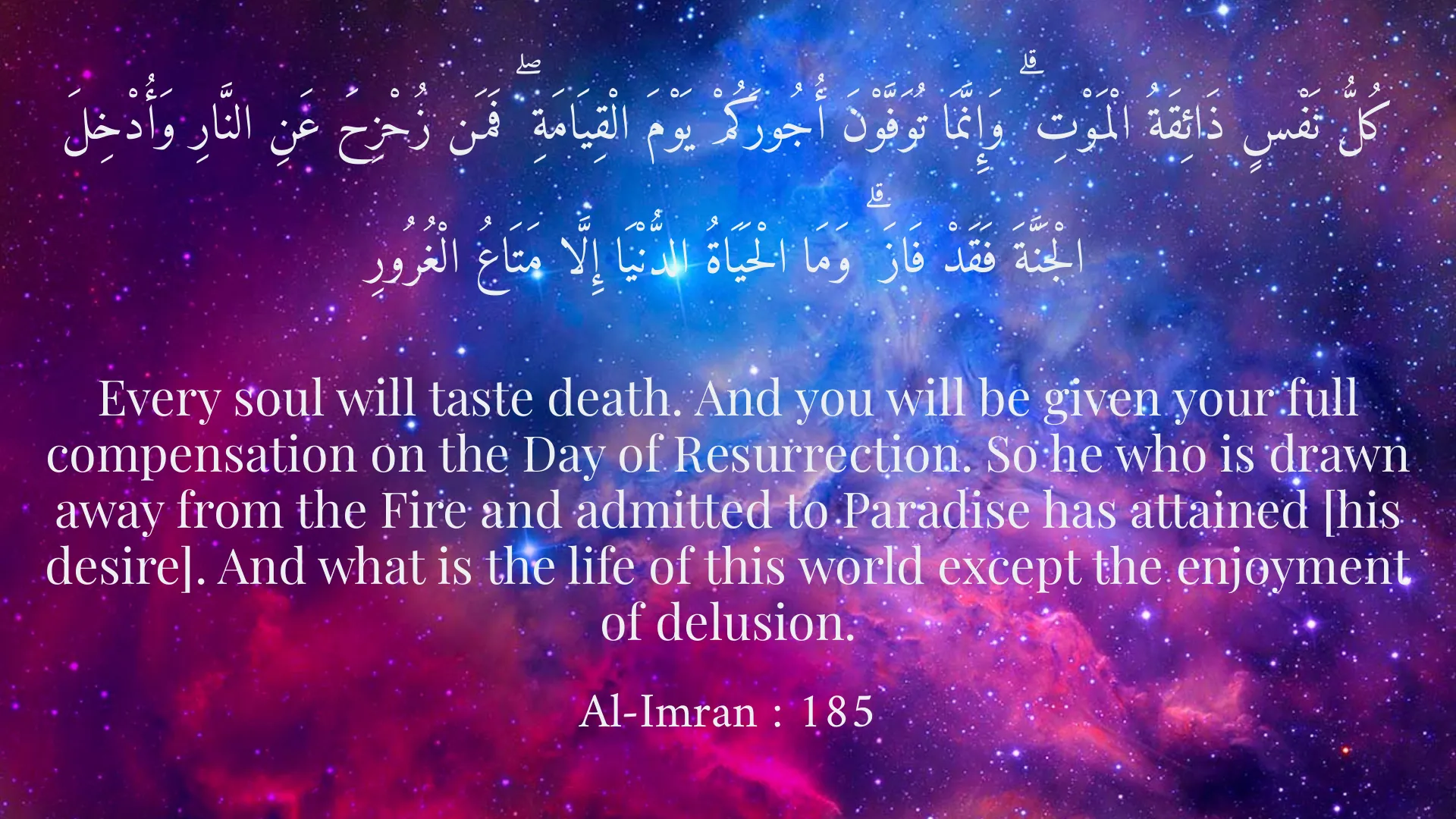
The remembrance of death, in Islamic teachings and especially within the Holy Quran, holds a profoundly significant and foundational position. This constant reminder is not merely an ethical recommendation but a sturdy pillar for constructing a meaningful and purposeful life. The Quran, through various means, invites humanity to ponder the truth of death and the transient nature of worldly existence. This remembrance should not evoke fear or despair; rather, it should serve as a powerful catalyst for righteous deeds and preparation for the eternal abode. Numerous verses allude to the undeniable truth that every soul shall taste death, and to Allah is the ultimate return of all. This repetition is not to instill dread but to awaken humans from worldly heedlessness. In Surah Al-Imran, verse 185, Allah states: “Kullu nafsin dha'iqatul mawt; wa innama tuwaffawna ujurakum yawmal-qiyamah; faman zuhzih anin-nari wa udkhilal-jannata faqad faz; wa mal-hayatud-dunya illa mata'ul-ghurur.” (Every soul will taste death. And you will be given your full compensation on the Day of Resurrection. So he who is drawn away from the Fire and admitted to Paradise has attained [his desire]. And what is the life of this world except the enjoyment of delusion.) This verse clearly indicates that death is not an end point but a gateway to eternal life, where the consequences of one's worldly actions are fully revealed. The remembrance of this truth guides individuals towards seeking divine pleasure and abstaining from sins. Worldly life is described as a delusive enjoyment, meaning it should not deceive a person with its fleeting appearances and pleasures, thereby diverting them from the primary purpose of creation. The remembrance of death helps individuals redefine their life priorities. In a world where humanity is constantly exposed to material deceptions and worldly ambitions, the contemplation of death acts as a profound wake-up call. This introspection encourages individuals to shift their focus from mere accumulation of wealth, pursuit of fame, and aimless pleasures towards acquiring moral virtues, fulfilling religious obligations, serving creation, and establishing a deeper connection with their Lord. When one comprehends that life is short and can end at any moment, they strive to live each moment with greater awareness and responsibility. This remembrance serves as a strong impetus for repenting from sins and making amends for past wrongs, as the opportunity for rectification is not unlimited. The Holy Quran emphasizes in various verses that worldly life is nothing but play and amusement, and the Hereafter is the true and everlasting abode. For instance, in Surah Al-An'am, verse 32, it states: “Wama alhayatu alddunya illa la'ibun walahwun walalddaru al-akhiratu khayrun lillatheena yattaqoona afala ta'qiloon.” (And the worldly life is nothing but amusement and diversion; but the home of the Hereafter is best for those who fear Allah. Then will you not reason?) This verse reminds us that excessive attachment to this world and forgetting the Hereafter signifies a lack of reason and insight. The remembrance of death revitalizes this reason, reminding individuals that true value lies in permanence and eternity, not in transient and perishable things. Furthermore, the remembrance of death cultivates humility and modesty in individuals. When one realizes that no matter how powerful, wealthy, or beloved they may be, they will ultimately return to their Lord, leaving everything behind, they are distanced from arrogance and pride. This humility paves the way for accepting the truth, upholding the rights of others, and avoiding injustice. As Saadi says, “If your income is scarce, spend slowly / So that no one says your income is more than this.” Here, our “income” refers to the opportunities of life, and our “spending” refers to the moments of our existence that diminish with every breath. Therefore, it can be asserted that the remembrance of death should transform into a continuous and heartfelt awareness, not a morbid obsession that paralyzes life. This awareness should exist in the background of all our decisions and actions but should not hinder vitality, effort, and hope for the future. In essence, the remembrance of death helps individuals make better use of the present moment, perform good deeds, and abstain from evil. This recollection does not bitter life; rather, it imbues it with depth, meaning, and purpose, as every small action gains eternal value in its light. The goal is not to constantly dwell on the end and forgo enjoying life, but to live life intelligently for a greater purpose. This intelligence includes planning for today and tomorrow, as well as contemplating eternity. The remembrance of death teaches us to appreciate the moments we have and to utilize them for spiritual growth and serving others. This perspective keeps one away from heedlessness and idleness, guiding them towards constructive and meaningful activities. Consequently, the remembrance of death is not merely a religious obligation but an educational strategy for attaining eternal felicity, freeing one from miserliness, greed, and selfishness, and bestowing breadth of vision and nobility. This remembrance helps individuals be more patient in the face of life's difficulties and understand that all these are fleeting, and what remains are righteous deeds and the pleasure of the Lord.
Related Verses
كُلُّ نَفْسٍ ذَائِقَةُ الْمَوْتِ ۗ وَإِنَّمَا تُوَفَّوْنَ أُجُورَكُمْ يَوْمَ الْقِيَامَةِ ۖ فَمَن زُحْزِحَ عَنِ النَّارِ وَأُدْخِلَ الْجَنَّةَ فَقَدْ فَازَ ۗ وَمَا الْحَيَاةُ الدُّنْيَا إِلَّا مَتَاعُ الْغُرُورِ
Every soul will taste death. And you will be given your full compensation on the Day of Resurrection. So he who is drawn away from the Fire and admitted to Paradise has attained [his desire]. And what is the life of this world except the enjoyment of delusion.
Al-Imran : 185
وَمَا الْحَيَاةُ الدُّنْيَا إِلَّا لَعِبٌ وَلَهْوٌ ۖ وَلَلدَّارُ الْآخِرَةُ خَيْرٌ لِّلَّذِينَ يَتَّقُونَ ۗ أَفَلَا تَعْقِلُونَ
And the worldly life is nothing but amusement and diversion; but the home of the Hereafter is best for those who fear Allah. Then will you not reason?
Al-An'am : 32
الَّذِينَ إِذَا أَصَابَتْهُم مُّصِيبَةٌ قَالُوا إِنَّا لِلَّهِ وَإِنَّا إِلَيْهِ رَاجِعُونَ
Who, when disaster strikes them, say, "Indeed we belong to Allah, and indeed to Him we will return."
Al-Baqarah : 156
Short Story
It is narrated that a powerful king, at the peak of his glory and splendor, could not sleep peacefully at night, fearing that his throne and crown might one day slip from his grasp. He had amassed vast treasures and dealt harshly with his subjects to increase his wealth. One day, a wise physician came to his court, and the king asked him for a medicine that would grant him eternal life. The physician smiled and said, "O King, there is no medicine for eternal life, but there is a medicine that removes the fear of death." The king eagerly asked, "What is it?" The physician replied, "It is to perform good deeds and help the needy. The more virtuous you are, the greater peace of heart you will find, and you will see death as a bridge to the eternal abode, not the end of everything." The king took heed of these words and thereafter devoted himself to justice and benevolence, realizing that true peace lies in detaching from worldly possessions and preparing for the journey to the afterlife.