Quranic Answer
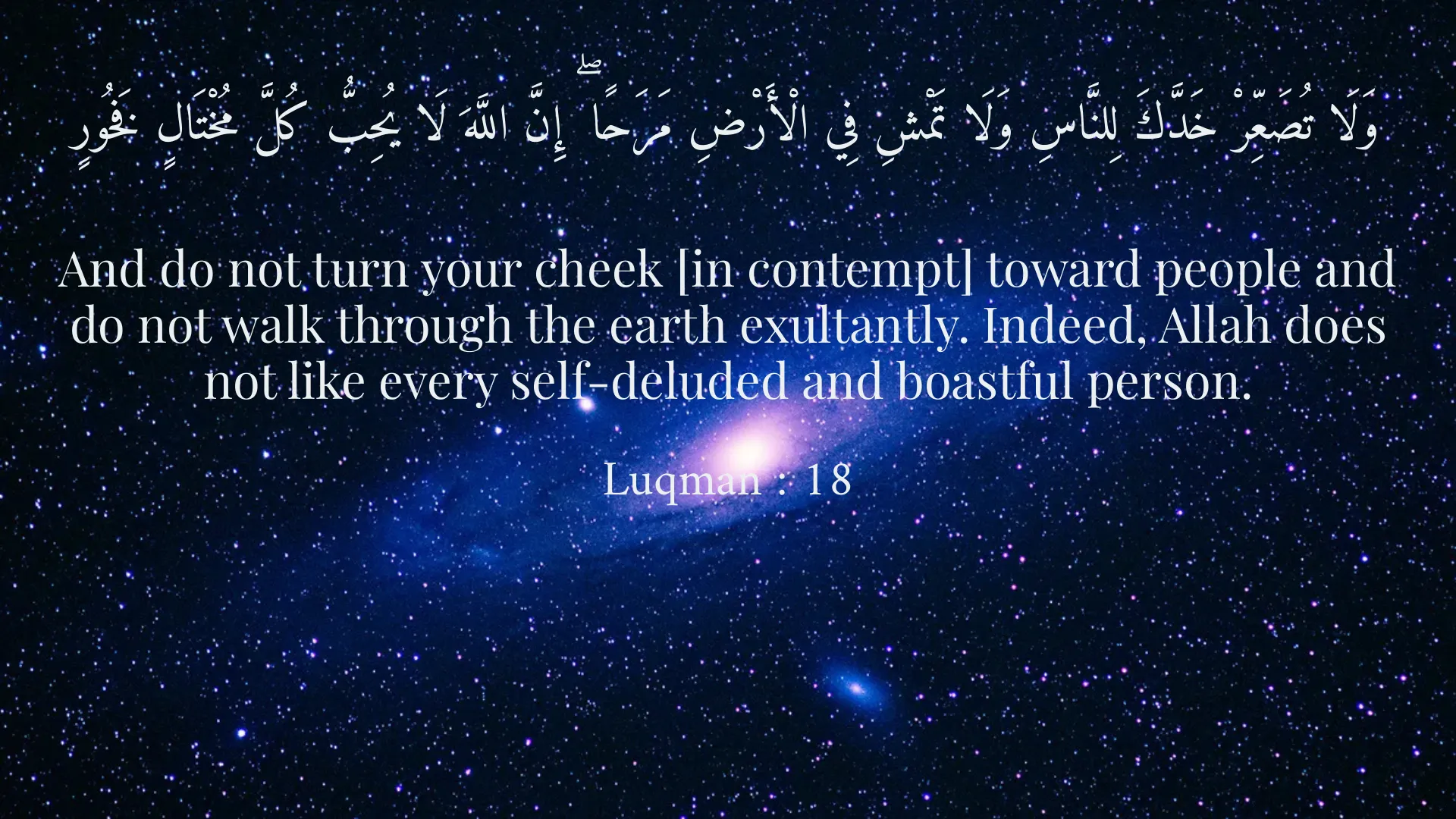
The Holy Quran, with its comprehensive and profound outlook on the human being, beautifully delineates the subtle and crucial boundary between 'healthy self-love' and 'blameworthy selfishness'. Healthy self-love is an innate and necessary state that signifies attention to one's spiritual and physical well-being, personal growth, and striving for human perfection. This type of self-affection serves as a motivation for self-improvement, acquiring knowledge, protecting oneself from harm, and moving towards the Divine. Indeed, without this kind of self-love, a person would not be able to fulfill their true role in existence or serve others, as a 'healthy self is the foundation of a healthy society'. The Quran, in numerous verses, emphasizes the importance of 'Tazkiyat al-Nafs' (purification of the soul), which is a form of spiritual self-love; purifying the soul from vices ultimately benefits the individual and their eternal salvation. On the other hand, 'selfishness' is defined as an excessive and imbalanced focus on personal interests and desires, disregarding or even harming others, and prioritizing one's whims over ethical and divine values. Selfishness is the root of many moral vices such as arrogance, greed, envy, stinginess, and oppression. The Quran strongly condemns these traits, considering them major obstacles to spiritual growth and human well-being. One of the most prominent manifestations of selfishness addressed in the Quran is 'arrogance' and 'self-admiration'. In Surah Luqman, verse 18, Allah states: "And do not turn your cheek [in contempt] toward people and do not walk through the earth exultantly. Indeed, Allah does not like every self-deluded and boastful person." This verse clearly indicates that pride and self-aggrandizement, which stem from selfishness, are disapproved of by Allah. Another example of selfishness is 'greed' and 'stinginess'. In Surah Al-Hashr, verse 9, Allah praises the Ansar (helpers) who preferred the Muhajireen (emigrants) over themselves, stating: "And whoever is protected from the stinginess of his soul – it is those who will be the successful." The Arabic word 'shuhh' signifies stinginess coupled with intense greed, symbolizing an excessive focus on personal gain and an unwillingness to give or sacrifice. This verse demonstrates that liberation from selfish stinginess is a condition for success. The Quran establishes the boundary between these two concepts in the notions of 'moderation' (I'tidal) and 'soul purification' (Tazkiyat al-Nafs). Self-love is healthy when it leads a person towards God and divine values, enabling them to grow in a way that allows them to serve others. This entails nurturing the 'Nafs al-Mutma'innah' (the tranquil soul), as mentioned in Surah Al-Fajr. This soul is filled with divine satisfaction and treads the path of truth. Conversely, selfishness is what deviates a person from the righteous path and enslaves them to the 'Nafs al-Ammarah bil-Su'' (the soul commanding to evil). Such a soul only thinks of its immediate and material desires and is willing to violate the rights of others and even commit injustice to achieve them. The Holy Quran explicitly states that by controlling and guiding this soul, a person can achieve salvation, as mentioned in Surah Ash-Shams, verses 7-10: "By the soul and He who proportioned it, and inspired it [with discernment of] its wickedness and its righteousness, he has succeeded who purifies it, and he has failed who corrupts it." These verses unequivocally state that human salvation and wretchedness depend on how one deals with their own soul: whether they purify it or leave it unchecked to drown in the abyss of selfishness. In summary, the Quran differentiates between self-love and selfishness based on the 'intention' and 'outcome' of an action. Healthy self-love aims for growth and perfection, resulting in individual well-being and collective good. Selfishness, however, intends only to satisfy personal desires, leading to the deterioration of one's character and harm to society. The Quran teaches us to always seek balance: neither to neglect ourselves nor to fall into the trap of self-worship and selfishness. This balance is the straight path that paves the way to salvation.
Related Verses
وَلَا تُصَعِّرْ خَدَّكَ لِلنَّاسِ وَلَا تَمْشِ فِي الْأَرْضِ مَرَحًا ۖ إِنَّ اللَّهَ لَا يُحِبُّ كُلَّ مُخْتَالٍ فَخُورٍ
And do not turn your cheek [in contempt] toward people and do not walk through the earth exultantly. Indeed, Allah does not like every self-deluded and boastful person.
Luqman : 18
وَالَّذِينَ تَبَوَّءُوا الدَّارَ وَالْإِيمَانَ مِن قَبْلِهِمْ يُحِبُّونَ مَنْ هَاجَرَ إِلَيْهِمْ وَلَا يَجِدُونَ فِي صُدُورِهِمْ حَاجَةً مِّمَّا أُوتُوا وَيُؤْثِرُونَ عَلَىٰ أَنفُسِهِمْ وَلَوْ كَانَ بِهِمْ خَصَاصَةٌ ۚ وَمَن يُوقَ شُحَّ نَفْسِهِ فَأُولَٰئِكَ هُمُ الْمُفْلِحُونَ
And [for] those who were settled in the home [of Medina] and [in] faith before them, they love those who emigrated to them and find not in their breasts any need from that which was given them and prefer [others] over themselves, even though they are in [dire] poverty. And whoever is protected from the stinginess of his soul - it is those who will be the successful.
Al-Hashr : 9
وَنَفْسٍ وَمَا سَوَّاهَا فَأَلْهَمَهَا فُجُورَهَا وَتَقْوَاهَا قَدْ أَفْلَحَ مَن زَكَّاهَا وَقَدْ خَابَ مَن دَسَّاهَا
By the soul and He who proportioned it, and inspired it [with discernment of] its wickedness and its righteousness, he has succeeded who purifies it, and he has failed who corrupts it.
Ash-Shams : 7-10
Short Story
One day, a wise ruler in a city, wishing to test the intentions of his people and provide water for caravans, commanded that everyone should pour a jug of milk into the public well at night. Each person thought to themselves, 'If I pour water instead of milk, it will be lost in this sea of milk, and no one will know.' And so, everyone poured water. In the morning, when the ruler and the people gathered and opened the well, they found it filled with clear water, with no trace of milk. This story, alluded to in a different form by Saadi, teaches us that if everyone, out of self-interest and the belief that their action will be hidden among others', turns away from benevolence and altruism, the ultimate outcome will be detrimental to all. Selfishness is like pouring water instead of milk; although it brings a small benefit to the individual at the moment, its result is collective deprivation, while true self-love hinges on individual growth and excellence, which only bears fruit through service to others and goodness to society. So, let us reflect on our growth and excellence, which ultimately benefits the collective, instead of being selfish.