Quranic Answer
The Holy Quran serves as a guiding framework for millions of Muslims all over the world, delineating various aspects of life and providing fundamental principles that govern their existence. Among the most significant teachings found within the Quran is the emphasis on family as a cornerstone of societal structure. In a world that often experiences upheaval and relational disconnects, these teachings resonate as timeless wisdom, promoting affection, respect, and responsibility among family members. One of the most potent verses addressing this topic can be found in Surah Al-Isra, verse 23, which states, "And your Lord has decreed that you not worship except Him, and to parents, good treatment." This verse not only establishes the priority of monotheism – the worship of Allah alone – but also emphasizes the critical importance of kindness towards one’s parents. This dual focus encapsulates the essence of a loving family life, where the worship of the Creator goes hand in hand with respecting and cherishing our family members. From the Islamic perspective, family is not merely an institution; it is a sanctuary where love, support, and mutual growth thrive. A loving and secure family environment forms the foundation of a Muslim's personal development and societal contribution. When individuals are nurtured in a home filled with respect and encouragement, they are more likely to grow into empathetic and responsible adults who contribute positively to society. The Quran urges Muslims to build relationships based on love and cooperation among family members. The establishment of these strong bonds is essential for fostering a stable and harmonious environment. The teachings on family extend beyond mere emotional connections; they involve active participation, understanding, and clear communication. Through acts of love and kindness, a Muslim household can create a nurturing space where children learn the values of compassion and responsibility. Furthermore, the Quran goes on to highlight the importance of marriage and family formation in Surah An-Nur, verse 32, where it states: "And marry those among you who are single." This clear directive from Allah signifies that marriage is not just a social contract but a crucial component of individual and social planning. It reaffirms that forming a family should be at the forefront of a person’s aspirations, emphasizing the positivity of marriage in promoting social stability. The marital union paves the way for the establishment of families, which are recognized as vital units in contributing to the well-being of society. The Holistic Role of Family Within Society In essence, families act as the building blocks of society. The stability and health of a society are significantly influenced by the quality of its family life. A strong family unit often translates into a robust community, leading to a network of supportive relationships among individuals. When families are teaching their members values such as honesty, integrity, and compassion, they contribute to the formation of better individuals who are more likely to work towards societal progress. In combination with the teachings on familial love and marriage, the Quran offers guidance on navigating the complexities of family dynamics, particularly in situations like divorce. The Quran addresses various issues related to divorce with a clear emphasis on the rights and responsibilities shared between spouses. This includes the importance of treating each other with respect and dignity, even in times of conflict. Surah Al-Baqarah, verse 229, states: "And when you divorce your wives, make sure to observe the waiting period (iddah) for each wife, and do not be harmed by keeping them until the end of their waiting period..." The instruction emphasizes that Allah commands fair treatment in all circumstances, urging all involved to maintain a level of respect and understanding. This highlights the overarching principle that, regardless of the outcome of relationships, one must comport themselves with dignity and consideration. In practicing these Quranic teachings, Muslims are essentially cultivating a positive environment that fosters growth and resilience, both personally and collectively. Every family must strive to live in accordance with these principles to become effective and righteous contributors to a greater community. While families may come in various forms, the underlying values of love, respect, and cooperation are universal. The Quran’s encouragement of strong familial networks serves as a reminder of the critical role that families play in enriching individual lives and enhancing community harmony. It urges society to reflect on the importance of maintaining strong and kind familial connections. Conclusion In summary, the Holy Quran places profound importance on family as the cornerstone of society. By advocating worship of Allah and the honorable treatment of parents, the Quran sets a standard for how relationships within the family should be formed. This influence extends to marriage and the responsibilities of spouses towards one another, further emphasizing the need for respect and mutual rights. In adhering to these teachings, the Muslim community can effectively cultivate a solid familial foundation that contributes to individual fulfillment and the well-being of society as a whole. Not only do these principles serve to strengthen family bonds, but they also engender a larger framework for building a loving and cohesive community, ultimately leading to a positive societal impact. Therefore, it is imperative for Muslims to understand and implement these Quranic teachings in their daily lives, ensuring that the family remains a sacred and nurturing institution.
Related Verses
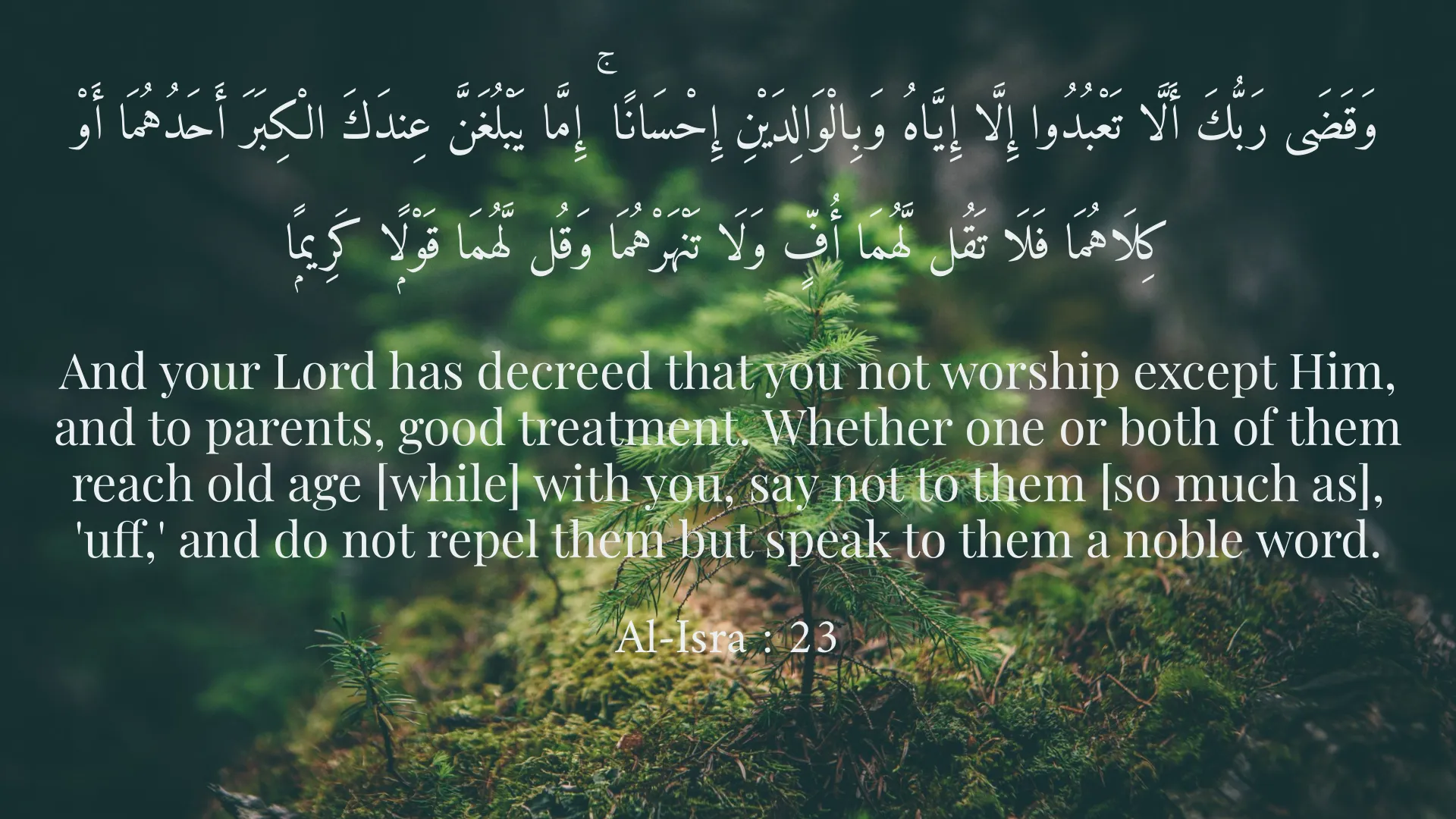
وَقَضَى رَبُّكَ أَلَّا تَعْبُدُوا إِلَّا إِيَّاهُ وَبِالْوَالِدَيْنِ إِحْسَانًا ۚ إِمَّا يَبْلُغَنَّ عِندَكَ الْكِبَرَ أَحَدُهُمَا أَوْ كِلَاهُمَا فَلَا تَقُل لَّهُمَا أُفٍّ وَلَا تَنْهَرْهُمَا وَقُل لَّهُمَا قَوْلًۭا كَرِيمًۭا
And your Lord has decreed that you not worship except Him, and to parents, good treatment. Whether one or both of them reach old age [while] with you, say not to them [so much as], 'uff,' and do not repel them but speak to them a noble word.
Al-Isra : 23
وَأَنْكِحُوا الْأَيَامَى مِنْكُمْ وَالصَّالِحِينَ مِنْ عِبَادِكُمْ وَإِمَائِكُمْ ۚ إِن يَكُونُوا فُقَرَاءَ يُغْنِهِمُ اللَّهُ مِن فَضْلِهِ ۗ وَاللَّهُ سَمِيعٌ عَلِيمٌ
And marry those among you who are single and the righteous among your male and female slaves. If they are poor, Allah will enrich them from His bounty. And Allah is All-Hearing and All-Knowing.
An-Nur : 32
Short Story
Once upon a time, a man named Ali was reflecting on his life and came to the realization that the importance of family should not be overlooked. He decided to spend more time with his wife and children and engage in conversations with them. Days passed, and their relationships deepened. One day, his child asked him why he always spent time with them. Ali smiled and replied, 'Family is my most important world, and Allah has commanded us to love one another.'