Quranic Answer
The Holy Quran, as the sacred text of Islam, provides not only spiritual guidance but also practical advice on how to live a fulfilling and productive life. Among the core themes that resonate throughout its verses is the emphasis on work and effort. These are not merely elements of personal growth; they are viewed as essential aspects of faith and nurtured through a divine framework that encourages believers to seize opportunities, engage diligently with the world, and trust in God for their sustenance. This article will explore these principles further, diving into the teachings from specific verses that advocate against laziness and endorse an attitude of industriousness. In Surah At-Taghabun, verse 16, Allah instructs the believers: 'So fear Allah as much as you can and listen and obey and spend in the way of Allah, and it is better for yourselves. And whoever is protected from the stinginess of his soul - it is those who will be the successful.' This verse serves as a potent reminder of the importance of spending from the provisions afforded to us, not just for individual gain but in the service of Allah and the community. It encourages us to reflect on our responsibilities toward others and actively engage in various forms of work that benefit society at large. The ethos here is that hard work should not be viewed in isolation but rather as part of a collective movement toward a better life, both here and in the hereafter. Young believers, in particular, are cautioned against the pitfalls of laziness and lethargy that can deter them from realizing their full potential. The world is rife with opportunities for those willing to put in the necessary effort, and the Quran continually motivates its followers, emphasizing that trust in Allah should accompany diligent work. This dual emphasis on effort and faith is crucial, as it helps believers navigate the complexities of life while remaining grounded in their spiritual convictions. Further highlighting this point, Surah An-Naml, verse 55 states: 'But when they embark on the ships, they invoke Allah, sincere to Him in religion.' This verse captures a crucial moment of human experience where, in times of distress or hardship, individuals often turn back to God in sincere pleas for assistance. What is significant about this is the implication that while laziness or despair may creep in during testing times, genuine reliance on God is coupled with an acknowledgment of one's own effort and hard work, notably when faced with challenges. The act of invoking Allah underlines the idea that when one's efforts seem insufficient, divine help is sought, which in turn indicates that action must precede supplication. The Quran does not shy away from addressing the consequences of laziness. In fact, it presents laziness as a form of neglect towards the blessings and responsibilities bestowed upon individuals by God. Life is often perceived as a test, and failing to act upon one's obligations can lead to detrimental consequences, both materially and spiritually. In Surah Al-Imran, verse 142, the Quran states, 'Or do you think that you will enter Paradise while Allah has not yet made evident those of you who strive for His cause and made evident those who are patient?' Here, we see the interplay between hard work, patience, and the aspirational pursuit of Paradise. The verse suggests that perseverance in one’s endeavors is crucial; it challenges believers not only to strive consecrated to God but also to embrace resilience in the face of adversity. This directly counters the tendency to retreat out of fear of failure, highlighting that true faith is demonstrable through action. Thus, it is clear that laziness is positioned as a barrier to success within the Quranic framework. Rather than adopting a passive approach to life’s challenges, believers are called to engage actively with their environment, using their talents and abilities to contribute to their families, communities, and the broader society. The notion of 'working hard' is fundamentally tied to the principles of gratitude and responsibility, reinforcing that every blessing comes with an accompanying duty. Islam places immense value on hard work, viewing it as a form of worship in itself. When believers approach their daily activities with gratitude towards Allah for their capabilities and provisions, their efforts transcend mere chores and transform into acts of devotion. This perspective creates a holistic approach to work, where even the mundane can become a means of spiritual enrichment. In conclusion, the teachings of the Quran regarding work and effort are comprehensive and deeply woven into the fabric of a Muslim's life. The advocacy against laziness is clear and serves as guidance that admonishes believers to pursue a path of diligence while placing their trust in Allah for their needs. It serves as an admonition for the younger generations to harness their energies productively and to remain vigilant against the forces of inertia that may inhibit their progress. By applying these teachings, individuals can cultivate a lifestyle characterized by hard work, faith, and hope, ultimately leading them to success in this life and the next.
Related Verses
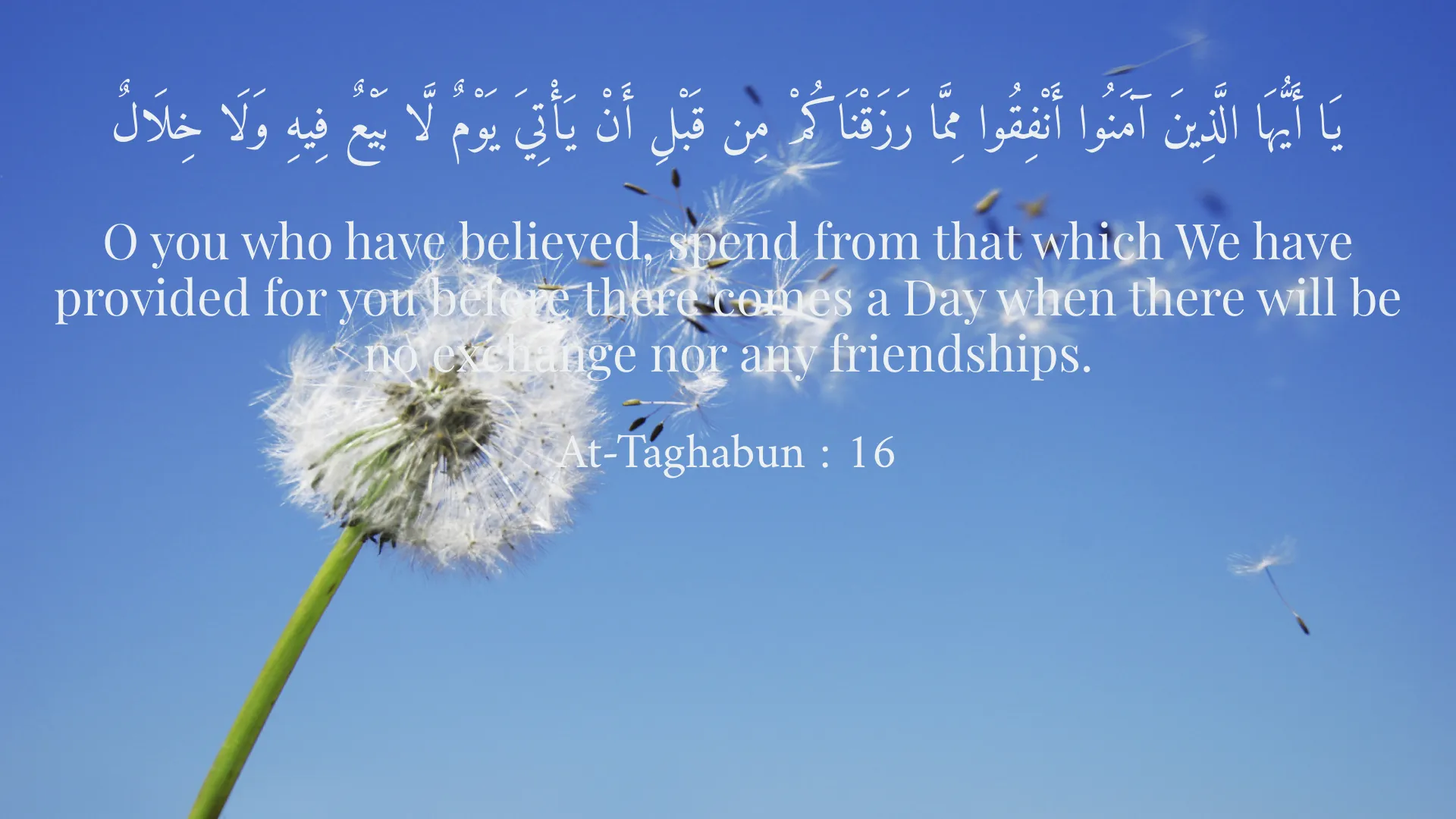
يَا أَيُّهَا الَّذِينَ آمَنُوا أَنْفِقُوا مِمَّا رَزَقْنَاكُمْ مِن قَبْلِ أَنْ يَأْتِيَ يَوْمٌ لَّا بَيْعٌ فِيهِ وَلَا خِلَالٌ
O you who have believed, spend from that which We have provided for you before there comes a Day when there will be no exchange nor any friendships.
At-Taghabun : 16
فَإِذَا رَكِبُوا فِي الْفُلْكِ دَعَوُوا اللَّهَ مُخْلِصِينَ لَهُ الدِّينَ
But when they embark on the ships, they invoke Allah, sincere to Him in religion.
An-Naml : 55
أَمْ حَسِبْتُمْ أَن تَدْخُلُوا الْجَنَّةَ وَلَمَّا يَعْلَمِ اللَّهُ الَّذِينَ جَاهَدُوا مِنكُمْ وَيَعْلَمَ الصَّابِرِينَ
Or did you think that you would enter Paradise while Allah has not yet made evident those among you who strive and those who are patient?
Al-Imran : 142
Short Story
Once upon a time, there was a young man named Ali who struggled with laziness. He often fell behind in his tasks and avoided fulfilling his responsibilities. One day while reading the Quran, he came across a verse that spoke about hard work. Ali realized that to achieve his goals, he needed to strive and not procrastinate. So, he decided to bring about a change in his life with faith in God and effort.