Quranic Answer
The concept of maintaining family ties, known in Arabic as 'Silat al-Rahim,' is a fundamental principle in Islam, deeply rooted in the teachings of the Holy Quran and the Hadiths of the Prophet Muhammad (PBUH). In this article, we will explore the significance of family ties as outlined in various Quranic verses and Hadiths, the consequences of severing these ties, and the broader implications for communities and society as a whole. ### Importance of Family Ties in the Quran The Holy Quran addresses the concept of family ties in several verses, illustrating their significance in shaping the moral and ethical fabric of Muslim society. The Quran portrays family relationships not just as social constructs but as sacred bonds that should be nurtured and maintained diligently. One of the foundational verses that emphasize this principle is found in Surah Al-Baqarah, verse 177, where Allah discusses the marks of a believer’s character. After mentioning various obligations, such as faith, prayer, and charity, Allah highlights the importance of showing compassion and care towards relatives. This brings forth the notion that true faith is reflected in the way one relates to their family members. Allah commands believers to fulfill their responsibilities towards their family, thereby making it clear that maintaining family ties is not simply a societal expectation but a requirement of faith. ### Consequences of Severing Family Ties Surah Muhammad, verse 22 takes this message a step further by warning against disobedience to God and His Messenger regarding kinship ties. This verse elucidates that severing family relationships can lead to dire consequences, both in this life and the Hereafter. The cutting off of kinship ties is viewed not only as a personal failure but as a rebellion against divine commands. The Quran warns that such actions can result in societal disintegration, loss of blessings, and punishment in the Hereafter. This message is echoed throughout Islamic teachings, underscoring that breaking off ties with family is considered one of the gravest sins. The emphasis is placed on the idea that actions in this world mirror one’s standing with Allah, and those who neglect their familial obligations may find themselves distanced from divine mercy. ### Teachings of the Prophet Muhammad (PBUH) The teachings of the Prophet Muhammad (PBUH) further illuminate the value of maintaining family ties. The Prophet consistently emphasized the rights and responsibilities of family members in his numerous Hadiths. He articulated that the importance of family relations should not only be acknowledged but actively practiced and pursued. There are countless sayings attributed to the Prophet emphasizing that cutting off ties with relatives is one of the major sins. One of the notable Hadith relates that one who wishes to enter Paradise must maintain their family ties. This statement underscores not only the spiritual importance of familial relationships but also the consequences tied to nurturing or breaking them. The Prophet encouraged Muslims to help their relatives in times of need, forgive their shortcomings, and nurture loving relationships, creating a strong sense of community and support. ### Nurturing Family Relations In essence, maintaining family ties involves actively nurturing relationships characterized by kindness, forgiveness, and mutual respect. Islam advocates for helping, forgiving, and sharing joys and sorrows with family members as essential practices for building a harmonious home and a cohesive community. Practicing Silat al-Rahim brings about many benefits. It not only strengthens the family unit but also cultivates a sense of belonging and security among individuals. Families that embody the principles of care and compassion are often more resilient in facing external challenges and adversities. Furthermore, when families are strong, their foundations can contribute positively to society at large, fostering unity, empathy, and social well-being. ### The Broader Implications on Society The repercussions of nurturing or severing family ties extend beyond individual households; they resonate throughout the broader community. Strong family ties contribute to social stability, reduce conflict, and promote overall harmony within society. Conversely, the breakdown of family relationships can lead to social fragmentation, increased crime, and a decline in moral and ethical standards. Thus, the Quranic imperative to maintain family ties serves not just the interests of individuals but the well-being of society as a whole. When communities embody the principles of Silat al-Rahim, they foster environments where care, compassion, and understanding thrive. This promotes solidarity and strengthens social networks, leading to greater communal support in times of need. Family members are more likely to stand by each other, contribute positively to their communities, and cultivate environments of mutual respect and understanding. ### Conclusion In conclusion, the significance of maintaining family ties, as emphasized in the Holy Quran and the teachings of the Prophet Muhammad (PBUH), cannot be overstated. The concept of Silat al-Rahim weaves together the fabric of individual lives while simultaneously shaping the moral and ethical landscape of society. By placing immense value on familial relationships, Islam encourages followers to cultivate love, understanding, and support within families. The result is a community built on the foundations of compassion, respect, and shared responsibility. It is our duty as believers to uphold these principles, ensuring that family ties remain strong for the sake of our faith and the well-being of society as a whole.
Related Verses
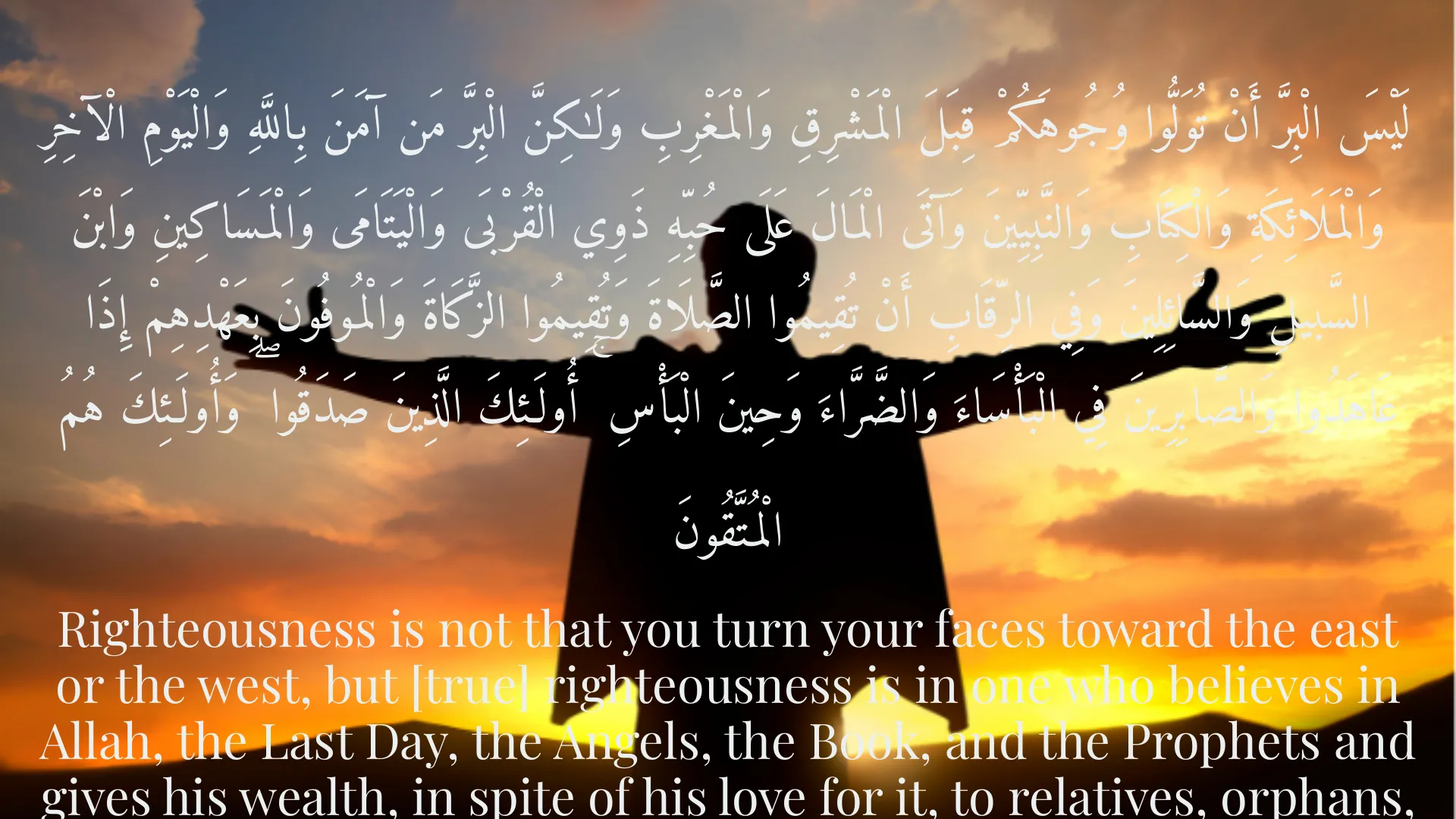
لَيْسَ الْبِرَّ أَنْ تُوَلُّوا وُجُوهَكُمْ قِبَلَ الْمَشْرِقِ وَالْمَغْرِبِ وَلَـٰكِنَّ الْبِرَّ مَن آمَنَ بِاللَّهِ وَالْيَوْمِ الْآخِرِ وَالْمَلَائِكَةِ وَالْكِتَابِ وَالنَّبِيِّينَ وَآتَى الْمَالَ عَلَى حُبِّهِ ذَوِي الْقُرْبَى وَالْيَتَامَى وَالْمَسَاكِينِ وَابْنَ السَّبيلِ وَالسَّائِلِينَ وَفِي الرِّقَابِ أَنْ تُقِيمُوا الصَّلَاةَ وَتُقِيمُوا الزَّكَاةَ وَالْمُوفُونَ بِعَهْدِهِمْ إِذَا عَاهَدُوا وَالصَّابِرِينَ فِي الْبَأْسَاءَ وَالضَّرَّاءَ وَحِينَ الْبَأْسِ ۚ أُولَـئِكَ الَّذِينَ صَدَقُوا ۖ وَأُولَـئِكَ هُمُ الْمُتَّقُونَ
Righteousness is not that you turn your faces toward the east or the west, but [true] righteousness is in one who believes in Allah, the Last Day, the Angels, the Book, and the Prophets and gives his wealth, in spite of his love for it, to relatives, orphans, the needy, the traveler, those who ask [for help], and for freeing slaves; and [who] establishes prayer and gives zakah; [those who] fulfill their promise when they promise; and [those who] are patient in poverty and hardship and during battle. Those are the ones who have been true, and it is those who are the righteous.
Al-Baqarah : 177
فَذُوقُوا بِمَا نَسِيتُمْ لِقَاءَ يَوْمِكُمْ هَـٰذَا إِنَّا أَنْسَيْنَـٰكُمْ ۖ إِنَّا كُنَّا نَسُدُّ عَنْكُم وَإِنَّا كُنَّا نَسُدُّ عَنْكُم
So taste [the punishment] for what you forgot the meeting of this Day. Indeed, We have neglected you.
Muhammad : 22
Short Story
Once upon a time, a man named Hassan placed great importance on his family ties. He would visit his uncle and aunt every week and participate in family gatherings during the festive seasons. Hassan believed that maintaining family relationships brought happiness and blessings into his life. He had learned a story from his grandfather who said, "Whenever you faced difficulties in life, it was these relatives who stood by your side." Hence, Hassan paid much attention to this important principle and never let any member of his family be forgotten.