Quranic Answer
The Holy Quran is a comprehensive guide for Muslims, covering various aspects of life, morality, and spirituality. One of the core themes that permeate its verses is the emphasis on family ties and the respect that should be accorded to them. Family, in Islam, is deemed a fundamental building block of society, and the Quran articulates the significance of these relationships with profound clarity. In a world where familial connections can sometimes be strained or neglected, returning to these Quranic teachings can prove invaluable. This article will elaborate on the importance of family ties in the Quran, reflected through various verses, and will discuss their implications for contemporary society. Beginning with Surah Al-Isra, verse 23, we encounter a powerful injunction on the treatment of parents. The verse states: "And your Lord has decreed that you not worship except Him, and to parents, good treatment. Whether one or both of them reach old age [while] with you, say not to them [so much as], 'uff,' and do not repel them but speak to them a noble word." This verse alone highlights several critical elements surrounding family relations in Islam. Firstly, it establishes the primacy of worshiping Allah alone, which is the cornerstone of Islamic belief. However, immediately following this directive, it underscores that good treatment towards one's parents is equally paramount. The closeness of these two commands indicates that reverence for Allah is intricately linked to our behavior and conduct towards our family members. The use of the word "uff" is particularly poignant. It represents the slightest expression of frustration or disdain, which in the context of caregiving parents, is absolutely condemned. By instructing believers to avoid even this minor display of annoyance, the Quran sets a high standard for the treatment of our elders. The requirement to speak to them nobly further emphasizes that our words and attitudes should embody kindness and respect. The underlying message encourages patience and compassion when dealing with aging parents who may require assistance or support as they navigate the complexities of old age. The Quran demonstrates that the relationship with parents is not just a duty but a fundamental act of worship. It reflects on the profound sacrifices parents make for their children, and in response, children are encouraged to reciprocate this love and care throughout their lives. The teachings on parental respect extend beyond mere obligations; they highlight the inherent value of human dignity and the need for mutual respect within family dynamics. In addition to parental relationships, the Quran speaks broadly about family ties and kinship, as evidenced in Surah At-Tawbah, verse 24: "Say, 'If your fathers, your sons, your brothers, your wives, your relatives, the wealth which you have obtained, and the commerce in which you fear decline, and the dwellings in which you delight are more beloved to you than Allah and His Messenger and jihad in His cause, then wait until Allah executes His command. And Allah does not guide the defiantly disobedient people.'" This verse highlights the necessity of prioritizing faith and devotion to Allah over familial attachments when they come into conflict. It illustrates an essential balance that Muslims are encouraged to maintain: family bonds are significant, but they must not eclipse one's devotion to Allah. The term "jihad" in this context should not be solely understood as a physical struggle but rather as a broader indication of striving for righteousness and justice in every aspect of life. This directive challenges believers to assess their loves and loyalties critically, ensuring it aligns with their faith. The Quran establishes that family relationships, while important, must co-exist harmoniously with one's religious obligations. The familial bond should not be a source of division when it stands in contrast to ethical and moral behavior defined by Islam. Thus, maintaining these balances and priorities becomes vital for personal and communal growth in Islamic teachings. Further illustrating the beauty of family ties, the Quran also encourages empathy and care amongst siblings and extended family. Surah An-Nisa emphasizes the importance of upholding rights and responsibilities to one another within the broader family unit. This includes advocating for those who may be marginalized within the family, promoting equitable treatment, and fostering understanding and acceptance between different family members. In the Quran, familial obligations extend to ensuring the well-being and protection of each family member, regardless of age or gender. The concept of family in Islam revolves around mutual support and nurturing relationships, reinforcing the idea that one's family is not just a matter of biological connections but a network of responsibilities that must be upheld with sincerity and dedication. The impact of these teachings is profound in the dynamics of contemporary life. In many modern societies, the traditional family structure is evolving, and individuals often face challenges in navigating their familial responsibilities. As people move away from their hometowns, engage in demanding jobs, and adopt new lifestyles, the essence of family connections may sometimes become diluted. The Quran presents a timeless perspective urging believers to maintain these relationships, urging us to prioritize efforts to stay connected, honor our loved ones, and ensure that the ties that bind us do not fray in the hustle and bustle of daily life. Moreover, in an age where family disputes and breakdowns are increasingly prevalent, the Quran’s emphasis on harmony, respect, and love can serve as a guiding framework to resolve conflicts effectively. By encouraging open communication, empathy, and understanding as prescribed in the Quran, families can work towards healthier dynamics, supporting one another in both challenging and joyful times. In conclusion, the teachings of the Holy Quran regarding family ties are a profound reminder of our responsibilities towards one another. It emphasizes the importance of honoring parents, nurturing sibling connections, and fostering kinship while placing devotion to Allah at the forefront of our lives. By adhering to these teachings, individuals are not only fulfilling religious obligations but are also actively contributing to building strong, supportive communities rooted in love and respect. As we navigate the complexities of modern life, the wisdom of the Quran serves as a compass guiding us back to the values of familial love and the importance of preserving the sanctity of family relationships.
Related Verses
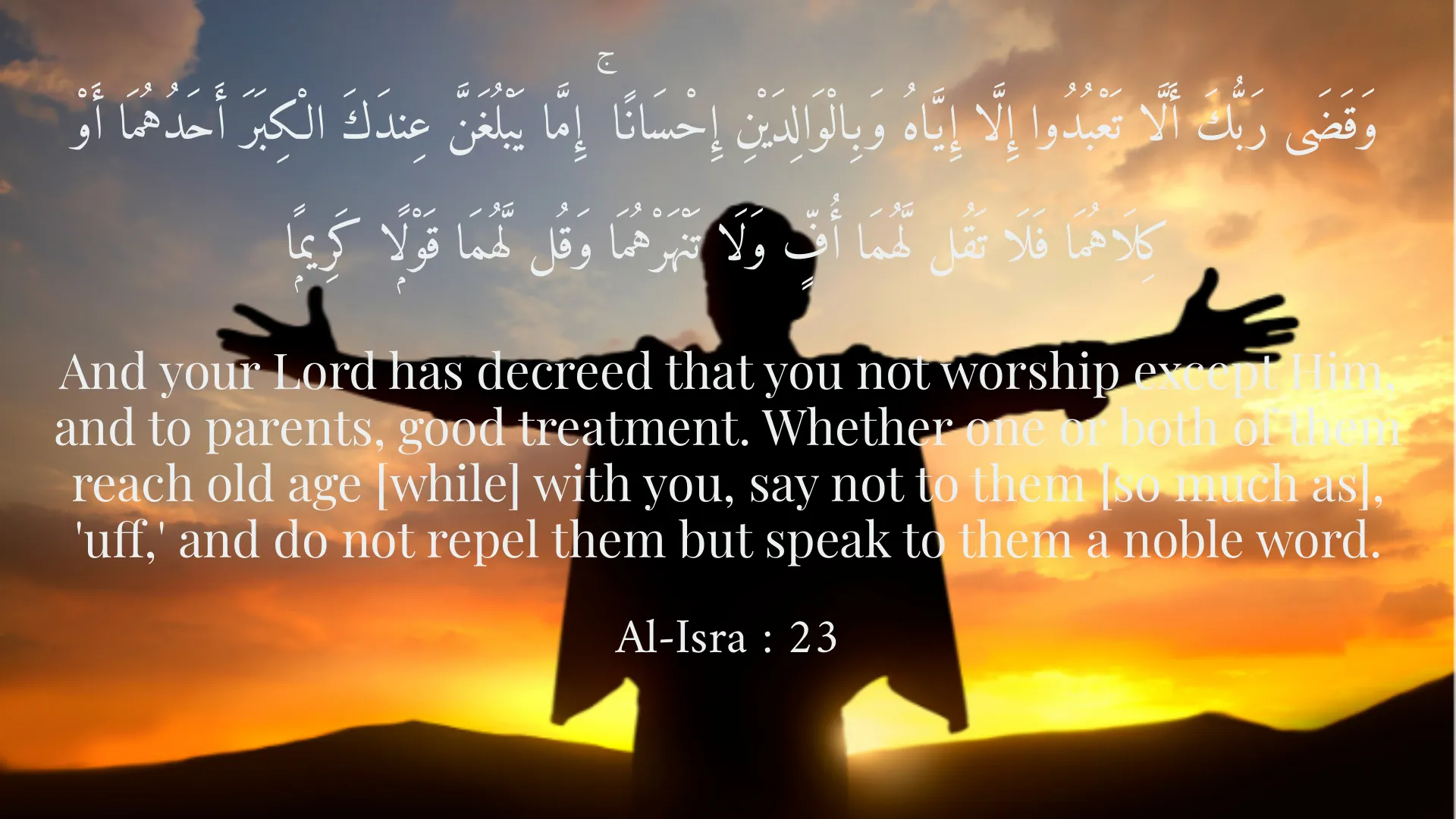
وَقَضَى رَبُّكَ أَلَّا تَعْبُدُوا إِلَّا إِيَّاهُ وَبِالْوَالِدَيْنِ إِحْسَانًا ۚ إِمَّا يَبْلُغَنَّ عِندَكَ الْكِبَرَ أَحَدُهُمَا أَوْ كِلَاهُمَا فَلَا تَقُل لَّهُمَا أُفٍّ وَلَا تَنْهَرْهُمَا وَقُل لَّهُمَا قَوْلًۭا كَرِيمًۭا
And your Lord has decreed that you not worship except Him, and to parents, good treatment. Whether one or both of them reach old age [while] with you, say not to them [so much as], 'uff,' and do not repel them but speak to them a noble word.
Al-Isra : 23
قُلْ إِن كَانَ آبَاؤُكُمْ وَأَبْنَاؤُكُمْ وَإِخْوَانُكُمْ وَأَزْوَاجُكُمْ وَعَشِيرَتُكُمْ وَأَمْوَالٌ اقْتَرَفْتُمُوهَا وَتِجَارَةٌ تَخْشَوْنَ كَسَادَهَا وَمَسَاكِنُ تَرْضَوْنَهَا أَحَبَّ إِلَيْكُمْ مِّنَ اللَّهِ وَرَسُولِهِ وَجِهَادٍ فِي سَبِيلِهِ فَتَرَبَّصُوا حَتَّى يَأْتِيَ اللَّهُ بِأَمْرِهِ ۚ وَاللَّهُ لَا يَهْدِي الْقَوْمَ الْفَاسِقِينَ
Say, 'If your fathers, your sons, your brothers, your wives, your relatives, the wealth which you have obtained, and the commerce in which you fear decline, and the dwellings in which you delight are more beloved to you than Allah and His Messenger and jihad in His cause, then wait until Allah executes His command. And Allah does not guide the defiantly disobedient people.'
At-Tawbah : 24
Short Story
One day, Adel was sitting with his family and asked them what mattered most to them. His mother replied first, "Mutual respect and honor," and his father added, "We must always help each other and stand together in difficult times." They discussed Quranic verses and realized that these verses clearly emphasize the importance of family ties. In that moment, Adel decided to focus more on the significance of family and kindness towards parents, and from that day forward, he noticed that his relationships with his family improved.