Quranic Answer
The Family: A Fundamental Institution in Islam The family unit stands as one of the most crucial institutions delineated within the pages of the Quran. The significance of family encompasses the moral and spiritual education of individuals, and Allah emphasizes its role across various verses. A closer examination reveals profound insights into the responsibilities shouldered by each family member and the collective duty towards nurturing an environment steeped in love, respect, and adherence to Islamic teachings. In Surah At-Tahreem, verse 6, the Quran explicitly advises believers: "O you who have believed, protect yourselves and your families from a Fire." This powerful verse serves as a clarion call, reminding individuals of their obligation towards their families. It reflects the imperative of safeguarding one's loved ones from spiritual and moral decay that may lead them astray. The imagery of fire symbolizes the dire consequences of sin and moral corruption, underscoring the weight of accountability each believer bears. The familial system in Islam extends this responsibility beyond mere protection from external threats to encompass a proactive role in guiding the family towards righteousness. This involves not only correcting inappropriate behaviors but also instilling values that align with Islamic principles. In essence, nurturing a family that embodies virtue is seen as a divine mandate. Moreover, the Quran accentuates the ethical treatment of parents, a theme prominently highlighted in Surah Al-Isra, verse 23: "And your Lord has decreed that you not worship except Him, and to parents, good treatment." This directive affirms that the respect and kindness extended to parents rank among the foundational tenets of proper upbringing in Islamic culture. The profound nature of this command illustrates that good conduct towards parents is not merely a recommendation, but a crucial element of a believer's faith. Respecting parents goes beyond verbal acknowledgment; it encompasses actions and attitudes that reflect love, gratitude, and obedience. Muslims are encouraged to provide for their parents in times of need, to show patience in the face of their mistakes or shortcomings, and to continuously strive for their happiness. The reciprocal nature of this relationship fosters a nurturing atmosphere in which children can thrive while being molded into responsible individuals. Creating a loving and secure environment for children is essential for their optimal development in faith and character. Families are charged with the monumental task of not only imparting religious knowledge but also integrating the teachings of Islam into daily life. When parents exhibit compassion, lack of judgement, and an encouraging demeanor, they lay the ground for children to approach religious values comfortably and openly. Conversely, environments filled with discord and negativity create barriers to learning and emotional growth, potentially resulting in disconnection from faith and family values. The teachings of the Quran remind us that the family unit must actively engage in discussions and reflections on moral and ethical issues. It encourages conversations based on mutual respect, where children feel free to express their thoughts and concerns. Such interactions nurture critical thinking and reinforce the importance of making decisions informed by faith and moral obligations. Furthermore, the Quran envisions that every family member contributes to the educational journey of the children. Husbands and wives are urged to collaborate and provide consistent role modeling for their offspring. A father’s strength complements a mother’s nurturing spirit to create a balanced household where children can witness healthy relationships and communication first-hand. Moreover, it is vital to understand that the family environment significantly influences the social and emotional development of children. Quranic principles advocate for the cultivation of positive traits such as empathy, compassion, and self-discipline. By imbuing these values through family interactions, children are prepared to face the challenges life may throw at them, armed with a strong moral compass. Islam also places emphasis on the concept of extended family, where relatives play a role in a child's upbringing. Interaction with grandparents, uncles, aunts, and cousins adds layers of support and enrichment to a child's experience. This network reinforces values and skills important for social integration and helps children learn from a variety of life experiences. In contemporary society, however, the challenge lies in navigating familial responsibilities amidst external pressures such as work, technology, and social changes. Parents are often caught in a whirlwind of duties that can detract from their roles as primary educators in the family setting. It is here that the reminder from the Quran serves as a vital compass. The teachings compel families to prioritize relationship-building and spiritual growth, urging them to carve out quality time for each other amidst the chaos of daily life. Thus, the Quran teaches us that the family is the bedrock of personal development and societal cohesion. A family that is devoted to nurturing each member through faith, education, and ethical conduct creates a community that reflects the higher values of Islam. In fulfilling this divine responsibility with awareness, families can build not only individual legacies of faith but a collective strength that echoes through generations. In conclusion, the role of the family in the upbringing of children is both vital and fundamental. The Quran provides a framework that emphasizes the protection, respect, and nurturing essential to achieving an ideal family environment. As believers, it becomes paramount to commit ourselves to these responsibilities, guided by the wisdom of the Quran and the teachings of the Prophet Muhammad (peace be upon him). The family should indeed be a sanctuary of learning and virtue, a timeless institution aimed at fostering the next generation of individuals who embody Islamic principles both at home and in society.
Related Verses
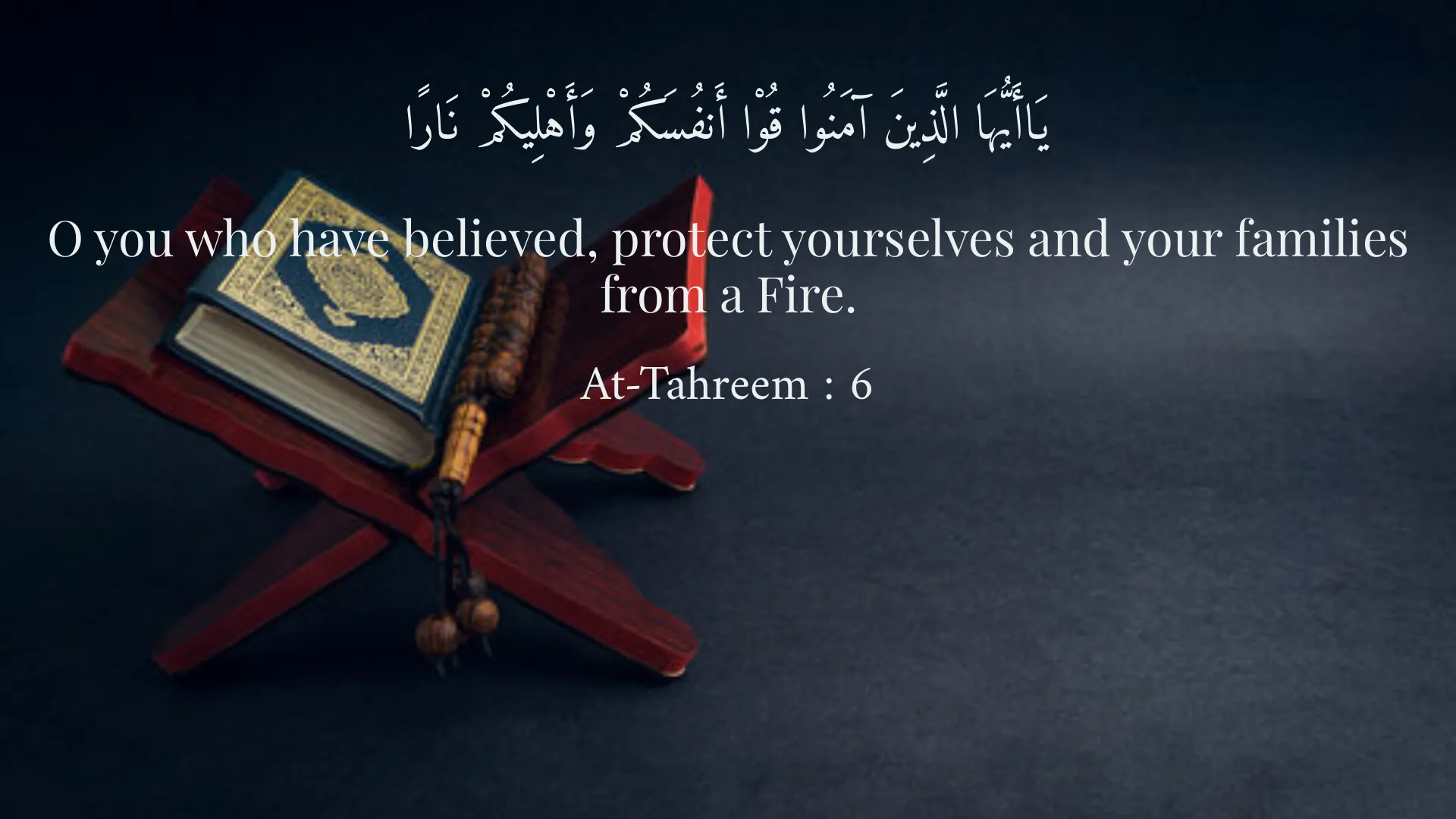
يَاأَيُّهَا الَّذِينَ آمَنُوا قُوْا أَنفُسَكُمْ وَأَهْلِیکُمْ نَارًا
O you who have believed, protect yourselves and your families from a Fire.
At-Tahreem : 6
وَقَضَى رَبُّكَ أَلَّا تَعْبُدُوا إِلَّا إِيَّاهُ وَبِالْوَالِدَيْنِ إِحْسَانًا
And your Lord has decreed that you not worship except Him, and to parents, good treatment.
Al-Isra : 23
Short Story
Once upon a time, there was a family that always respected one another and valued religious teachings in raising their children. One day, one of the children asked his father, 'Why should we respect our parents?' The father replied, 'Because it is God's command, and it will also help us raise good children in the future.' With this answer, the child decided always to respect his parents and live according to the teachings of the Quran.